Painting a Plywood Shed Workshop and Epoxy Coating the Floor
The short version
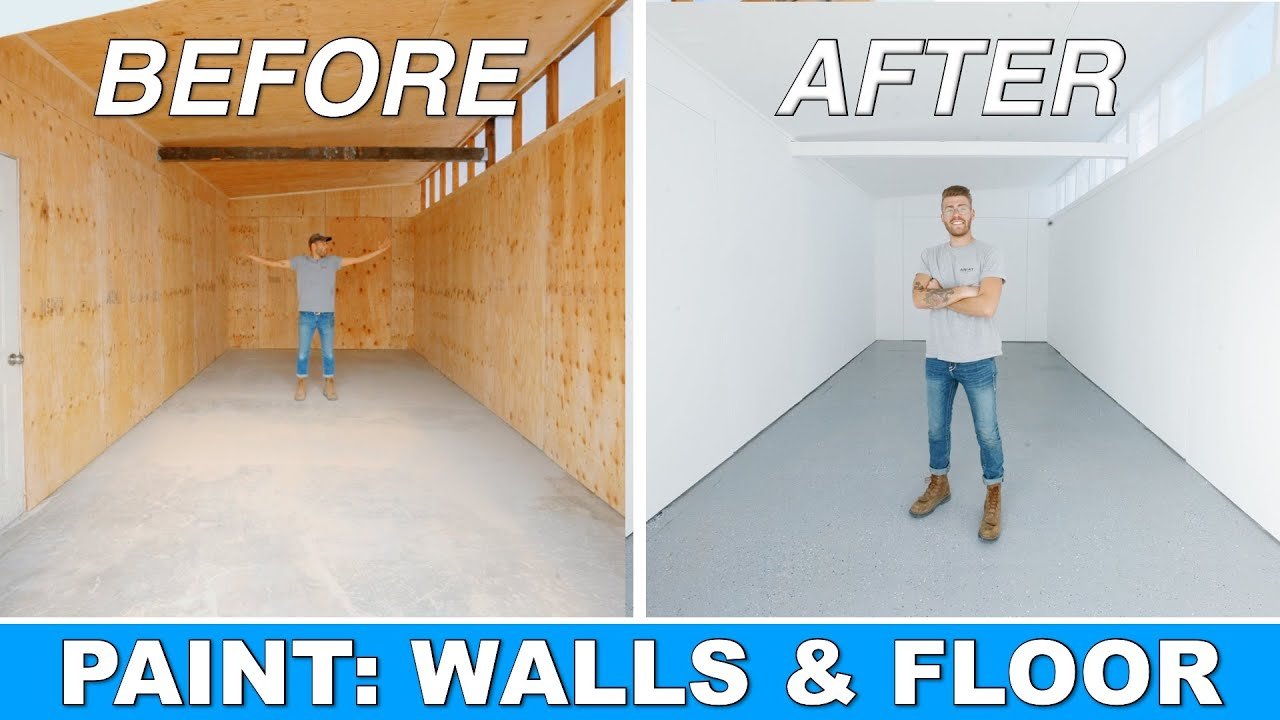
Episode 2 of a shed-to-workshop conversion covers priming and painting the plywood interior with a Wagner Control Pro 150 airless sprayer, then applying a Rust-Oleum garage concrete epoxy kit with chips to the floor. The creator shares beginner sprayer tips and the floor prep steps, and finishes with the walls and ceiling in flat white.
Full written account
In episode two of a shed-to-workshop conversion on a property in Joshua Tree, the plywood interior built in the first episode gets primed, painted flat white, and the new concrete floor is coated with garage epoxy. The walls and ceiling were sprayed with a Wagner Control Pro 150 airless sprayer, which the creator says he had used on only one earlier large project.
Prep and priming
The concrete floor was first protected with construction paper and tape. The plastic sheeting left on the inside of the polycarbonate windows served as masking. The primer was Kilz 3, thinned slightly because it is so thick; the creator says original Kilz might not need thinning. The sprayer was tested first.
Sprayer tips
He gives four beginner tips:
- Keep the sprayer square, or perpendicular, to the wall so the fan is consistent top to bottom.
- Stay about 8 to 12 inches from the wall.
- Overlap each pass by about half.
- Stop the sprayer before starting the next row, because paint can build up at the end of each run and cause runs.
The half-inch plywood walls were painted in four-foot-wide sections, one panel at a time, with each coat overlapping the panel beside it. The ceiling went the same way, with a step stool and more attention to overspray. A center beam kept showing a dark color through, even after a few coats of primer and a few coats of paint.
Caulk and flat white
As the primer dried, a gap showed between plywood panels in a corner. He ran a bead of latex caulk and smoothed it with a wet paper towel. The topcoat was Bear Ultra Pure White in flat, straight from the shelf. The sprayer pulls directly from one-gallon or five-gallon buckets. He ran it from sunup to sundown, powered by a Goal Zero Yeti 3000 that also ran lights, and advises a respirator rated for spraying paint. The doors were painted afterward. Walls and ceiling ended with two coats of flat white.
Epoxy floor
After the paper came off, he applied a Rust-Oleum garage floor kit, the two-and-a-half car size, to a floor with more inconsistencies than a professional finish; the chips were meant to hide them. The steps:
- Wet the concrete and let it soak in.
- Mix the concrete etch fairly concentrated and scrub; he used a foam brush since he lacked the bristle brush the directions recommend.
- Rinse with a garden hose before it dries.
- Mask the base of the walls.
- Burst the two-part pouch and mix thoroughly.
- Cut in the corners, then roll with a three-quarter inch nap roller.
He spread a thick coat and threw the chips heavily, finding it easier to throw them upward than sideways, since they otherwise cluster. Working in sections small enough to broadcast chips evenly, each overlapping the last by 6 or 12 inches, helped the sections blend. A spill of the mixed product happened on the floor, where it did no harm. He says the kit has shown good durability and resists staining, based on a first use in his parents' garage.
Result
He chose flat white for the softer glow and because it films better. He reports a couple of runs from being heavy-handed and recommends the Wagner sprayer.
Questions this video answers
What sprayer was used to paint the plywood walls?
A Wagner Control Pro 150 airless sprayer, which draws directly from one-gallon or five-gallon buckets.
What airless sprayer tips does the video give?
Stay square to the wall, keep 8 to 12 inches away, overlap each pass by about half, and stop the sprayer before starting the next row so paint doesn't build up and run.
What primer and paint were used?
Kilz 3 primer, then Bear Ultra Pure White in flat, applied in two coats of flat white on walls and ceiling.
How was the concrete floor prepared and coated?
Wet the concrete, scrub with a mixed concrete etch, rinse with a garden hose before it dries, mask the base of the walls, then roll the epoxy with a 3/4 in. nap roller and throw chips upward.
Does the video give a safety warning?
Yes. The video advises a respirator rated for spraying paint.
Explore related projects
Connected by the topic: Paint a room