Door Won’t Latch: Three Strike Plate Fixes, Easiest to Hardest
The short version
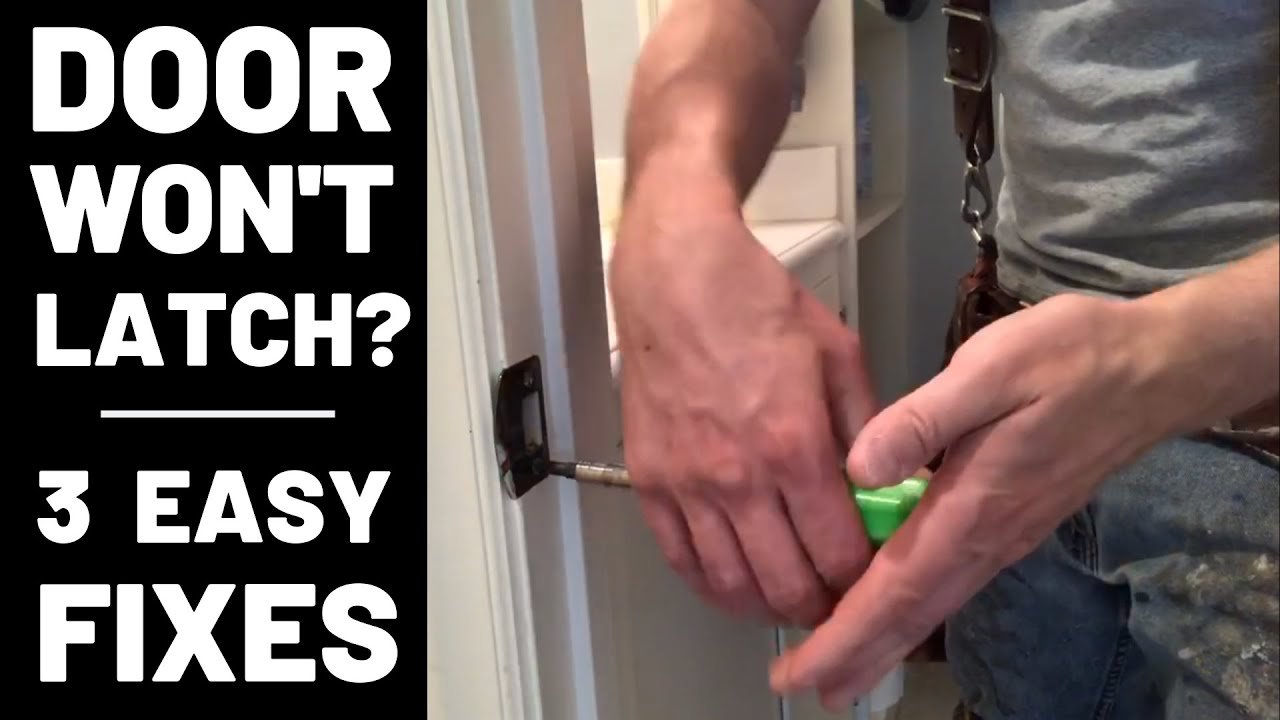
A bathroom door that will not latch is fixed three ways, from easiest to most involved: tapping down the strike plate lip, filing the strike plate, or repositioning the whole plate lower. The latch is usually too low on the strike plate, which the wear marks show. The third fix uses toothpicks and superglue to fill old screw holes, new pilot holes, chisel work and caulk.
Full written account
A bathroom door that pushes open from the inside because the latch won't catch is, according to The Honest Carpenter's Ethan James, caused 99% of the time by a latch sitting too low on the strike plate. Three fixes follow, each more involved than the last, so a homeowner can try one and move on to the next if it fails.
Finding the cause
The wear pattern on the strike plate shows the problem: the marks the latch leaves, and some polish worn away, show it hitting too low. Another check is to kneel outside the room and sight the latch against the plate by eye, or mark reference points with a pencil.
Fix 1: drive the strike plate down
Using a big screwdriver and a 16-ounce hammer, tap the bottom lip of the strike plate really hard several times. This forces down the wood inside the latch hole. In the demonstration the door still let go at the last second under a hard pull, so it did not work, though he says it sometimes does.
Fix 2: file the strike plate
Remove the screws and plate, then pass a metal file back and forth across the bottom lip, working evenly side to side. The filing can go down to the screw hole but should stop just short of cutting into it. After refitting, the door held pretty well, and he says he could probably walk away from it.
Fix 3: reposition the plate
Move the plate down about an eighth or 3/16 inch, between the old screw hole and the latch hole, without letting the screw hole overlap the latch hole. Mark the new screw holes and trace the bottom edge and corner for chiseling.
- Fill the old screw holes with toothpicks and plenty of superglue, wedged in hard, and let them dry about ten minutes.
- Notch the toothpicks with a utility knife, snap them off flush and tap them down with the hammer.
- Set pin points with a trim nail, then drill with progressively larger bits up to an eighth inch. The wood-filled old holes keep the bit from wandering.
- Hand-set the screws so they cut thread channels.
- Score a line with a utility knife, then use a sharp one-inch chisel to establish depth before gently removing the wood lip. Paring strokes by hand finish it, since the jamb can split or be gouged.
- Mount the plate, then pare out extra wood that could stop the latch from dropping in.
The gap at the top is filled with caulk, wiped with a finger over a few coats, or wood filler, then painted. The latch should then fall near the center of the latch hole, snap into place and hold through a few hard pulls.
Questions this video answers
Why doesn't my door latch?
The video says that 99% of the time the latch is too low on the strike plate, which shows in the wear marks the latch leaves on the plate.
What is the first fix?
Tap the bottom lip of the strike plate hard several times with a big screwdriver and a 16-ounce hammer to force down the wood inside the latch hole.
What is the second fix?
Remove the strike plate and file its bottom lip evenly, stopping just short of the screw hole, then reinstall it.
What is the third fix?
Fill the old screw holes with superglued toothpicks, drill new pilot holes, chisel out the wood lip with a 1-inch chisel, mount the plate about an eighth to 3/16 inch lower, and fill the top gap with caulk or wood filler.
How long does it take and what does it cost?
The video does not state a time or a cost.
Explore related projects
Connected by the topic: Carpentry