Why Breakers Trip: Overloads, Ground Faults and Short Circuits
The short version
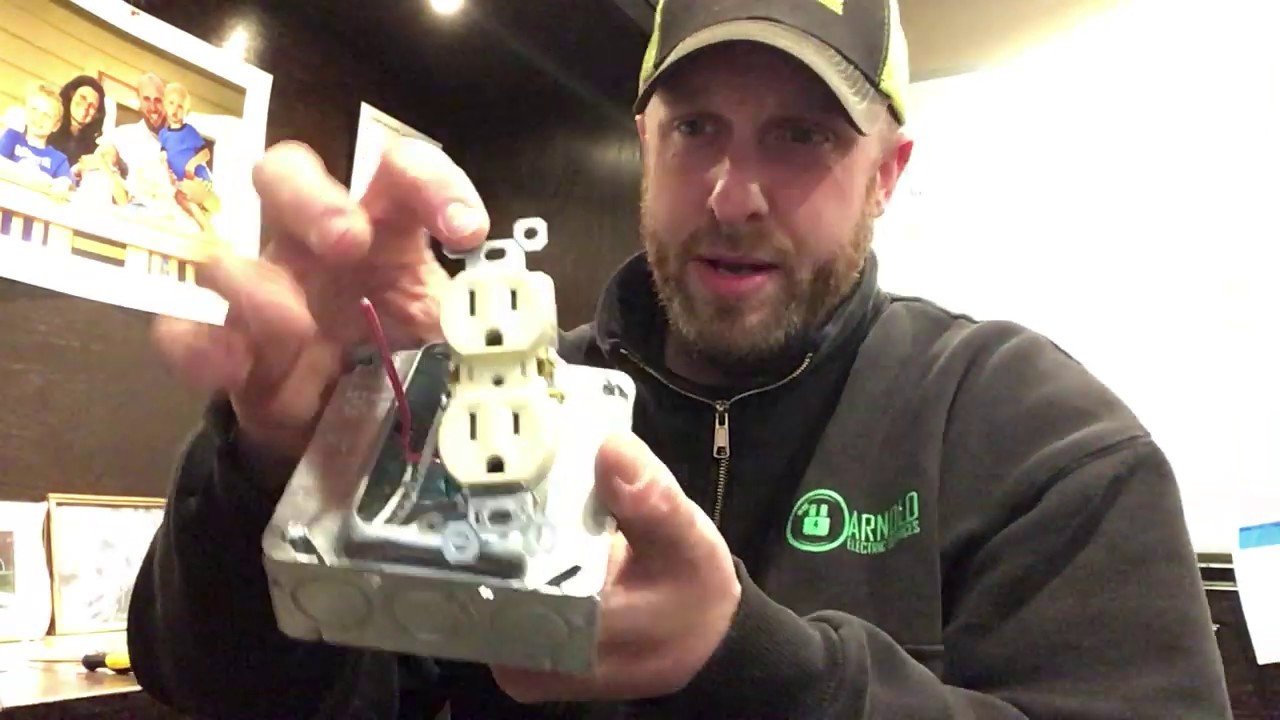
A Chicago electrician explains the three main reasons a circuit breaker keeps tripping: an overloaded circuit, a ground fault, and a short circuit. He uses an older kitchen on 15 amp circuits as the overload example and shows how a loose outlet screw or crossed hot and neutral wires trip a breaker on reset.
Full written account
Why does a breaker keep tripping?
According to Jack Arnold of Arnold Electric Services, a company working on existing electrical systems in older homes on the northwest side of Chicago, breaker tripping comes down to three main causes: an overloaded circuit, a ground fault, and a short circuit.
Overloaded circuit
His kitchen example: a standard modern kitchen requires seven 20 amp circuits, but older Chicago homes often have two, three or four 15 amp circuits feeding the counter outlets, dishwasher, range hood and disposal. If a toaster and a microwave can't run at the same time, there are probably not enough circuits.
To test it, the electrician has the homeowner run the microwave and toaster, takes the panel cover off and clamps an amp probe on the breaker's wire to measure amperage. A typical kitchen appliance averages about 8 amps, and older Chicago homes were typically wired with 15 amp circuits. The fix is to add additional circuits.
Ground fault
In older homes, a ground fault is usually a metal screw on an outlet that has wiggled loose over time and touches the metal outlet box. An energized part of an outlet, switch or breaker touching a metal box is a ground fault. The breaker can't be reset: it trips the instant it is turned back on.
Short circuit
A short circuit is a cross wire: the hot and neutral touching. One example is a white wire coming out of a wire nut and getting jammed under the wire nut of a hot conductor. As with a ground fault, the breaker trips automatically when reset.
Questions this video answers
What are the three causes of a tripping breaker?
An overloaded circuit, a ground fault, and a short circuit.
How can you tell a circuit is overloaded?
A circuit that can't run a toaster and a microwave at the same time may not have enough circuits; a typical kitchen appliance averages about 8 amps on a 15 amp circuit.
What is a ground fault?
An energized part, such as a loose outlet screw, touches a metal box. The breaker trips the instant you reset it.
What is a short circuit?
The hot and neutral touch, for example a white wire jammed under the wire nut of a hot conductor. The breaker trips immediately on reset.
How is an overloaded circuit fixed?
Add additional circuits; the electrician offers to consult on a plan.
Explore related projects
Connected by the topic: Electrical