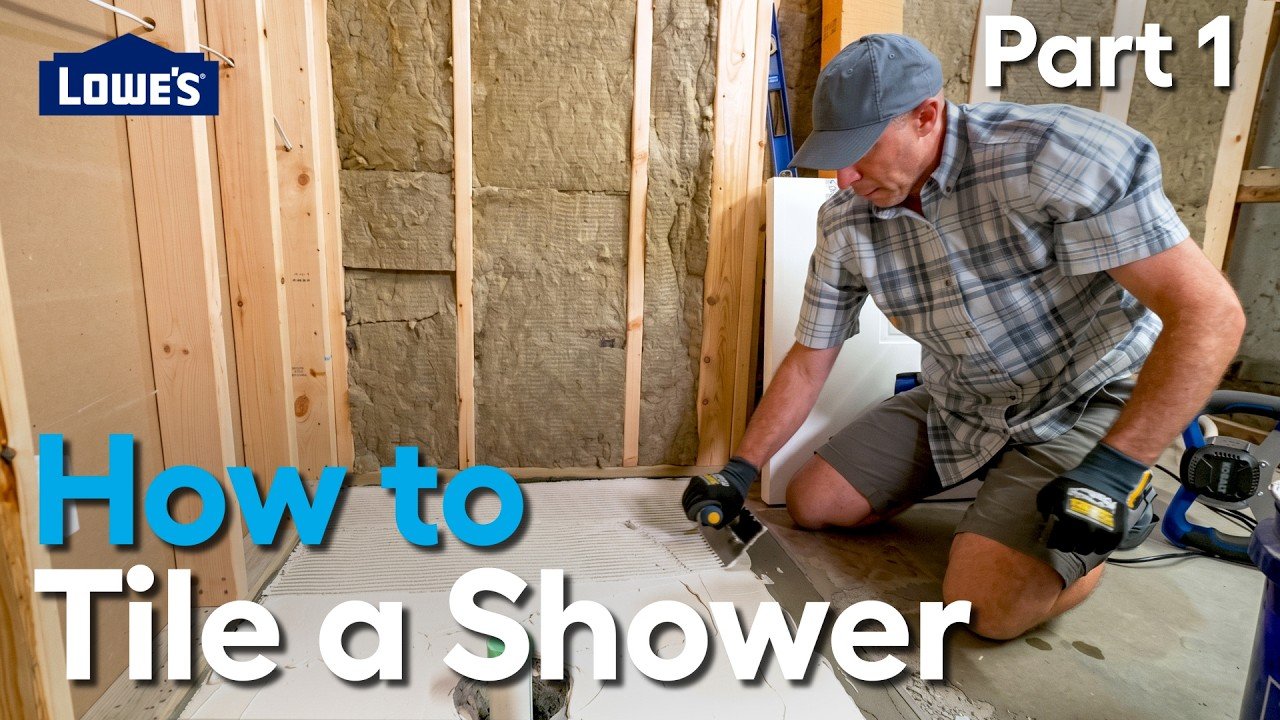
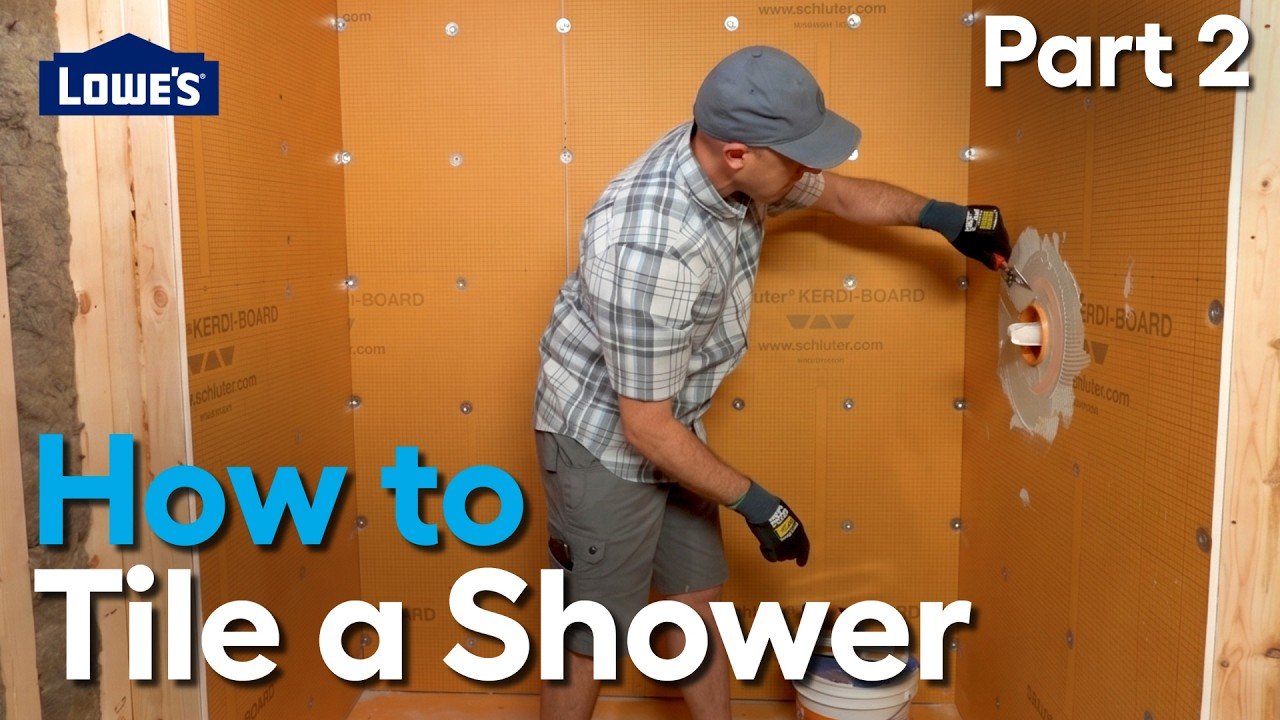
Rebuilding a Tiny Basement Shower on a Concrete Slab With Tile
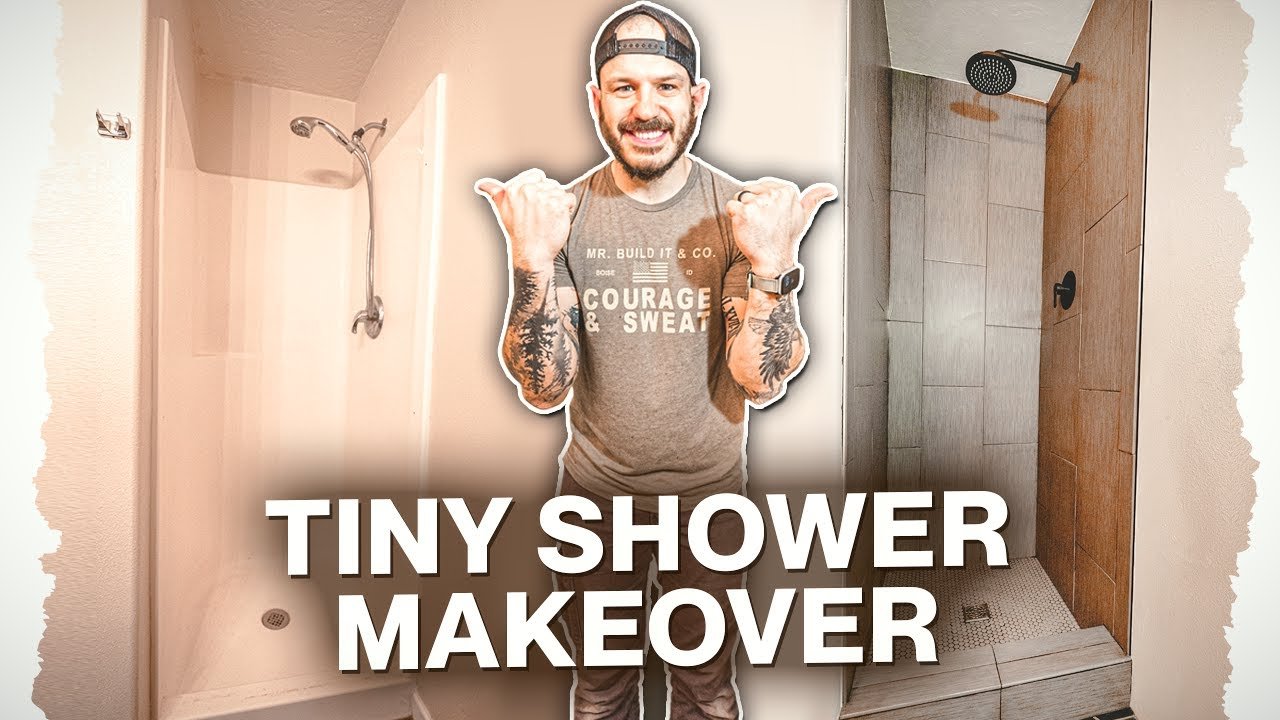
The short version
A 25-year-old phone-booth shower in a finished basement is torn out and rebuilt on a concrete slab with a Schluter pan system, a PEX-connected mixing valve, an overhead rain shower, and 12×24 porcelain tile with charcoal grout. The creator reports the spending against a $1,500 budget. It is part one of a two-part series, and the door question is left for the next video.
Full written account
A 25-year-old phone-booth shower in a finished basement gets stripped out and rebuilt on a concrete slab in this makeover. The plan is tile up the walls and on the floor, plus an overhead raindrop shower like the creator's bigger shower. The original budget was $1,500.
Demolition and the drain
The old unit comes out by cutting about two inches of drywall from the sides and top. A tab behind the drywall is screwed into the studs; once it is free the unit usually pops off, with a screw at the bottom to remove as well. A cutout also checks whether there is room above for the water line for the rain shower.
Because the slab is concrete, the Schluter connection that goes under the foundation is not an option. The drain pipe area is dug out, a collar goes around the pipe to protect it, and quick-set concrete is filled in, wetted and flattened so the Schluter system can sit on top.
Framing and drywall
A 2×4 holding up the PVC pipe overlapped half an inch, which would have thrown the tile and drywall out of line. It is cut off, a few screws keep the pipe up, and the 2×4 moves to the inside so drywall can still be secured. Some places needed shims or a double layer of drywall to square things up. For clean drywall cuts, score with a razor blade against a drywall square, then cut the back paper.
Pan and waterproofing
The Schluter kit, which cost $522, includes a waterproofing membrane, a curb and a sloped pan. It is set in unmodified thinset. The drain flange was four inches in diameter and should have sat flush on the floor. The options were building up a platform an inch and a half high or cutting a square around it with an angle grinder. Moisture-resistant drywall is covered with the waterproofing, with at least two inches of overlap on every joint.
Plumbing and testing
The new mixing valve uses adapters sealed with Teflon tape and PEX connections with crimp rings clamped by a pressurizing tool. With the water on, nothing leaked. The pan is then filled one to two inches, the level marked, and left for 24 hours.
Tile and grout
The tile is 12×24 porcelain set vertically with a quarter-inch trowel and a leveling system of lifters and wedges, clamped to the right notch. He calls it the hardest tile job he has done, with a bow in the load-bearing walls. His $200 tile saw has a sliding table, the feature he says matters. Charcoal grout covers gaps up to an eighth of an inch and haze dries overnight. Corners and edges get 100% silicone, then a few coats of sealer.
Costs
Spending listed: $90 for the shower faucet system, $522 for the Schluter system, $50 for the drain gate, $60 for pipe fittings in the concrete, $250 for tile and grout and $40 for tile levelers. He is leaving the door off for now to test for backsplash because of a floor regulation, and the second part of the series covers it.
Questions this video answers
What shower pan system did he use?
A Schluter shower pan system, which includes the waterproofing membrane, a curb and a sloped pan, set in unmodified thinset.
What did the shower cost?
He says the original budget was $1,500 and lists $90 for the shower faucet system, $522 for the Schluter system, $50 for the drain gate, $60 for pipe fittings in the concrete, $250 for tile and grout and $40 for tile levelers.
How did he test the shower pan for leaks?
He fills the pan with one to two inches of water, marks the level and lets it sit for 24 hours.
What does he say to look for in a tile saw?
He says to look for a sliding table; he paid $200 for his and says you don't need the $500 model.
What tile did he use?
It is 12×24 porcelain tile set vertically with a quarter inch trowel and a leveling system, with charcoal grout.
Explore related projects
Connected by the topic: Tile a shower