How to Coat Corner Bead With a Trowel: First-Coat Basics
The short version
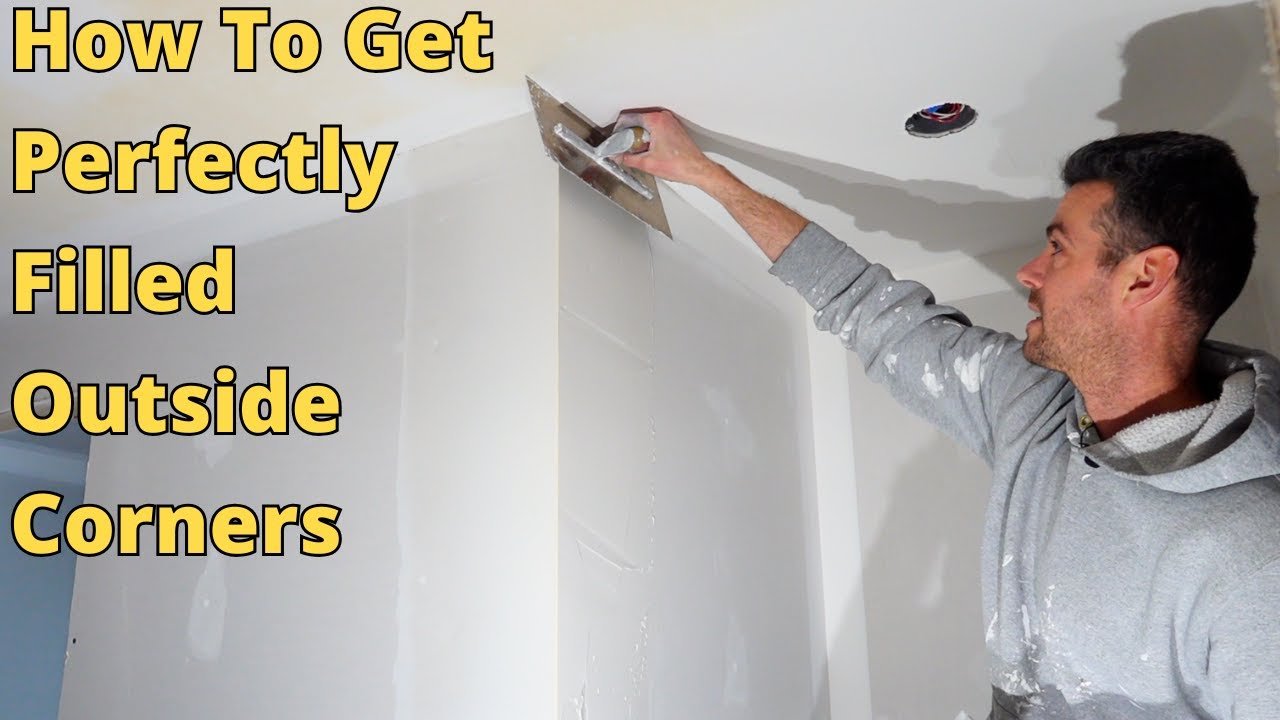
A drywall finisher shows how to apply the first coat of joint compound to corner bead with a straight 13×5 in. trowel, using thick, well-mixed mud and an arcing motion. The video covers feathering the edge, filling the bead from point A to point B, working around electrical boxes, and using a knife for awkward spots. The first coat does not need to be perfect because the second coat improves it.
Full written account
Coating corner bead with a trowel comes down to one idea: on the first coat the mud must be full, not perfect. A drywall finisher with 15 years of experience explains that passing over the bead again and again pulls the material out, so one loaded pass and a feathering pass are usually enough.
Choosing the trowel
The trowel used is a straight 13×5 in. model with a slight curve. Trowels on big box store shelves or online are often curved the other way. The presenter doesn't recommend them: they leave the mud out a little on corner bead, but he calls them a one-trick pony and not particularly user friendly. A knife can be used with a very similar technique, but he says he is a trowel guy.
Mud and loading
For the first coat the mud should be fairly thick and well mixed, with little porosity, so it goes on nicely and doesn't shrink too much. The easiest way for beginners is to load the trowel and run it along the bead, working up to just past the middle at a comfortable working height. Normally he puts a blob closer to the front of the trowel and arcs the stroke to load the edge of the bead full. Arcing the wrong way puts a lot of mud on the edge.
Feathering and filling
The edge is feathered by pushing on it. A knife does the same by bending the blade, leaving a perfectly feathered edge. A corner bead is just filling point A to point B. The bead has a nosing that flares up, and that is what lets the mud cover the flange if the bead is installed properly. The first pass aims to clear mud off the nosing. Before going up to the ceiling he often makes sure the top edge of the trowel is clean so he doesn't put goobs on it.
Obstacles
With electrical boxes in the way, you work around them and try not to fill the boxes completely, though some mud gets in. He says a trowel is hard to use on things like this, so he often doesn't bother, and a knife comes in handy. More complicated bead work is done the same way on both sides, pushing on one side first and then lightly on the other. Anything that isn't perfect will sand flat and get a smooth second coat.
Questions this video answers
What trowel does the video recommend for corner bead?
A straight 13×5 in. trowel with a slight curve, rather than the trowels sold with the opposite hook, which it calls a one-trick pony.
How thick should the mud be for the first coat?
Fairly thick and well mixed, with little porosity, so it goes on nicely and doesn't shrink too much.
Does the first coat have to be perfect?
No. It needs to be full, and it will get a lot better on the second coat.
Can you use a knife instead of a trowel?
Yes, a knife works with a very similar technique, and it helps in awkward spots.
Explore related projects
Connected by the topic: Drywall