How the California Drywall Patch Works and Why It Fails
The short version
A drywaller explains the California (blowout, butterfly, hot) patch, where a piece of drywall is cut with its paper left on two sides and set into the opening in mud. He says patches fail when there is too little mud binding the edges or when the paper is peeled back too aggressively. He patches two openings, one over a leftover electrical box, and finishes with a backside mock-up and a push test.
Full written account
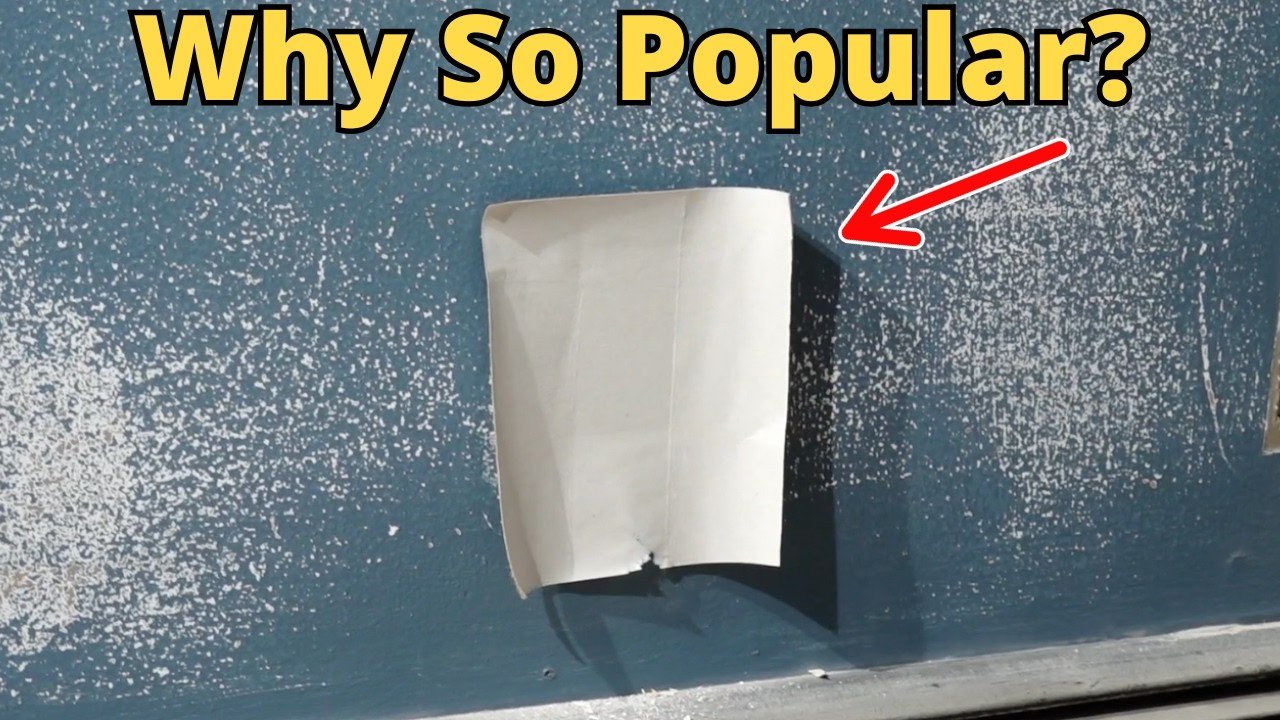
The California patch, also called a blowout patch, butterfly patch or hot patch, is described by Vancouver Carpenter as the most popular drywall patch in the world. Its trick is a piece of drywall whose paper is left overhanging on two sides, bedded in plenty of mud, and the video explains why it holds when done right and why it fails when it doesn't.
Cutting the patch
The opening only needs to be reasonably square, with some rough edges squared up. The patch piece starts about an inch and a half bigger in each direction. It is then cut about an eighth of an inch smaller per side, giving a quarter inch of slack overall. A tape measure can help but a tight fit isn't needed: "The mud is going to be what makes up the difference." The pieces are snapped and the unwanted board pulled off, leaving paper on the edges. A correct fit has an eighth to a quarter inch of movement top to bottom and side to side.
The longer paper flap goes over the bigger gap. He notes the Canadian board he used rips thin and flaky, whereas drywall he used at his brother's place in California stayed sturdy.
Mud and glue
The patch is set in hot mud thinned with water and thinned carpenter's glue. He adds the glue because the ProSet mud sold in Western Canada has poor adhesion, and he has had patches fall off painted walls.
Why the patch fails
He names two causes. The first is not getting enough mud into the joint to bind the pieces. The second is peeling the paper too aggressively, which leaves a blister void beneath it. His fix is to load mud along all the edges, with extra along the wider gap, push the patch flush, and give the paper a minute to absorb mud, since some has to soak into it. Then he wipes it out gently.
After taping, he says to leave it alone until dry. He calls coating immediately a mistake he made in his popular YouTube short, where it caused a bulge and let part of the patch float.
Leaving the box in
One opening has an electrical box and hardware left in place, which he expects to upset purists. Removing it would mean opening the wall, because it is attached to the drywall. He says a lot of mud makes it adequate and that the cable behind is disconnected: he isn't "burying live wires." The other method, a stick of wood behind and a screwed-in board under tape, is one he also uses and has filmed.
Coats, sanding and skimming
The 30-minute mud is set before the first coat, with the edges feathered. Neither patch showed blisters or bubbles when dry, even the one with the large void. A quick sand follows, then a tight skim over the painted surface, which bubbles badly. Skimming tight fills the bubbles, so a later coat that leaves some build-up won't bubble as badly.
Testing the strength
He says a quarter inch or more of mud behind the paper or tape won't blister and will be very strong. A mock-up in all-purpose mud shows the glue-up from the back. Pushing about as hard as someone leaning on a wall did not move it, and he says the board itself might break before the patch did.
Questions this video answers
What other names does the California patch have?
Blowout patch, butterfly patch and hot patch.
Why do these patches fail?
Too little mud in the joint to bind the patch, and peeling the paper back too aggressively, which leaves a blister void.
How much slack should the patch have?
Cut it about an eighth of an inch smaller on each side, leaving roughly an eighth to a quarter inch of movement; the mud makes up the difference.
Why add glue to the mud?
He adds thinned carpenter's glue to help adhesion because the ProSet mud he uses has poor adhesion, and patches have fallen off painted walls.
Should you coat the patch right after taping it in?
No. He says to leave it until dry, since coating right away can make the patch bulge and float.
How much mud prevents blisters?
He says a quarter inch or more of mud behind the paper or tape won't blister and will be very strong.
Explore related projects
Connected by the topic: Drywall