Five Ways to Fix a Sagging Door That Rubs the Jamb
The short version
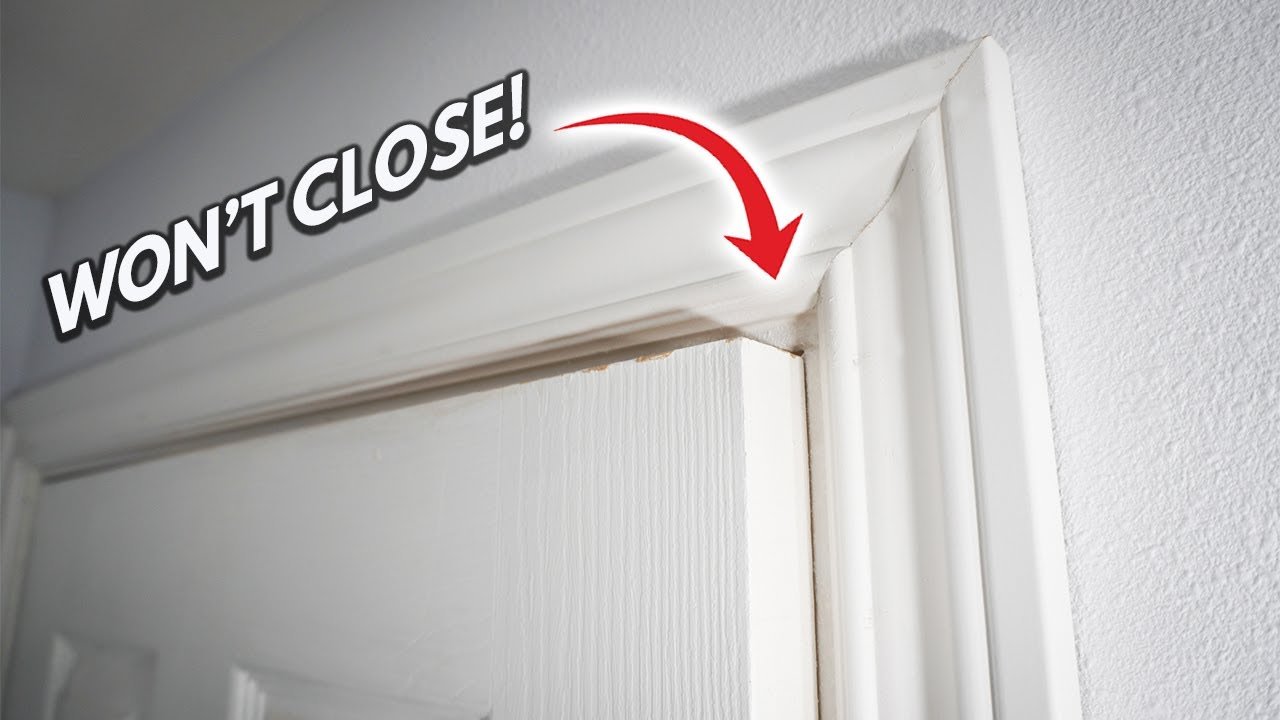
Five tips for a sagging door that rubs on the jamb and won't close. They cover realigning hinges with a wrench and shims, fixing loose screws with toothpicks, using a longer screw into the stud, recessing hinges with a chisel, and sanding as a last resort.
Full written account
A door that rubs against the jamb and won't close is usually traced to the top hinge, which gets most of the action when the door opens and closes. Fix This House walks through five fixes, ordered from simple to last resort.
Tip 1: Shim the gap and align the hinges
The middle and bottom hinges are left alone. The top hinge pin is knocked upward with a punch tool, though a nail or mini screwdriver works too. With the pin out, the hinge leaves come apart, and the misalignment is what makes the door rub against the jamb.
To set the gap, stack wooden shims, or hard cards such as credit cards, into it. Start at the bottom and push upward so the door wedges at the right distance and leaves an even space. A second option is an air shim pump placed under the door and pumped like a blood pressure bulb. A foot can work the pump while adjusting.
With the door held, a crescent wrench is used to nudge the hinge leaves into line, sometimes by about an eighth or a sixteenth of an inch. The wrench must face the right way. Too much force can make it slip and damage the door. Then the pin is tapped back in with a hammer, gently, so the mechanism doesn't break. Remove the shim and the door should close smoothly.
Tip 2: Check the hardware
Use a flathead or Phillips screwdriver to check every screw in the door and jamb. A screw that keeps spinning without tightening is loose. Remove it, and the hole will be wider than it should be. Toothpicks, wooden scraps or skinny shims can be pushed in with the butt end first, then broken off, building up material so the screw tightens again.
Tip 3: Use a longer screw
For a loose hinge, use a general purpose screw of about 2 1/2 in. and drive it so it contacts the stud.
Tip 4: Recess the hinges
More work: mark how far the door should be lowered, then chisel the hinge recesses so the hinges move down roughly a quarter or an eighth of an inch. This can be done at the jamb or on the door itself, for the top, middle and bottom hinges. The video only demonstrates the concept.
Last resort: Sand the jamb
If nothing else works, a belt sander can relieve a little material at the jamb or the top of the door. The presenter doesn't recommend it. It is dusty and may mean taking the whole door out.
Questions this video answers
Which hinge should I check first on a rubbing door?
Leave the middle and bottom hinges alone and look at the top hinge, which gets most of the action when the door opens and closes.
What can I use to hold the gap while adjusting hinges?
Wooden shims, or hard cards such as credit cards, stacked into the gap, or an air shim pump placed under the door.
How do I fix a loose screw hole on a door hinge?
Remove the screw, break toothpicks or skinny wooden shims off inside the hole to build up material, then drive the screw back in.
What screw can replace a loose hinge screw?
Use a general purpose screw of about 2 1/2 in. that reaches the stud.
Should I sand the door jamb with a belt sander?
Only as a last resort, after the other tips fail. The video does not recommend it, says it is dusty and a lot of work, and may involve taking the door out.
Explore related projects
Connected by the topic: Carpentry