Mudskip vs All-Purpose Mud: Testing a Level 5 Drywall Finish
The short version
A pro finisher tapes and skims one wall with traditional all-purpose compound while a beginner does the wall beside it with Mudskip, a powder compound that stays workable as it dries. The Mudskip wall is skimmed and primed by day three and painted on day four; the traditional wall takes six days. Under a spotlight, the pro can't see a difference in quality.
Full written account
Level 5 is the smoothest drywall finish there is: the whole wall gets a skim coat so the joints and the paper look identical under paint and raking light. It’s also the slowest to do by hand. In this test, Home RenoVision DIY’s pro finisher does a wall the traditional way while his partner, who has never skim coated, does the wall next to it with Mudskip, a powder compound sold in a bag the video prices at $30. The host says the video isn’t sponsored.
At a glance
- Skill level: Handy for the Mudskip side. A traditional level 5 skim coat takes real practice.
- Time: The Mudskip wall was skimmed and primed on day three and painted on day four. The traditional wall took six days.
- Cost: $30 for the bag of Mudskip powder, per the video. No other prices are given.
- Tools: Drywall knives (4 in. and 6 in.), a 2 ft skimming blade, a mixing bucket, sanding pole and a sander with 180-grit discs, a work light.
- Materials: Mudskip powder, premixed all-purpose compound for the traditional side, paper tape, PVA drywall primer, eggshell paint.
What the test showed, day by day
Day 1: taping. Mudskip is mixed from powder with water. After about 20 minutes it was stiff enough that a finger left no dent, while the all-purpose mud on the other wall was still wet. The beginner noticed something a pro doesn’t expect: the more he worked Mudskip, the fewer ridges he left.
Shrinkage. All-purpose mud shrank back over the screw holes and along the tape, leaving divots you could feel. Mudskip left a little extra material sitting proud instead. The pro says that a homeowner using regular compound needs about three coats over screws to get them flush, each one dry overnight. Putting wet mud over wet mud can peel the first coat off or trap moisture.
Day 2: wet on wet. The traditional side can’t do horizontal and vertical joints on the same day without tool marks. The Mudskip side could, and the pro tried it himself: every pass on regular mud left a mark, while the Mudskip smoothed into itself. Mudskip also claims up to 24 hours to re-wet and retool, and a thumb dent from earlier vanished when it was smoothed out.
Day 3: sanding and primer. The Mudskip wall was fully skimmed. Inside corners still needed a few ridges chiseled off. Mudskip says you don’t need to sand, but the pro recommends a quick light sand, the kind you’d give a wall between paint coats, rather than spending hours with a wet blade. The wall was primed and checked with a light the same day.
Days 4 to 6: the traditional wall. After three days of taping the traditional wall was ready for its full skim coat, sanding with 180 grit, a second skim after the prime check, and a final light check on day six.
The verdict. Under a spotlight the traditional wall had one missed sanding scratch. The pro couldn’t see any difference in quality between the two.
The product claims, checked
- Same-day wet-on-wet coats: confirmed. The pro called it the biggest difference, because a traditional skim coat starts to peel if you go back over it too soon.
- Level 5 in one day: true for a single flat surface. Inside corners are the catch. You could do a whole room in a day with an inside-corner tool, but you won’t get the crisp corner you get by doing one surface at a time.
- Minimal sanding: confirmed. The Mudskip wall needed about as much sanding as a wall between paint coats.
Safety: wear a mask anyway
The video says Mudskip’s sanding dust falls straight to the ground and calls that “no mask necessary.” We don’t agree. Any joint compound dust gets in your lungs and eyes, and the traditional side’s dust hung in the room for a long time. Wear a dust mask or respirator and eye protection whenever you sand compound, whatever the bag says.
Who this is for
If you’re finishing a basement or a renovation yourself and don’t have years at the knife, a compound that stays workable and lets you stack coats in one day takes a lot of the art out of it. If you already finish drywall well, the gain is speed, mostly on skim coats.
When to call a pro
For a high-gloss paint or strong raking light (big windows, a long hallway), a professional finisher is still the surest way to a level 5 wall.
Related
- Drywall repair: which patch to use for which size of hole, our guide to choosing a patch.
- How to patch small, medium and large drywall holes with hot mud, from the same channel, and more in the Drywall system.
Questions this video answers
Does Mudskip need sanding?
The video says a quick light sand removes ridges, and the host recommends it rather than trying to smooth everything by hand.
Can you apply coats wet on wet?
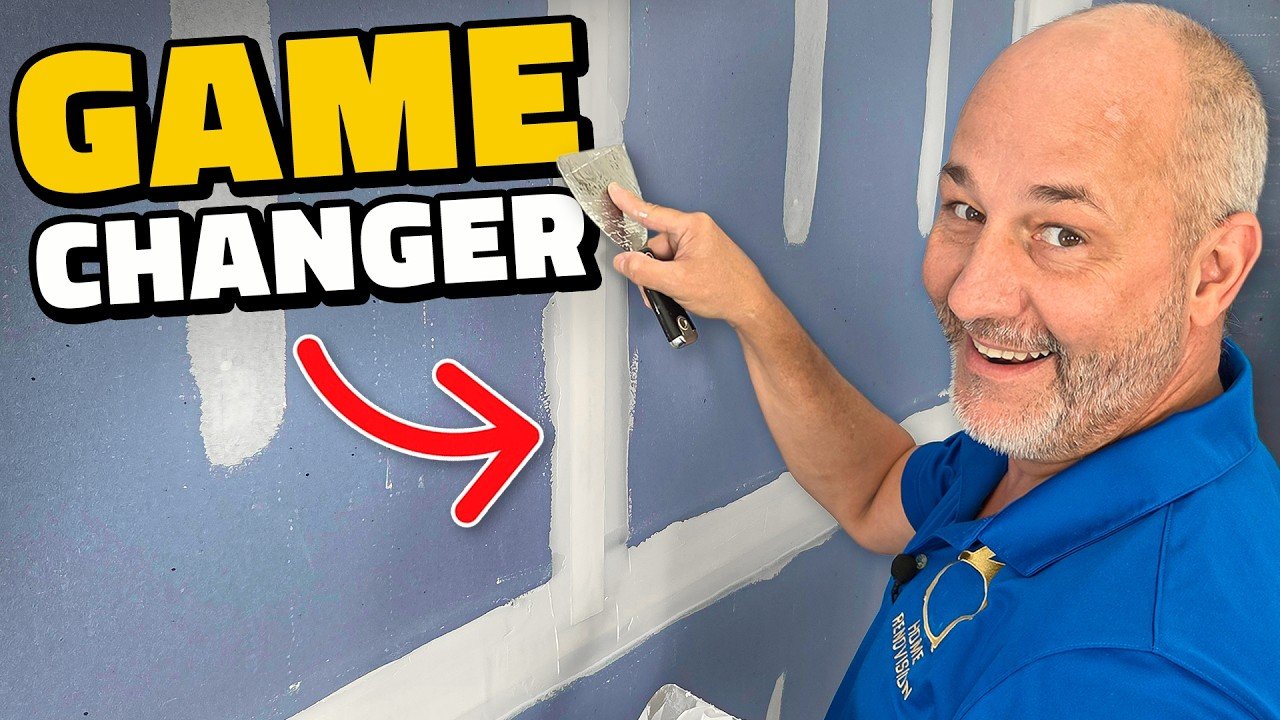
Yes, in the test the Mudskip side took same-day wet-on-wet coats, which the host called a game changer.
How much does Mudskip cost?
The video mentions a $30 bag of powder.
Was the finish as good as traditional mud?
Under a light, the host could not see a difference in quality between the two sides.
Explore related projects
Connected by the topic: Drywall