Choosing Corner Bead: Paper, Vinyl, L-Edge, Tear-Away and J Trim
The short version
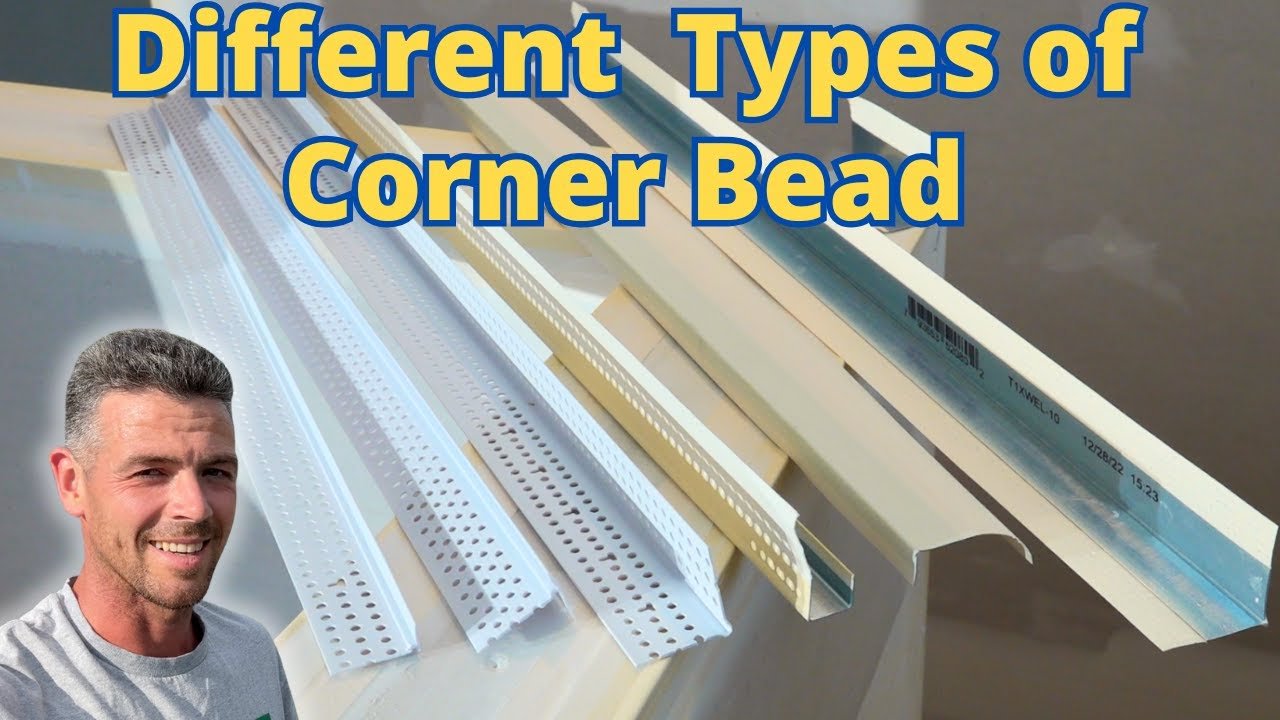
A drywall finisher compares seven types of corner bead and what each is for: paper-faced tape-on, vinyl, off-angle composite tape, L-edge, tear-away bead, tear-away flat and J trim. He explains why he considers steel bead obsolete, how to install each type, and why plastic trims need a sticky first coat of taping mud or all-purpose heavyweight.
Full written account
A drywall finisher lays out seven corner bead types on the bench, each with its own purpose, and leaves out steel bead entirely. He considers steel corner bead obsolete, though he notes some areas offer nothing else and that he thinks Australian steel beads are far superior to those sold here. In parts of the US, especially the middle of the country, he says steel is still loved.
Paper-faced tape-on bead
This is the most common type: a steel bead with a paper flange. The bead width he uses most often is 7/8 in. Extra-wide versions, a little under a quarter inch bigger, cover bigger gaps, such as drywall left back by accident or gaps between overlaps of up to 3/4 in. Cheap big-box versions can have a bead as small as 5/8 in., while drywall-supply beads are better quality. One that is almost 1 in. wide is probably too big for most uses because the mud has to go out further to hide it.
He installs it with taping mud and a knife, or all-purpose heavyweight. For 10 to 20 beads he works by hand; on a job with many beads he uses a corner bead hopper, loaded with mud, which coats the bead as it passes through. He calls paper-faced bead the industry standard in North America. Paper cracks less and installs faster, and is slightly more expensive in materials, but he says the install time savings and absence of callbacks make up for it.
Vinyl bead
Vinyl bead goes on with spray adhesive, or a staple every 2 in., which he finds too much work. He uses it only to match arch bead, which has the same round profile and is made by the same company (a Trimex bead). He does not see it as a viable answer for wet areas, since the drywall and joint compound would turn to mush anyway.
Off-angle corner tape
For angles that aren't 90°, he uses an adjustable composite corner tape of paper and plastic, which works inside or outside. He uses it in stairwells. On 90° corners it tends to wave rather than stay straight.
L-edge, tear-away bead and tear-away flat
The raised nose of a bead lets mud bridge to the flange and hide it. The L-edge has a nosing on one side and is flat on the other, and hides an unfinished drywall edge. Used against wood or brick, it fills with mud, mud spills onto the other surface and a hairline crack results.
For butting against another surface, he uses tear-away bead, which has two finished sides and a protective strip that keeps mud off the neighbouring material. The strip pulls off afterwards, leaving an L-edge. It needs spray adhesive and about a quarter inch of space, though only about an eighth is needed. Tear-away flat has no second finished edge and can be butted tight, which suits beams and brick. He hasn't seen these in big-box stores.
J trim
J trim gives three finished edges and works only with access to all three sides of the drywall. He sees it mostly around bifold door openings and attic openings. He prefers tape-on over nail-on steel J trim, because nail-on legs are short and often leave too little wood to nail into.
First coat over plastic
On any plastic trim, the first coat should be taping mud or all-purpose heavyweight, a mud with a lot of glue. He doesn't think all-purpose light is adequate over the glossy surface.
Questions this video answers
Why doesn't he use steel corner bead?
He considers steel corner bead obsolete; he says paper-faced bead cracks less and installs faster, and is slightly more expensive in materials but saves time and callbacks.
How is paper-faced bead installed?
With taping mud or all-purpose heavyweight and a knife; for large jobs he uses a corner bead hopper.
How are vinyl and tear-away beads attached?
Vinyl bead needs spray adhesive (or a staple every 2 in.); tear-away bead also uses spray adhesive.
When should you use tear-away bead instead of L-edge?
When the drywall butts against another surface like brick or a beam, because the L-edge fills with mud and can hairline crack, while the tear-away strip keeps mud off the other surface.
How much space should be left for tear-away bead?
He leaves about a quarter inch, though only about an eighth is needed. Tear-away flat needs no gap.
What mud should go on plastic trim first?
Taping mud or all-purpose heavyweight; he does not think all-purpose light is adequate.
Explore related projects
Connected by the topic: Drywall