Kitchen Subway Backsplash: Tools, Cuts and Mortar Tips Explained
The short version
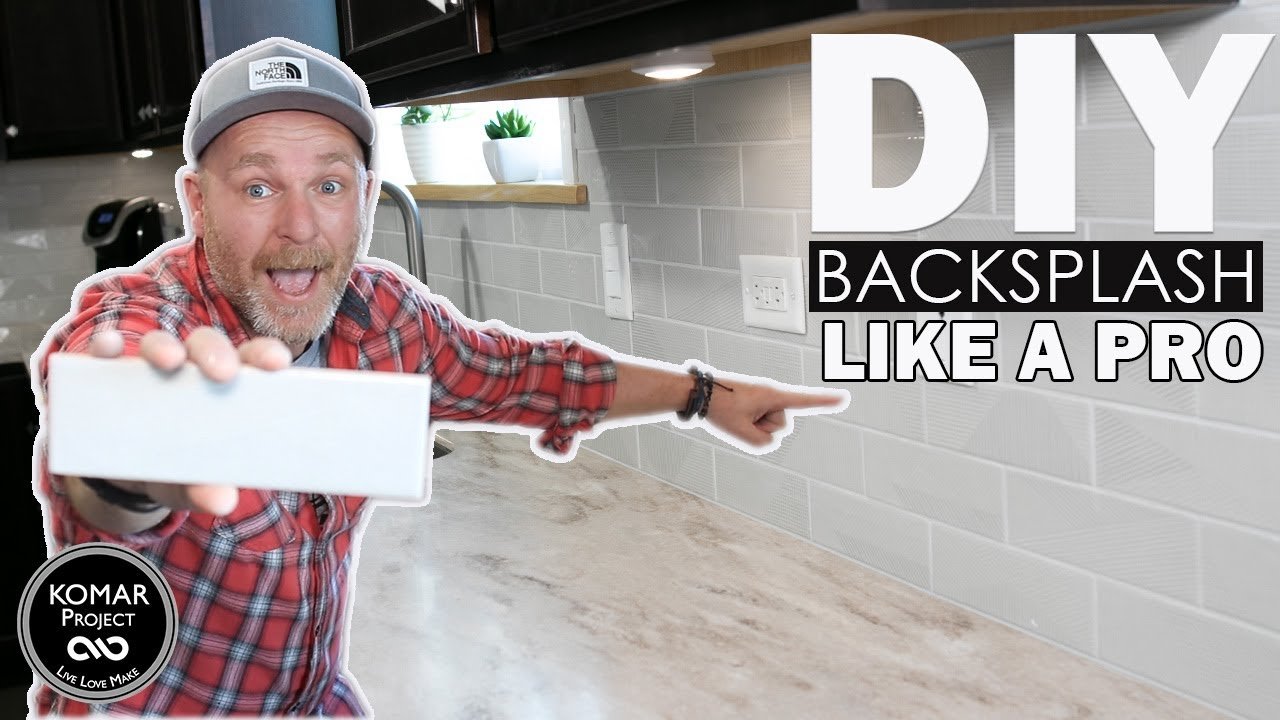
Komar Project replaces a builder-grade kitchen's old backsplash with 2.5 x 8 inch textured subway tile. The video covers removing the old backsplash, turning off the breaker and pulling the outlets, making straight, L-shaped and U-shaped cuts with a wet saw or an angle grinder, and setting the tile in pre-mixed mortar. It ends with unsanded grout, repeated sponge wipe-downs and caulking the top and bottom. The creator puts materials at around $500 and the labor at two days.
Full written account
A builder-grade kitchen gets a new look from 2.5 x 8 inch textured subway tile in a Komar Project backsplash install, which the creator puts at roughly $500 in materials and two days of labor. He calls the subway tile pretty much impossible to screw up for a first-time tiler.
Prep: old backsplash, caulk and outlets
The old backsplash matched the countertops and came with the house. After finding the stud locations, he pried it away from the wall at those spots with a pry bar and hammer. Old caulk came off with a scraper fitted with a razor blade. He covers the countertop with cardboard or plastic because the work is messy.
Before pulling the outlets out to make room for the tile, he turned off the breakers. Every outlet comes out so none touches the box, which could cause a short. His advice is to call an electrician if working around outlets is uncomfortable. He also removed the window sill, to replace it with a custom wood one he made; for a backsplash alone, that is unnecessary.
Tools and cuts
The list is a wet saw, a square, a Sharpie, a notched trowel (3/8 inch in his case), a rubber grout float and a sponge. A wet saw works like a table saw with a sliding table: the tile lies on the table and the table slides through the blade. Sharpie shows up on polished tile and wipes off, where pencil barely shows.
For repeated straight cuts, he lines the mark up to the blade and clamps scrap wood to the table as a stop. An L-shaped cut, used around outlets, stops at the perpendicular line; because the blade is round, he lifts the tile while the blade spins to reach the corner. For a U-shaped cut he makes end cuts, then cuts roughly every eighth of an inch between them and tilts the tile up to remove the material. An angle grinder with a diamond blade does the same work with the waste hanging off the edge, and it can make curved cuts, useful around shower drains and controls.
Setting the tile
He starts at the outside corner where the cabinets show so there is a full tile there, and lays the tile out first to avoid a thin sliver at the top or bottom. He uses pre-mixed mortar from a hardware store because he dislikes mixing powder. Spacers go under the first row, which is a full tile, with a half tile starting the second row. He puts the factory edge on the outside where it shows. Small areas get back-buttered tiles. At outlets, he cuts the tile to where the drywall and the box end.
To judge the mortar, he holds the trowel at 90 degrees to the wall and scrapes all the way to it. Floating the trowel without reaching the wall leaves too much mortar.
About four hours after the first side went up, he pulled the spacers because the mortar was drying. Where the stove was pulled out, he screwed a ledger of scrap plywood under a level across the two cabinets so the tile runs across the gap.
Grout and finish
Spacers of 1/8 inch or smaller call for unsanded grout, so he used light grey Silver Bullet, mixed between the consistency of ketchup and peanut butter. After 30 minutes he began sponging, and it took four wipe-downs to clear the haze. He caulked the top and bottom with grout caulk, reinstalled the outlets with 1-1/4 inch #6 screws, added the cover plates and fitted the new live edge window sill. The whole job took a weekend.
Questions this video answers
How much did the backsplash cost?
The creator says about $500 in materials and two days of labor.
Do you need a wet saw?
No. An angle grinder with a diamond blade can make the cuts, including curved ones, and a score-and-snap cutter at around $20 can also do the job.
Which grout should you use?
Spacers of 1/8 inch or smaller call for unsanded grout. The creator used unsanded Silver Bullet grout with 1/8 inch spacers.
How do you know you have enough mortar?
Hold the notched trowel at 90 degrees to the wall and scrape all the way to the wall, so the mortar ridges stand out evenly.
How is the grout cleaned off?
Wait about 30 minutes, then wipe with a tile sponge. It took four wipe-downs to remove the haze.
What about the electrical outlets?
Turn off the breaker first and pull the outlets out of the wall. Call an electrician if you are not comfortable doing it.
Explore related projects
Connected by the topic: Tile