Paint a Room: Top-Down Order, Cutting In and Roller Technique
The short version
A Lowe's walkthrough of painting a room: estimating paint, painting top down from ceiling to walls to trim, cutting in with a brush, rolling in a zig-zag pattern, taping trim, and cleaning up brushes and rollers. It gives specific tips such as boxing paint, working in 4-foot sections and laying off.
Full written account
Paint coverage sets the plan for a room: one gallon covers about 400 square feet, and running out in the middle of a project is the thing to avoid. Lowe's lays out a basic method that starts with prep and moves from the top of the room down.
Estimating paint
For each wall, multiply length by height to get square footage. For trim, use the length in feet and .5 for the width. If more than one gallon is needed, the gallons are mixed together in a 5-gallon bucket, a step called boxing, so the color stays consistent.
Order of work
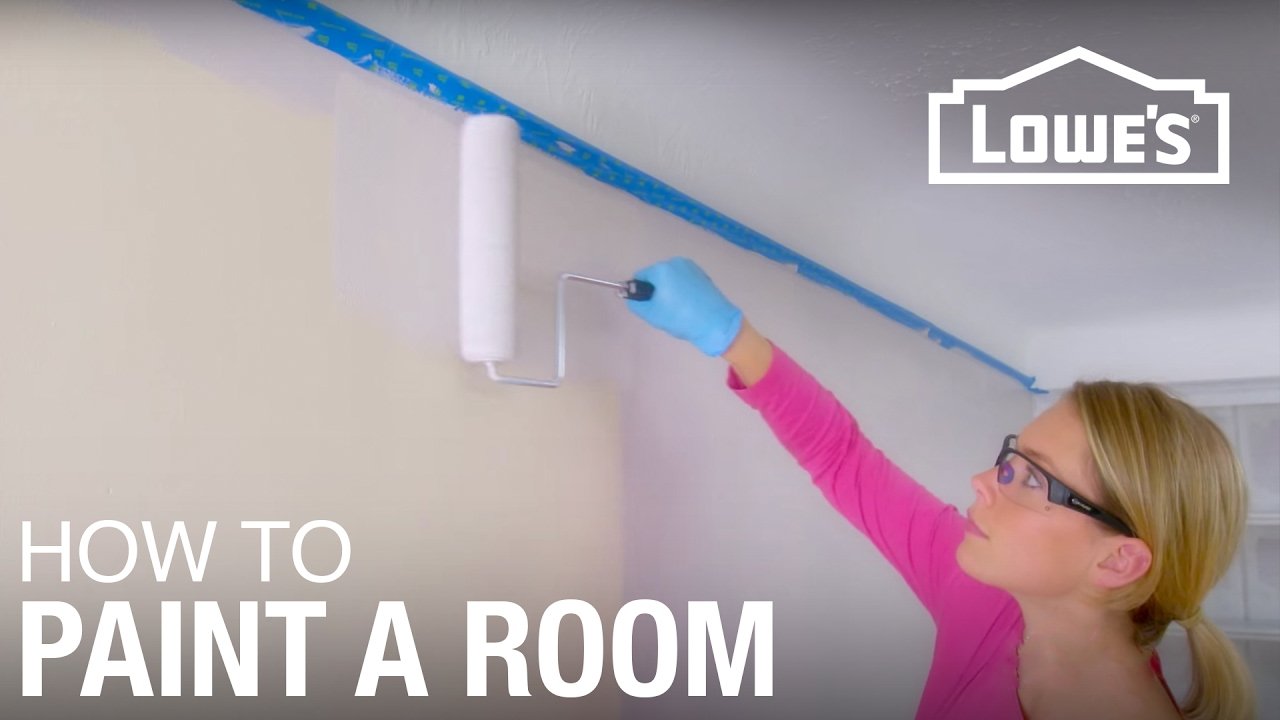
Work from the top down: the ceiling, then the walls, and finish with the trim. The ceiling is painted much like the walls, brushing the edges and then using a roller. Rolling too fast causes spatter. Once the ceiling is dry, the edges can be masked with painter's tape before starting the walls.
Cutting in
A smaller cut bucket works well for the edges. Dip the brush about a third of the way into the paint and tap it against the sides rather than scraping. Hold the brush like a pencil and use smooth strokes, feathering out the edges to prevent runs. A little paint on the trim doesn't matter since the trim is painted later.
Rolling the walls
A bucket needs a roller grid, and a pan works best with a liner for easy cleanup. Dampen the roller cover with a wet rag to help it load, then dip just a little way into the paint and roll a few times to even it out. Don't submerge the roller.
Starting near the edge, roll the paint on in a zig-zag pattern, and roll in several directions for good coverage, especially on textured walls. Don't press and squeeze the roller to get more paint out; reload instead. Work in 4-foot sections, top then bottom. Turning the roller sideways gets close to the ceiling and baseboards. Lightly rolling down over painted areas to remove buildup and runs is called laying off. Paint one wall at a time for each coat, with two coats for the room.
For a break, cover the bucket and wrap the brush and roller. They can go in the fridge if they will be used the next day.
Trim and cleanup
After the walls are completely dry, run painter's tape along the wall-trim edge and press it down with a plastic putty knife. After painting, cut along stuck spots with a knife and remove the tape shortly after the paint is dry to prevent peeling. Some tapes have specific removal times, so check before pulling it off.
For latex paints, run the brush under water, clean the bristles with a cleaning brush, work in some hand cleaner, rinse again and reshape the brush. A 5-in-1 tool cleans roller covers, which are stored upright.
Questions this video answers
How much paint do I need?
One gallon covers about 400 square feet.
How do I figure out square footage?
Multiply length times height for each wall. For trim, use the length in feet and .5 for the width.
What order do I paint in?
Work from the top down: ceiling first, then walls, then trim.
What if I use more than one gallon?
Mix them together in a 5-gallon bucket, called boxing, to keep the color consistent.
How many coats?
Two coats for the room, painting one wall at a time for each coat.
When do I remove painter's tape?
Remove it shortly after the paint is dry to prevent peeling, and check any removal time the tape maker recommends.
Explore related projects
Connected by the topic: Paint a room