Latex, Silicone or Butyl? Matching Caulk to the Joint
The short version
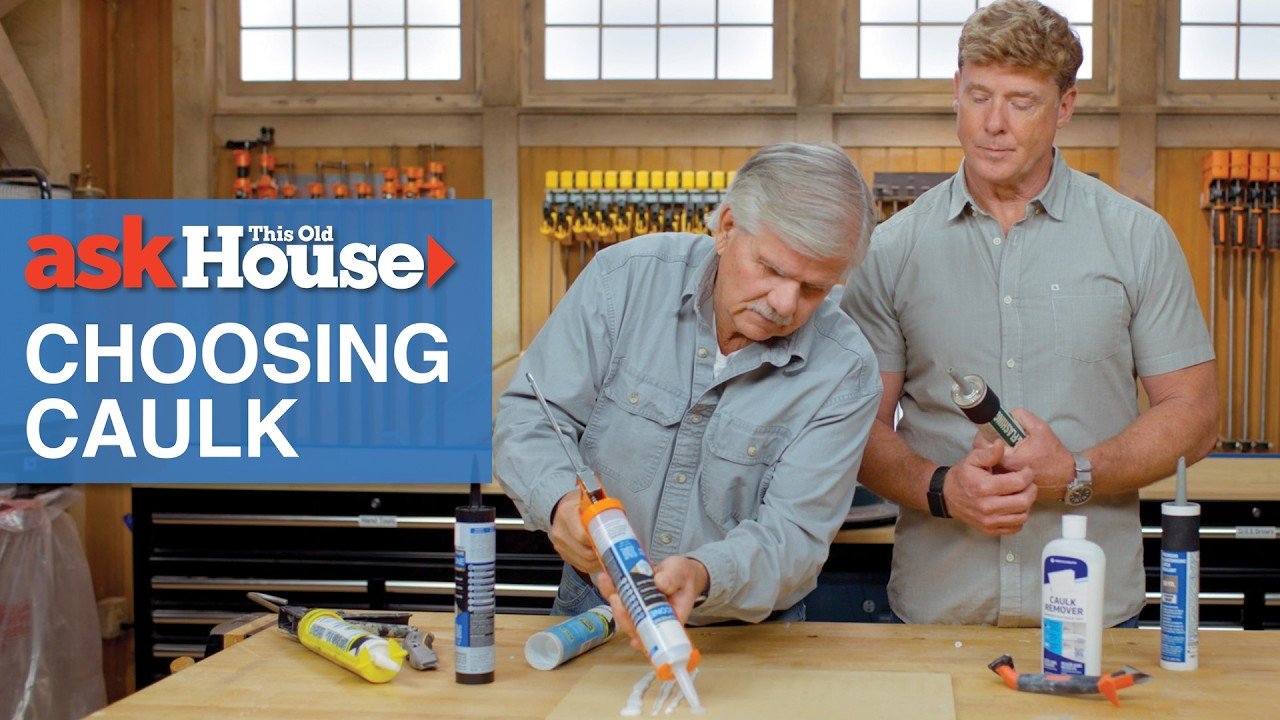
General contractor Tom Silva shows host Kevin O'Connor the main types of caulk: latex, acrylic with silicone, 100% silicone and butyl. He explains where each is used, why a failed joint must be cleaned off before recaulking, and how he opens and applies a tube.
Full written account
Tom Silva, a general contractor, says you cannot caulk over a failed joint: new silicone "will look good for about an hour," but it will not stick. That rule frames his walk-through of caulk types with host Kevin O'Connor, who notes the aisle offers "an endless selection."
Latex for interior joints
A painter will use latex caulk on interior walls, Silva says. It goes around casing, trim and baseboard, wherever a wall meets a transition such as a molding. Latex fills the gap and is paintable. He likes primer on the wall before caulking because it gives the caulk more adhesion.
Acrylic with silicone outside
For exterior gaps or holes that will be painted, Silva would go to an acrylic caulk with silicone added. The acrylic brings adhesion capability, and the silicone adds water protection that plain latex would not give. Exterior caulk sees more expansion and contraction, so it needs to flow and move with the joint.
100% silicone for wet areas
Silva only likes 100% silicone. It is pricey and comes in many colors because it cannot really be painted. He recommends it where a shower wall meets the tub, since that joint must stick well and be waterproof so water does not get behind the wall.
Butyl for metal and movement
For connecting two pieces of metal, such as on gutters, Silva points to butyl. He says it is used a lot in the commercial industry and should be used more. It is a rubber sealant that stays soft for a long time, though it can be messy. He also uses it for a long expansion joint in a tile floor: instead of grout, he caulks it in a color matching the grout. Butyl adheres to the tile and bends and stretches as the floor expands and contracts.
Prep and application
To redo a failed joint, the old material has to come off completely. Around a tub, Silva scrapes it clean with a razor blade, then rubs it with a cleaner. Sometimes he uses lacquer thinner or denatured alcohol. The joint must be dry before a new coat goes on.
The small hole on a caulk gun has a cutter: pull the trigger, put the tube tip in the hole, and it cuts the tip off. Some people pull the bead and some push it. Silva always pulls. He controls flow by easing off the trigger, and pushing drives caulk into a crack.
Questions this video answers
What caulk works for interior trim and baseboard?
Latex caulk, because it fills the gap and is paintable. Tom Silva uses it around casing, trim and baseboard.
What does Tom Silva use outside for gaps that will be painted?
An acrylic caulk with silicone added. The acrylic gives adhesion, and the silicone adds some water protection.
What caulk goes where a shower wall meets the tub?
100% silicone, which he says is pricey, comes in many colors and can't really be painted.
What is used to connect metal pieces such as gutters?
Butyl, a rubber sealant that stays soft for a long time. He says it can be messy.
Can you caulk over old failed caulk?
No. A failed joint can't be caulked over because new silicone won't stick. Remove the old material completely, clean, and let the joint dry first.
How does Tom prep a tub joint?
He scrapes it clean with a razor blade, then cleans with a cleaner, lacquer thinner or denatured alcohol. The joint has to be dry before the new coat goes on.
Explore related projects
Connected by the topic: Carpentry