Fix a Sticking Door: Chalk Test, Tight Hinges and Light Sanding
The short version
Aaron Massey of Home School explains three causes of a sticking door: humidity swelling, loose hinges, and a house settling. He shows how to find the rubbing spot with chalk, tighten hinges, and sand or plane the door a little at a time with it left on its hinges. He finishes with touch-up paint and warns about possible lead-based paint in older homes.
Full written account
Aaron Massey, host of the DIY show Home School, rates a sticking door as a fairly easy project. He lists three reasons a door sticks: humidity in the air that makes the door swell and hit the jamb, loose hinges that let it sag, and a house that has settled over time, especially an older one, shifting the door frame.
Find where it sticks
On some doors the spot is obvious because paint is chipping or stain is worn off. If not, rub colored chalk along the edge of the door and close it. Some chalk transfers to the door frame and shows the problem area.
Check the hinges
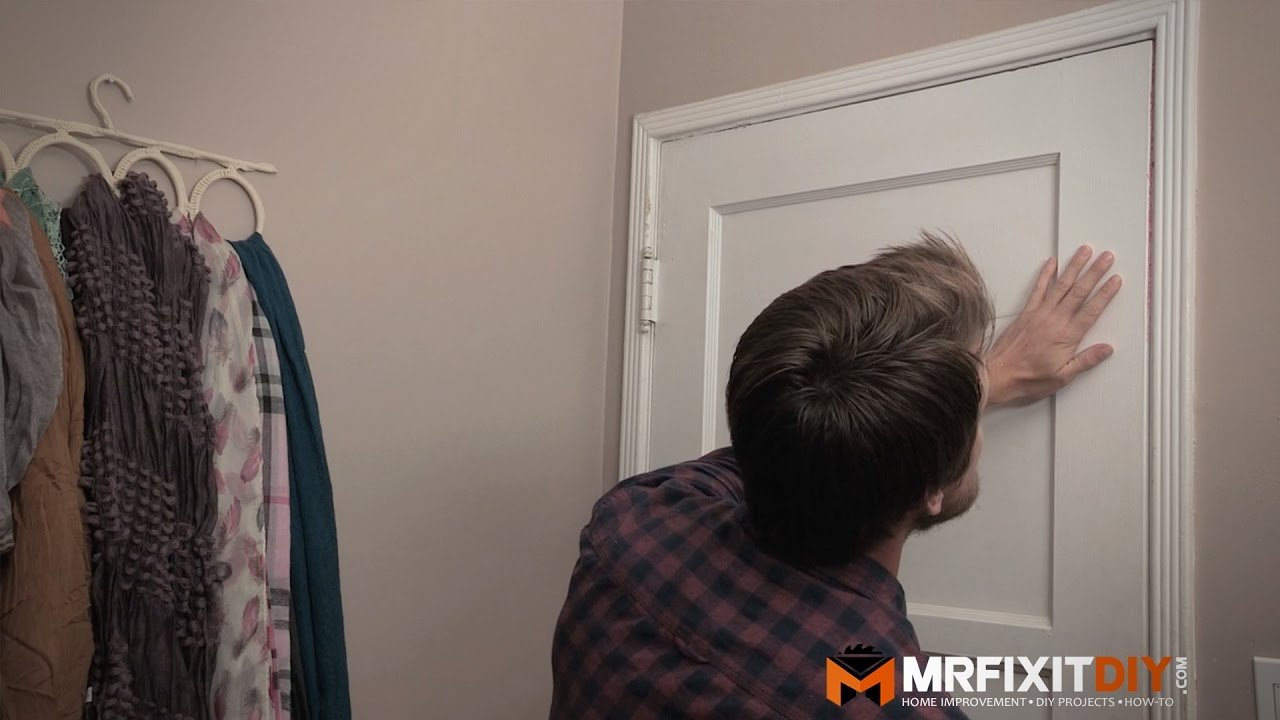
Hold the door with both hands and push it against the hinge side. If the hinges flex, they are loose, and tightening them may solve the problem. In older homes this may mean removing several coats of paint from the hinges. Score around the hinges before chipping so the paint doesn't come off beyond the area intended.
Chipping old paint in an old house calls for protection. Keep small children and pets away, because the paint underneath could be lead-based.
If a hinge screw won't tighten, try a longer screw. If that doesn't work or isn't an option, cover a toothpick in wood glue, put it in the hole and clip off the end. After a few hours, try a new screw. The glue and toothpick expand a little and give the screw enough traction.
Sand the problem area
If the hinges are tight and the door still sticks, moisture or a settled frame may be the cause. The recommended fix is to sand the problem area, using a sanding block, sandpaper, a power sander, or a hand or power planer. Take off only enough for the door to close.
He advises against removing the door. Sand a little, try closing the door, then sand a little more, until there is enough clearance. Taking the door on and off repeatedly only creates more work, so he leaves it on and cleans up afterward. The last step is touch-up paint.
Questions this video answers
Why does a door stick?
Humidity swelling the door so it hits the jamb, loose hinges that let it sag, or an older house settling and shifting the door frame.
How do you find where the door is sticking?
Rub colored chalk along the door edge and close the door; chalk transfers to the frame where the door rubs. Chipped paint or worn stain can also show it.
How can you tell if hinges are loose?
Push the door against the hinge side with both hands; if the hinges flex, they are loose.
What if a hinge screw won't tighten?
Try a longer screw, or put a toothpick covered in wood glue in the hole, clip off the end, and try a new screw after a few hours.
What if the hinges are tight and the door still sticks?
Sand or plane the problem area a little at a time, leaving the door on its hinges, then touch up the paint.
Explore related projects
Connected by the topic: Carpentry