Door Won’t Latch? Three Fixes From Hinge Screws to Washers
The short version
Three fixes for an interior door that won't latch because the latch and latch plate are misaligned. They start with tightening hinge screws and swapping in longer ones, then filing the latch plate, and finally spacing the hinges out from the jamb with washers.
Full written account
A solid wood interior door with glass panes would not latch in a home the owner had held for a couple of months. The cause was a latch that sat lower than its latch plate. Three fixes work up from simple to more involved.
Why the latch and plate stop lining up
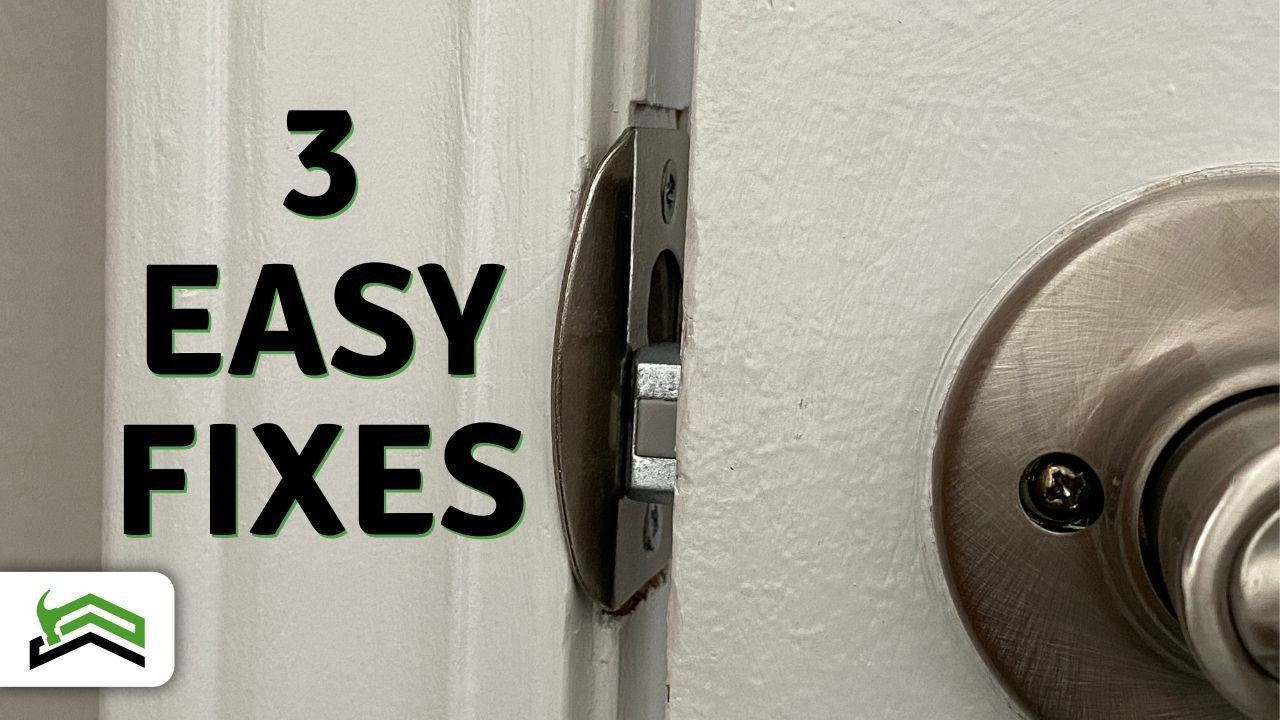
Over time, whether from the home settling or hinges getting loose, the latch and latch plate can become misaligned. The door then cannot be closed and latched properly.
Fix 1: tighten the hinges
The first check is the hinge side. Grab the door, move it side to side and look for play in the hinges. Then tighten each screw with a Phillips screwdriver. On this door the bottom screw kept turning because it was stripped out. The original screws were only 3/4 in. long, small enough to strip easily.
The replacement is a 2-1/4 in. screw from a pack that also holds 1 in. screws. It needs no pilot hole and can go into the existing hole. Because it passes through the jamb into the 2×4 frame behind, it holds better. All hinges should be tight before any work on the latch side, otherwise play will work loose again and undo the adjustment.
Fix 2: file the latch plate
To see where the latch hits the plate, put pipe sealant (caulk also works) on the bottom of the latch. Retract the latch slightly, close the door fully, touch the latch to the plate and move it back and forth. The mark shows where they interfere.
A hand file with a concave surface matches the bottom of the latch plate. Work in one direction with single passes. This takes time, but it may give enough clearance. On this door some wood needed removing along with the metal, but the interference was too great to file all the way down.
Fix 3: reposition the door in the frame
First assess the gaps. This door had about 3/8 in. at the top and 1/4 in. on the latch side, where roughly 1/8 in. is usual. On the hinge side it was tight, under the usual 1/16 in. Because the latch was lower than the plate, the latch side needed to move up, which rotates the whole door. That is why there must be room at the top, and why one hinge adjustment must not cause the door to hit the jamb.
The lower hinge pin came out with side cutters gripping the top of the pin and a tap from below. With the middle pin also out, only the top hinge pin stayed in. The latch side was shimmed so the door did not sag. Tapping the shims moved the latch up until it passed through the plate.
The space needed was more than bending the hinge could provide, so the alternative was washers. Each washer is 1/16 in. thick, and two behind a hinge plate space it 1/8 in. from the jamb. The plan was 1/8 in. at the bottom and middle hinges and perhaps 1/16 in. at the top.
Painter's tape held the washers over the screw holes. The tape was then trimmed to leave less cleanup. The screws are 2-1/4 in. in the middle and 1 in. at the others, replacing the 3/4 in. screws. They were tightened by hand rather than with a cordless drill, to avoid over-tightening and stripping. After a final tightening, the door latched.
Questions this video answers
Why does a door stop latching?
Over time the latch and the latch plate can become misaligned, whether from the home settling or from hinges getting loose.
What is the first fix to try?
Tighten the hinge screws first. A stripped screw can be replaced with a 2-1/4 in. screw that goes through the jamb into the 2×4 frame behind it.
How do you find where the latch is hitting the plate?
Mark the bottom of the latch with pipe sealant or caulk, close the door and touch the latch to the plate to see where it hits. Then remove material from the latch plate with a hand file that has a concave surface.
How are washers used to adjust the door?
Two 1/16 in. washers behind a hinge plate space it out from the jamb by 1/8 in. This repositions the door so the latch lines up with the plate.
What gaps does the video aim for around the door?
The video gives about 1/8 in. on the latch side and about 1/16 in. on the hinge side.
Explore related projects
Connected by the topic: Carpentry