Slow Flushing Toilet: Clog and Mineral Buildup Fixes
The short version
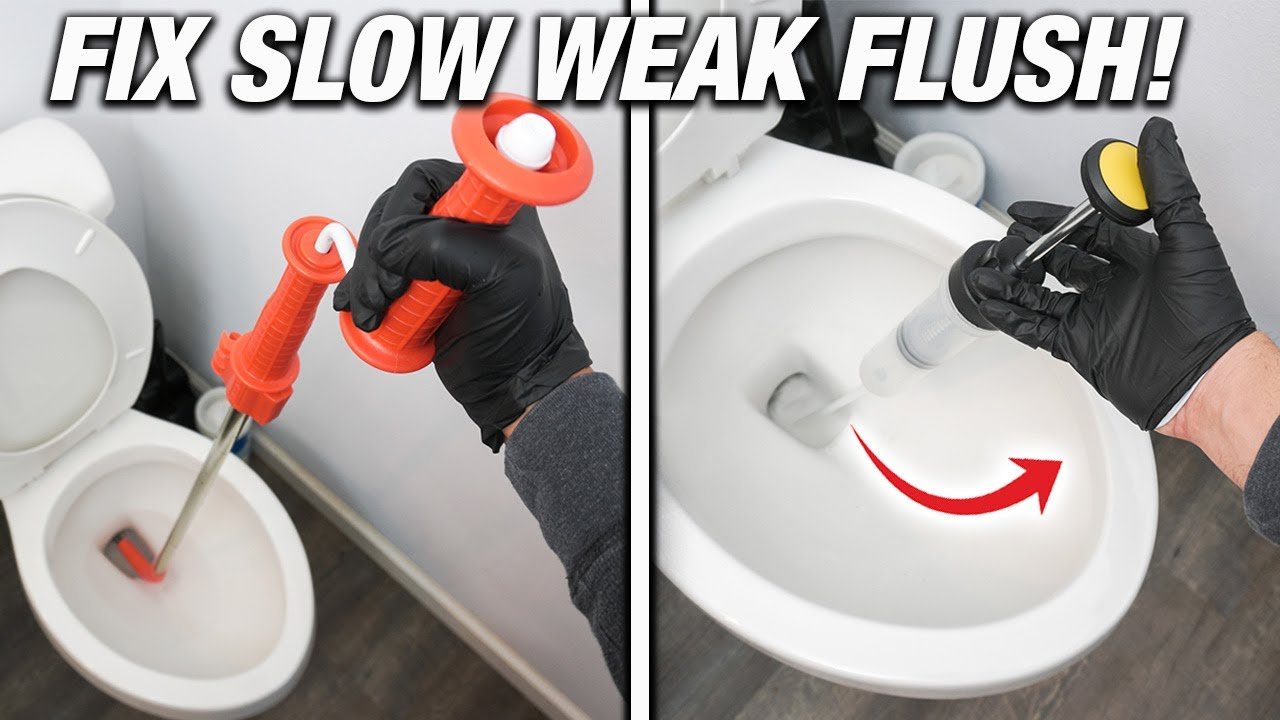
Four approaches to a slow, sluggish toilet are shown: plunging, a closet auger, draining the bowl to find and fish out a clog with a mirror, flashlight and coat hanger, and clearing hard-water mineral buildup from the siphon jets with an Allen wrench or coat hanger followed by a diluted bleach pour into the overflow tube.
Full written account
A toilet that still drains but flushes slowly usually has one of two problems, according to Fix This House: a clog sitting on top of the trap that lets a little water through, or calcified mineral buildup from hard water. Four fixes are shown, from simplest to most involved.
Plunger and closet auger
The first fix is a toilet plunger. The inner portion is pulled out so the cup forms a bell or mushroom shape, then it is fitted over the opening and given a few pumps. Gloves are worn even with a brand-new plunger.
If that fails, a closet (toilet) auger comes next. Its 3 ft cable is described as well over enough to reach up to the trap and down. An ergonomic extension post and a rotating handle let the user stand while feeding the cable through the hole in the bowl. The handle is turned slowly while the snake grinds on the blockage, then the cable is retracted and dried. The auger can leave black marks on the porcelain that look like scratches; these are metal marks and can be scrubbed off with a scuff pad.
Draining the bowl and looking for the clog
The third method starts by removing the water from the bowl with a paper cup, a sponge or a large syringe. A little standing water at the bottom is fine. A pocket mirror and flashlight are used to see up into the trap, ideally with a second person holding the flashlight and bouncing light off the mirror. A wire coat hanger with the end cut off and a small hook bent in it is used to poke at and fish out whatever is blocking the trap.
Mineral buildup in the siphon jets
If all three methods fail and the toilet still flushes slowly, the cause is probably mineral buildup rather than a clog in the trap. Hard water leaves calcium on the siphon jets, the small holes under the rim where water comes out to create the swirling flush. A pocket mirror and flashlight show where the holes are.
The holes are reamed one at a time with an Allen wrench, starting with the smallest size and moving up. The hook on the wrench helps with maneuvering. The work is time consuming, and the porcelain is fragile: a chipped hole could cause more blockage. A bent piece of coat hanger can also scrape around the underside of the rim and clear the other hole at the bottom with a circular motion.
Bleach treatment
After reaming, the tank lid is removed and a mixture of one part household bleach to ten parts water is poured into the tank's overflow tube. After a couple of minutes it is flushed, which should help clear the remaining mineral buildup.
Questions this video answers
Why does a toilet flush slowly?
A clog sitting on top of the trap that still lets a little water pass, or mineral buildup from hard water in the siphon jets under the rim.
How do you use a plunger on a slow toilet?
Pull out the inner portion of the plunger so it forms a bell shape, fit it over the opening and give it a few pumps.
How long a cable does the toilet auger have?
The video says a toilet auger with a 3 ft cable is more than enough to reach up to the trap and down.
How do you clear mineral buildup in a toilet?
Ream the siphon jet holes under the rim with an Allen wrench or a bent piece of wire coat hanger, then pour a mix of 1 part household bleach to 10 parts water into the tank overflow tube.
What is the risk when cleaning the siphon jets?
Porcelain is fragile, and chipping a hole could cause more blockage.
Explore related projects
Connected by the topic: Plumbing