Latex, Solvent, Polyurethane or Silicone: Choosing the Caulk
The short version
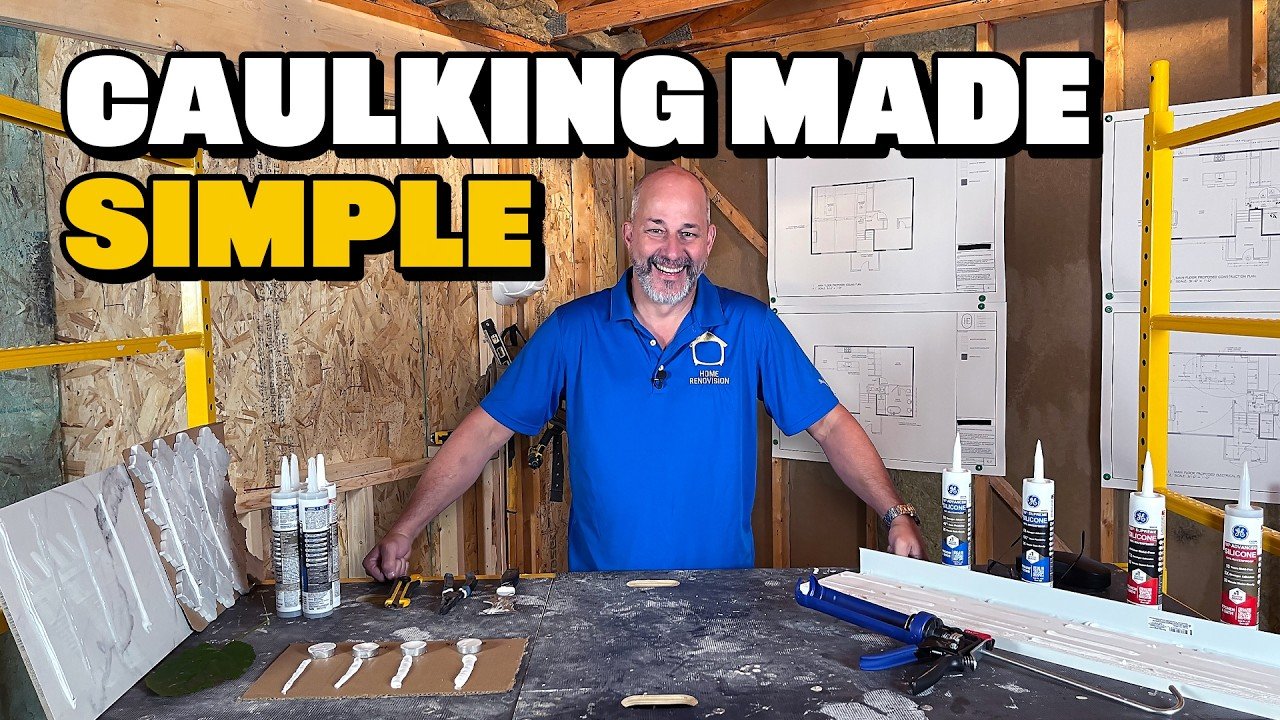
A contractor compares the four most common caulking types: latex, solvent-based, polyurethane and silicone. A GE product specialist helped with freeze and stretch tests. Silicone, especially a premium formula, is recommended as the most versatile choice, and a caulk gun with a low and high torque setting is suggested.
Full written account
A contractor running the Home RenoVision DIY channel sets out the four most common types of caulking, with help from John, a GE product specialist who is a chemist. The conclusion: silicone is the most versatile and best performing of the four, and a freeze test shows why.
The four types
Latex is, in his opinion, only for indoor use, such as around trim and doors. It is simple to use, safe and has little odor. The downsides are that it hardens and cracks, goes yellow and collects dirt.
Solvent-based caulk bonds well and stretches well but doesn't return to its original shape, so in a four-season climate the joint stays stretched. It doesn't collect dust and is waterproof. It can't be tooled, so it makes a mess if you put a finger in it. He warns never to use it inside to seal a shower; when he did, the owners couldn't use their bathroom for a month.
Polyurethane is good outdoors and bonds well and is paintable. It collects dust and dirt, so unpainted it leaves ugly gray lines.
Silicone is permanently flexible and doesn't shrink. It is mold resistant, which makes it his first choice for wet applications such as tile showers. It is UV resistant, stays flexible through temperature swings and bonds to porous and nonporous surfaces.
Silicone grades
Silicone comes in basic, advanced and premium formulas with different chemistry. He always chooses premium for performance and durability. New labels are coming to stores over the next few months to make the right product easier to identify.
Freeze tests
The products were sprayed with coolant spray and then stretched.
- Latex turned to chalk and dust and broke. He advises resisting hybrid products that claim indoor and outdoor use if they are latex.
- Solvent-based performed decently, with snow on it, but gave up when stretched.
- Polyurethane performed well, but it gets filthy, which is a problem around windows.
- Silicone showed no flaking, breaking or chalking, and came back after being stretched frozen.
Regular silicone lasts only so many freeze-thaw cycles; advanced lasts longer and the superior grade has more cycles available. One cycle can be a single freeze lasting four months, but some years bring a freeze and thaw almost every day for months. For that reason he recommends checking sealants every year.
Caulk gun
The advanced silicone is a little thicker and needs more torque. He recommends a gun with a low torque setting for easy-flowing products and a high torque setting, likened to changing bicycle gears. On high torque the product comes out slower with more control, and one finger is enough, which reduces fatigue.
Questions this video answers
Which four types of caulking does the video compare?
Latex, solvent-based, polyurethane and silicone.
Which caulking does the presenter recommend most?
Silicone, which the presenter calls the most versatile and best performing. He says it is permanently flexible, doesn't shrink, is mold resistant and UV resistant, and bonds to porous and nonporous surfaces.
Can latex caulk be used outside?
The presenter says latex is generally only for indoor use, such as around trim and doors. In the freeze test it turned to chalk and dust and broke.
What is the downside of polyurethane caulk?
Polyurethane performed well when frozen but collects dust and dirt, leaving gray lines unless painted.
Does the grade of silicone matter?
Yes. Silicone comes in basic, advanced and premium formulas, and the presenter always chooses premium for performance and durability. Higher grades last through more freeze-thaw cycles.
How often should sealants be checked?
He recommends checking sealants every year because you don't know when they will give up.
Explore related projects
Connected by the topic: Plumbing