Clogged Double Kitchen Sink: Plunge, Unjam, or Pull the P Trap
The short version
A plumber shows how to clear a clogged double kitchen sink with a garbage disposal. He covers plunging the basket strainer side, unjamming the disposal, and taking apart the P trap and slip joint fittings when both sides are blocked. He also explains how to reassemble and check for leaks.
Full written account
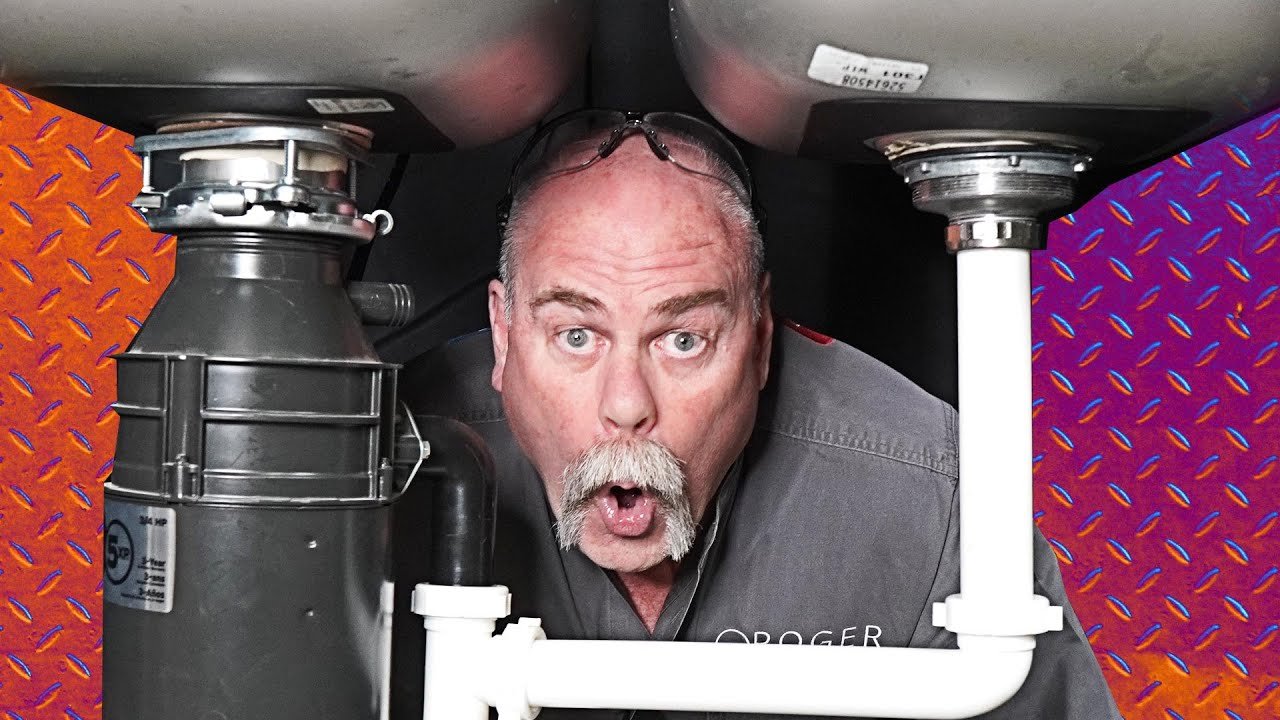
A kitchen sink with standing water that won't drain can often be cleared without leaving the cabinet under it. The plumber Roger Wakefield works through a double sink with a garbage disposal on one side, both sides tied together below into a single trap, and sorts the fix by which side is blocked.
Work out which side is blocked
If water run on the garbage disposal side goes down without backing up on the other side, the blockage is likely in the riser piece. Looking down through the basket strainer may show straws or a buildup of gunk.
Plunge the basket strainer side
The plunger should be one made for a flat surface, not a toilet plunger. Put the stopper in the disposal side and hold it there. The plunger must cover the entire basket strainer and seal against the sink around it, which may need to be felt rather than seen. Gloves are suggested, especially if the water is dirty. Then push to force water down and break up whatever is in the pipe. It may take more than one push, and hard pushing.
If the blockage is on the disposal side, the plunger isn't needed in the same way. Plug the basket side and plunge the disposal side, since something could be sitting in the 90 going down.
Unjam the disposal
For a jammed disposal, seal off the basket strainer side, then push on the disposal with a sturdy object. If the tool that goes in the bottom center is missing, the end of a plunger or a broom works. If the disposal does nothing, check whether the reset button on the bottom is sticking out. It may have popped after the disposal was turned on too many times.
When both sides are stopped up
Then the stoppage is normally in the P trap, though it may be in the trap arm, which needs a sewer cable. Put a bucket under the P trap, undo it and catch the water, and check it for a clog. If lots of water comes back through the arm, the arm may need to come out of the wall or trap adapter. If it's chrome or brass and soldered in, it may be time to call a plumber, because a top sink snake has to be run through it.
The slip joint fittings, including the T, can also be loosened to find the clog. Loosen slowly, keep buckets or pans under them, and wear safety glasses.
Reassemble and check
Check the bubble washer for tears. The nuts are plastic and can break if overtightened, so they should be hand tight. Turn on the hot water. If the sink starts to fill, there is a clog back in the arm. If it drains, let the hot water run, then check the slip joint nuts for leaks. Paper towels laid under the pipes and checked the next day will show any wetness, which protects the wood under the sink.
If the clog is back in the wall, a sewer machine, a hydro-jetter or a kinetic water ram may be needed, which means renting equipment or possibly calling a plumber.
Questions this video answers
What kind of plunger works on a kitchen sink?
A plunger made for a flat surface, not a toilet plunger, plus a stopper or plug for the disposal side so the pressure goes down the clogged side.
How do you plunge a double kitchen sink?
Plug the other side, seal the plunger over the whole basket strainer, hold the plug down and push to force the water against whatever is blocking the riser. It may take several tries.
What if the garbage disposal is jammed?
Push down on the disposal with a sturdy object such as the end of a plunger or a broom, and check whether the reset button on the bottom is sticking out.
What if both sides are stopped up?
Take apart the P trap and the slip joint fittings, catching the water in a bucket, and look for the clog.
How tight should the slip joint nuts be?
Tighten the plastic slip joint nuts hand tight only, since overtightening can break them. Check the bubble washer for tears.
When should you call a plumber?
If the clog is back in the wall, he says you may need a sewer machine, a hydro-jetter or a kinetic water ram, which means renting equipment or possibly calling a plumber. Soldered chrome or brass trap arms may also call for a plumber.
Explore related projects
Connected by the topic: Plumbing