Blowing In Attic Insulation With an AttiCat: Seven Lessons Learned
The short version
A couple insulated their attic with a rented AttiCat machine and expanding fiberglass blown-in insulation, and share seven lessons. They cover prep work (air sealing, spray foaming, ventilation holes, baffles, a walkway), full safety gear, bungee cords for the 100 ft hose, not overstuffing the machine, the strong spray, a concrete mixer for touch-ups, and a reverse-mode shop vac for cleanup. The result was R44 insulation, about 15 in deep.
Full written account
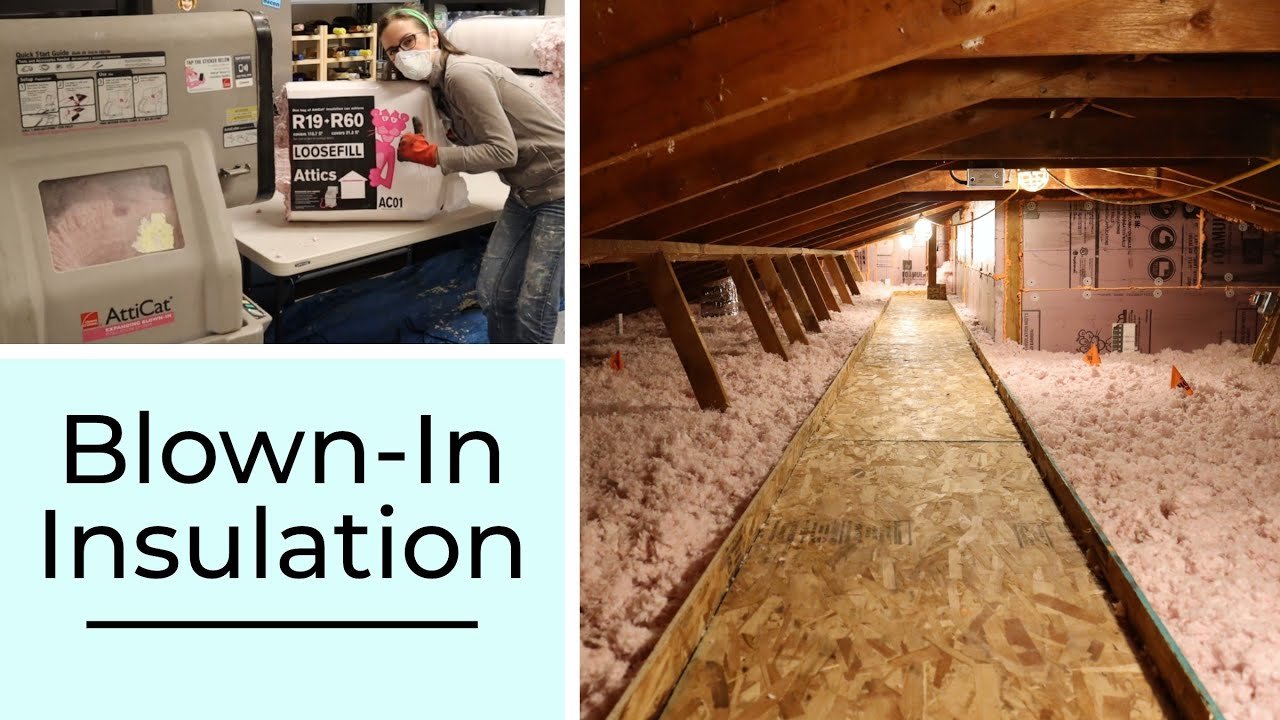
Insulating an attic with a rented AttiCat machine and expanding fiberglass blown-in insulation produced R44, about 15 in deep, for the couple behind Hammer & a Headband. The blowing itself is described as fairly easy, but they learned seven lessons along the way.
Prep work comes first
Eric spent two months air sealing the walls, spray foaming around fixtures, adding ventilation holes, and installing baffles to keep the holes from clogging with insulation. The attic had no walkway, which makes it hard to move around without putting a foot through the ceiling, so he built one and insulated underneath it before the day the rest of the insulation was blown in.
Safety gear, including for the person feeding the machine
The insulation has less dust than other types, but many particles end up in the air and are hard to see. Eric, blowing in the attic, wore gloves, goggles and a mask, then upgraded to disposable coveralls and a full face ventilator. His partner fed half bags into the machine in the basement. Because the room looked virtually dust-free, she relied on eyeglasses, and after a couple of bags she was coughing and her eyes were scratchy. She also took her mask off while the machine was off, not realizing the unseen dust was still in the air. Her advice is to wear full gear whenever in the room with the machine.
Managing the hose and the machine
The AttiCat has a 100 ft hose that flails when insulation moves through it. Bungee cords held it around the staircase railing and in the attic entryway so it wouldn't fall back into the house. Eric also bungeed a broomstick to the end of the hose to reach nooks and crannies.
Overstuffing the machine is a mistake: the insulation expands so much when released from the bag that it can struggle to break up and move into the hose. The couple waited until the paddles at the bottom were visible before adding another half bag. They precut bags and staged them on a table. The plastic bag has to catch on the machine's cutter to open, so it should be slid in close enough to it.
Fire hose mode
There is no low or medium setting; the machine is either off or in fire hose mode. The couple thinks the low attic ceiling added to the effect, with insulation bouncing off every surface. When the pressure sent insulation too far, Eric used a gloved hand to slow it, and sometimes aimed at the ceiling so it fell gently into place. He suggests aiming parallel with the bays, and in an attic without a walkway, planning a route and starting at the farthest point. He set up string lights and kept extra bungees and an extension cord nearby. The broomstick was dropped and is now buried in the insulation.
The AttiCat comes with a remote control so the person in the attic can turn it off. The rental store said its batteries were full, but they were not, so testing it in the store is worth doing.
Touch-ups and cleanup
Insulation was kept out of the area where a fan would go. After the fan was installed, Eric used a concrete mixer to break up more insulation to fill around it, less efficient than the machine and not as well broken up, but workable.
Some insulation had blown into the baffles and blocked the ventilation holes. Eric used a makeshift rake to level it and clear the walkway, then used a shop vac in reverse from outside, holding the hose against each ventilation hole to shoot the insulation back into the attic bays. He also used it to blow insulation off the ceiling and walkway. The house has been noticeably warmer, and they hope to see utility bills go down.
Questions this video answers
How long is the AttiCat hose?
The AttiCat insulation blower has a 100 ft hose, which flails when insulation blows through, so bungee cords were used to hold it in place.
How full should you keep the machine?
Don't overstuff it. Wait until you can see the paddles in the bottom of the machine before adding another half bag.
What can you use for touch-ups after returning the rental?
A concrete mixer can break up extra insulation to fill spots such as around a fan installed later. It is less efficient and doesn't break up the insulation as nicely.
How do you clear insulation that blew into the baffles?
Put a shop vac hose in reverse against each ventilation hole from outside to shoot the insulation back into the attic bays.
What result did they get?
R44 insulation, about 15 in deep. The house has been noticeably warmer.
Explore related projects
Connected by the topic: Insulation