Blocked Soffit Vents: How to Check and Fix Attic Ventilation

The short version
Explains how a ridge-and-soffit attic ventilation system is supposed to work and why blocked soffit vents are the common failure. Shows how to check the attic in the morning and pull insulation back 6 to 12 in. from the eaves, with optional rafter baffles. Also argues powered attic fans can make the problem worse when intake is blocked, and gives costs for adding ridge or soffit vents.
Full written account
On a 95°F summer afternoon, an attic can sit around 150 to 160°F, roughly 60° hotter than the air outside, while the air conditioner below tries to hold 72°F. The ventilation system meant to prevent this is already built into most American homes, and the most common reason it fails is a blocked soffit vent.
How the system is meant to work
Cool outside air enters through vents in the soffit, the underside of the eave that overhangs the exterior wall. It rises along the underside of the roof deck, picks up heat, and exits through a ridge vent at the peak. Hot air leaving the top pulls cooler air in at the bottom, with no fan, electricity or moving parts. The Department of Energy calls the ridge and soffit combination the most effective attic ventilation system available. When it works, the attic stays within 10 to 15° of the outside air, so 105°F instead of 160°F on a 95°F day. One Austin, Texas homeowner with a balanced ridge-and-soffit system saw the attic go from 140°F to 95°F.
Why it fails
Research cited in the video shows about half of U.S. homes have evidence of improper ventilation. The most common failure is a blocked vent rather than a missing one. Blown-in insulation drifts toward the eaves, batts get stuffed into rafter bays, and rodents sometimes drag insulation there. Some soffits were never real: vinyl or aluminum panels installed over the original solid wood during a siding job look perforated from the ground, but push up on them and they hit a solid surface. In other cases a roofer installs a ridge vent without anyone checking whether intake exists.
What it costs
Roofing Contractor magazine asked contractors how much shingle life they see lost to bad attic ventilation. The average answer was 24%, with some reporting up to 50% in extreme cases. The video also says GAF, CertainTeed, Owens Corning and Atlas require adequate attic ventilation as a condition of the warranty, and that a manufacturer's inspector may deny a claim if ventilation is inadequate. Proper ventilation cuts cooling costs by 10 to 15%.
A typical family generates 2 to 4 gallons of moisture a day. In a sealed attic it condenses on the roof deck and soaks insulation, and wet fiberglass can lose up to 80% of its R-value. Ducts running through a 160°F attic warm the cooled air before it reaches rooms. In snow country, a warm attic melts snow from underneath, the water refreezes at the cold eaves, and the resulting ice dam can leak into the ceiling.
The powered fan problem
A roof-mounted powered attic fan, about $200 in the video, creates negative pressure. If the soffits are blocked, it pulls conditioned air up through recessed lights, plumbing chases and the attic hatch. The Department of Energy Building America program warns against powered attic fans where intake ventilation is inadequate; its study found they pulled an average of 231 cubic feet per minute of conditioned air out of the homes tested.
Checking and fixing it
Go up in the morning, with gloves, long sleeves and a dust mask for fiberglass, and bring a flashlight. Look at the low point where the roof slope meets the top of the exterior wall. A gap between insulation and roof deck, or daylight through the soffit vents, means air is getting in. Insulation piled against the deck with no gap is the problem.
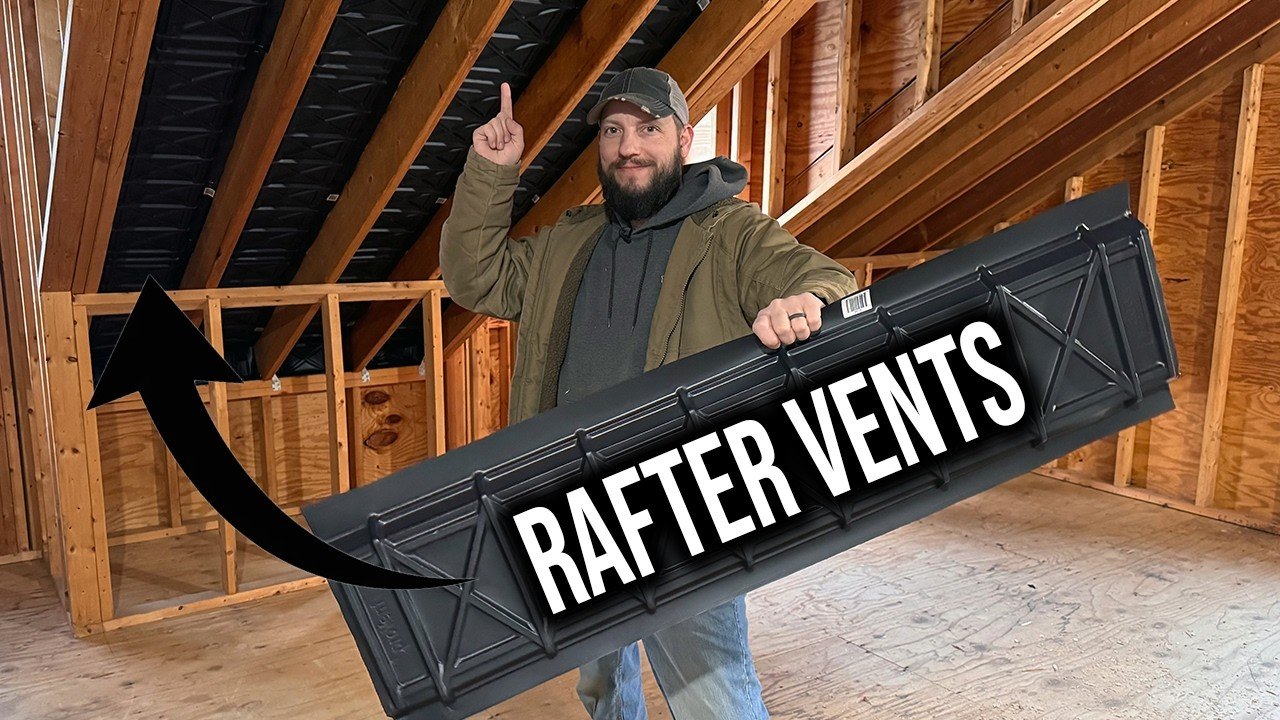
The free fix is to pull the insulation back 6 to 12 in. from the eave, rafter bay by rafter bay, so there is a clear channel from the soffit vent into the open attic. To keep it clear, staple rafter baffles, foam or plastic channels about 2 ft long, between each pair of rafters at the soffit. They cost about $1 to $2 each, and a typical house needs 30 to 40, for a total of $30 to $80.
Homes missing part of the system need the other half. Ridge vent material runs $2 to $4 a linear foot, adding $300 to $650 during a roof replacement. Soffit vents run $315 to $465 installed. The video suggests asking a roofer whether continuous ridge ventilation is included and whether anyone has verified that the soffit intake is clear.
Questions this video answers
How do I check my attic ventilation?
Go up in the morning with a flashlight, gloves, long sleeves and a dust mask. Look at the low point where the roof meets the exterior wall. A gap and daylight through the soffit vents means air is getting in; insulation packed against the roof deck means the intake is blocked.
What is the free fix?
Pull the insulation back from the soffit openings by 6 to 12 in., rafter bay by rafter bay, so there is a clear channel from the soffit vent into the open attic.
What are rafter baffles and what do they cost?
They are foam or plastic channels about 2 ft long that fit between rafters at the soffit and are stapled in place to keep insulation from creeping back. They cost about $1 to $2 each, and a typical house needs 30 to 40.
Should I install a powered attic fan?
The video advises against it where soffit intake is blocked. It says the fan can pull conditioned air from the house, and cites a Department of Energy Building America study that found an average of 231 cubic feet per minute pulled out of the homes tested.
What does adding vents cost?
Ridge vent material runs $2 to $4 a linear foot, adding $300 to $650 during a roof replacement. Soffit vents run $315 to $465 installed.
Explore related projects
Connected by the topic: Insulation