Fix Cracked Grout at Wall Transitions With Matching Caulk
The short version
Cracked grout is common because grout is a cement product with little flexibility, especially at transitions like countertop-to-wall or floor-to-wall. The video shows cutting out loose grout with a razor knife and filling the joint with color-matched sanded caulk. It is tooled with a damp finger and cleaned with a sponge and water.
Full written account
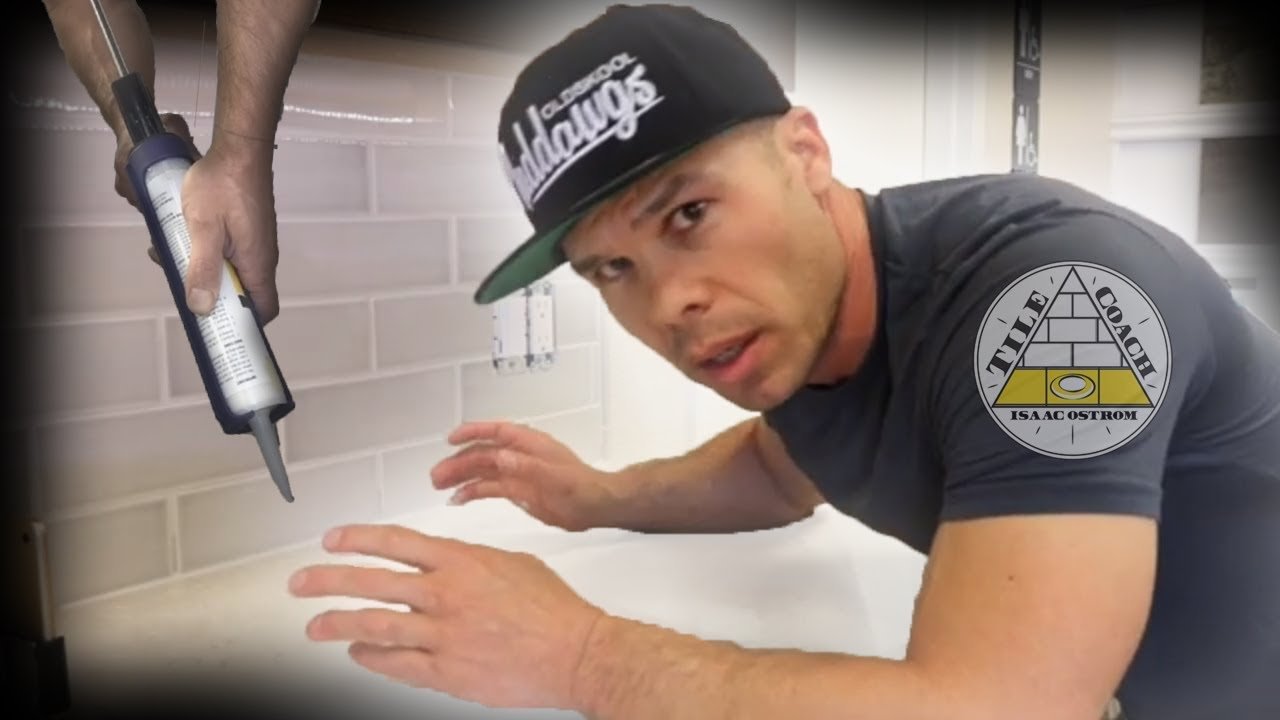
Grout is a cement product with very little flexibility, so wherever tile meets a different surface, such as a countertop and a wall or a floor and a wall, it often cracks. Tile contractor Isaac Ostrom of TileCoach describes the fix: replace the cracked grout in the joint with caulk made to match grout colors.
Choosing the caulk
Caulk is made to match grout colors. If you know your grout color, an online search for caulk for that brand of grout works, or you can get a sample chart. Ostrom's shop uses a power grout that does not require a sealer, has matched its colors, and orders a tube of the matching caulk from the tile shop. The caulk comes sanded and unsanded: sanded matches a sanded grout, and unsanded matches a smooth, non-sanded grout.
Preparing the joint
The joint must be clean first. Cut away any loose material with a razor knife until all the loose, cracked grout is out.
Filling the joint
Cut the tube tip at a 45° angle, about 3/16 inch off the tip, and lay a bead. Go slowly to fill the joint completely, because going too fast can leave small air gaps. The more caulk in the joint, the longer it lasts.
Cleanup and storage
This is siliconized acrylic, not silicone, and the difference matters: it cleans up with water. Tool the joint with a damp finger, pressing the caulk in and removing the excess, then clean with a damp sponge. Leave the tube at the job site so it can be used for touch-ups, and cover the opening with masking or duct tape to keep it airtight.
Maintenance
Where there is continuing movement, treat it as a maintenance joint: every 6 months to a year, clean it out and redo it. Ostrom says a homeowner probably does not need to hire anyone for this.
Questions this video answers
Why does grout crack at transitions?
Grout is a cement product with very little flexibility, so cracks often appear at transitions such as a countertop meeting a wall or a floor meeting a wall.
What do you fill the joint with?
Caulk made to match grout colors. It comes sanded, to match sanded grout, and unsanded, to match smooth non-sanded grout.
How do you prepare the joint?
Cut away the loose grout with a razor knife so the joint is clean, then fill it with the matching caulk.
What kind of caulk is used and how is it cleaned up?
It is siliconized acrylic, not silicone, and cleans up with water and a sponge.
How often might it need redoing?
Where there is continuing movement, treat it as a maintenance joint: every 6 months to a year, clean it out and redo it.
Explore related projects
Connected by the topic: Tile