Replace an Interior Slab Door in an Existing Frame, Step by Step
The short version
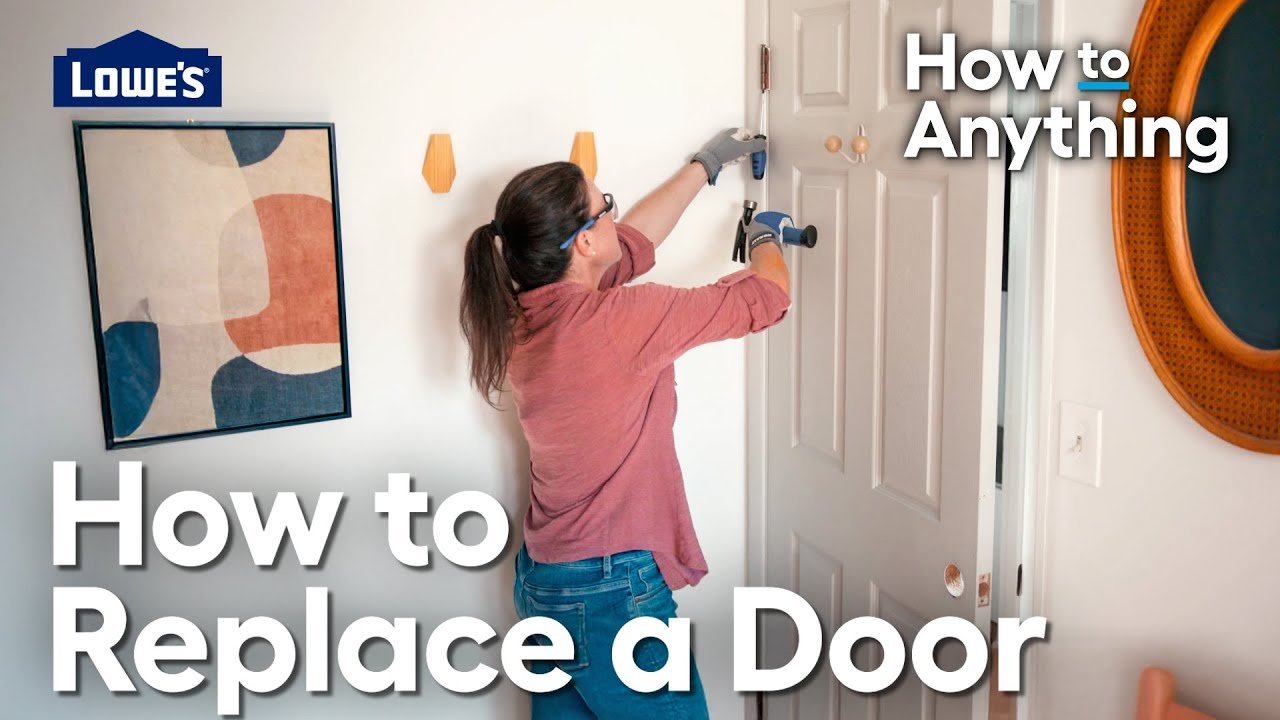
Jen from Lowe's Home Improvement replaces an interior door in an existing frame with a 30 by 80 solid core slab door. She removes the old door by tapping out the hinge pins, uses the old door as a template to mark hinge, latch and knob locations, routes the hinge mortises with a jig, drills the knob and latch holes with a second jig, and hangs the new door.
Full written account
Jen, host of Lowe's How To Anything, replaces a 30 by 80 interior door and keeps the existing frame. The job turns on one early choice: the frame is in good condition, so only the door needs replacing. If a frame is damaged, the video says to order a prehung door, which includes the frame and door together.
Measuring and removing the old door
The first step is measuring the height and width of the existing door so the new one matches. This door measures 30 by 80. The knob comes off first, and to keep things simple the existing hinge hardware is reused.
To free the door, the hinge pins are popped out of the center of the hinges with a thin Phillips head screwdriver and a hammer. She starts with the bottom pin, placing the screwdriver in the hole and tapping, then does the top pin. The door is lifted gently off the hinges, and the half of each hinge on the frame stays installed, so the frame needs no changes.
Using the old door as a template
The new door is a contemporary, smooth-finish solid core door, described as easy to paint and as adding some soundproofing. The old door is laid on top of it and used as a template for the hinge placement. The old hinges come off first. A tip from the video: put the loose screws on a piece of painter's tape and stick it to the hinge so no parts are lost.
The two doors are lined up at the top, checked with a speed square, and the hinge positions are marked with a thin pencil. The knob and latch plate locations are traced as well. Precision matters here because the hinges need to fit just right.
Cutting the hinge mortises
A hinge jig from Lowe's is installed according to its instructions, with the template lined up to where the hinge goes. A router cuts each mortise. The hinge is test-fitted, and the depth is just right; the video notes the router bit is adjustable if the depth is off. Because the router leaves curved corners and the hinge has square edges, a chisel and hammer square them off. Pilot holes are marked and drilled, since they prevent the wood from splitting when the hinge screws go in.
Knob, latch and latch plate
A second jig, made for the knob and latch holes, guides the cuts. The latch hole is drilled first. For the knob hole, she drills halfway through from one side, until the tip of the arbor pokes through the other side. She then flips the door and finishes the cut, which gives less splintering and chipping. The latch plate recess is then routed using the earlier mark.
With the new hardware installed, the door is hung and fits.
Questions this video answers
When do you need a prehung door instead of a slab door?
If the door frame is damaged, the video says to order a prehung door, which includes the frame and door together. If the frame is in good condition, you can replace just the door.
How do you remove the old door?
Remove the knob, then tap the pins out of the hinges with a thin Phillips screwdriver and a hammer, starting with the bottom pin. The frame half of each hinge stays in place.
How do you cut the hinge spots on the new door?
Lay the old door on the new one, line them up at the top with a speed square, and trace the hinge locations. Use a hinge jig and router, then square the curved corners with a chisel and hammer.
How do you avoid splintering when drilling the knob hole?
Drill from one side until the arbor tip pokes through, then flip the door over and finish the cut from the other side.
Why drill pilot holes for the hinge screws?
The video says pilot holes prevent the wood from splitting when the hinges are screwed on.
Explore related projects
Connected by the topic: Carpentry