Blown-In Attic Insulation: Prep, Air Sealing and Machine Use
The short version
Lowe's shows how to add blown-in fiberglass loose fill insulation over an existing layer in an attic. It covers prep work such as sealing air gaps, building dams around a heater flue and boxes around non-IC-rated recessed lights, installing rafter vents, and placing depth markers and barriers. It then shows running the loose fill machine as a two-person job, building a raised 2×6 and plywood storage floor, and insulating the attic hatch.
Full written account
Joists let air move through the spaces between them, so they must be covered with insulation. Loose fill, or blown-in, insulation is one way to do it, and Lowe's walks through an attic job that tops off an existing layer with fiberglass.
Choosing loose fill
Batt and roll insulation suits wide open spaces between joists and studs. Loose fill works well in tight spaces, or when there is already a layer of insulation to top off. It requires running a machine. The key number is the R-value, the resistance to heat flow: the higher it is, the more resistance. Colder climates usually call for a higher R-value. Fiberglass is described as a common, budget-friendly material, and cellulose, made from recycled paper treated for fire resistance, packs tightly between joists. This project uses fiberglass.
To size the job, multiply the attic's length by its width to get square footage, then check the back of the package for the height that gives the right R-value.
Gear and prep
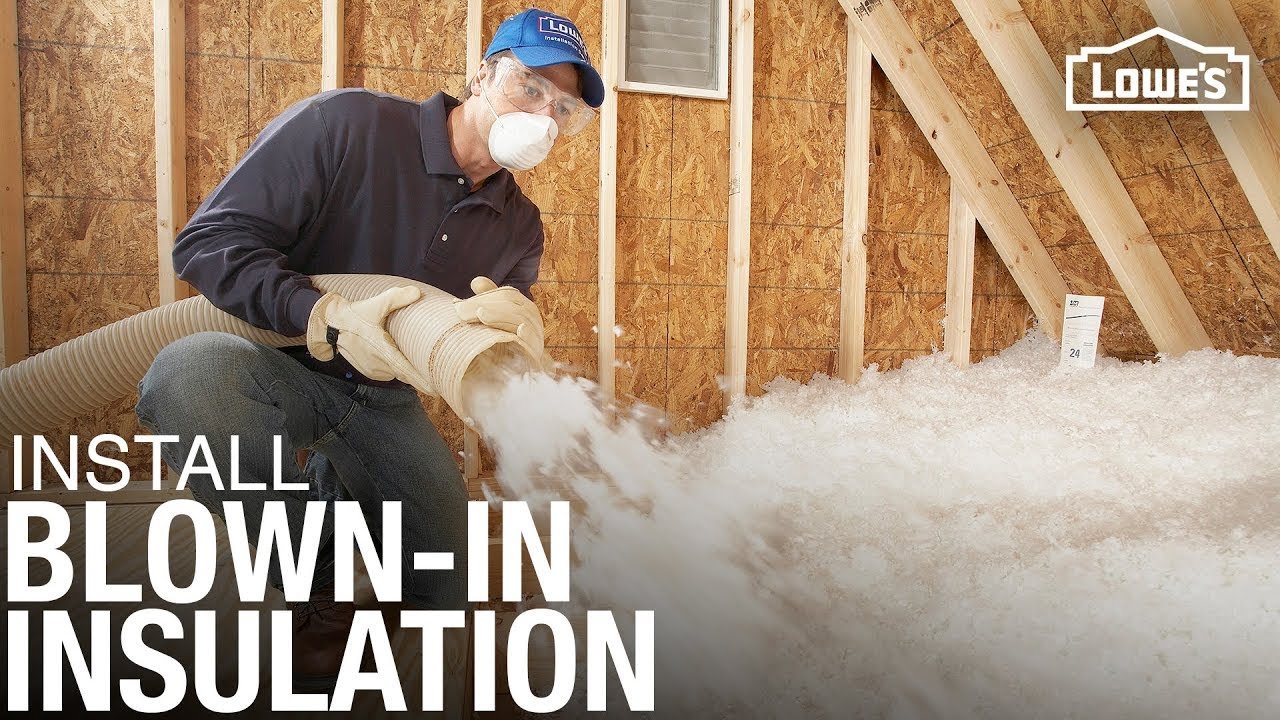
For fiberglass, wear old clothes or disposable coveralls, plus a dust mask, safety glasses, a hat, knee pads and gloves. A hard hat helps in tight spaces with exposed roofing nails. Existing insulation that is compressed or moldy should be removed and the moisture problem fixed. A piece of plywood across the joists makes a work surface.
Sealing and protecting
Spray foam goes in large gaps around pipes, and smaller spaces around electrical boxes and utilities. Water lines can be wrapped with a pipe sleeve, and bath vents should exhaust outside. For rough damage, call a pro.
Around a heater flue, a barrier holds the insulation back from the hot pipe. Run a bead of high temperature caulk around the pipe, press pieces of sheet metal into it and staple them to the joist. Another approach is to cut tabs on a piece of sheet metal, form it around the pipe as a dam and staple the tabs in place.
Recessed lights in the ceiling below should be rated type IC. If they are not, keep insulation away to prevent a fire hazard: build a box with drywall and screws that leaves a three inch space around the fixture, and spray foam along the seams. Skylight passages should be insulated too; here the gaps were filled with batting, then wrapped with unfaced insulation and house wrap.
Vents, markers and barriers
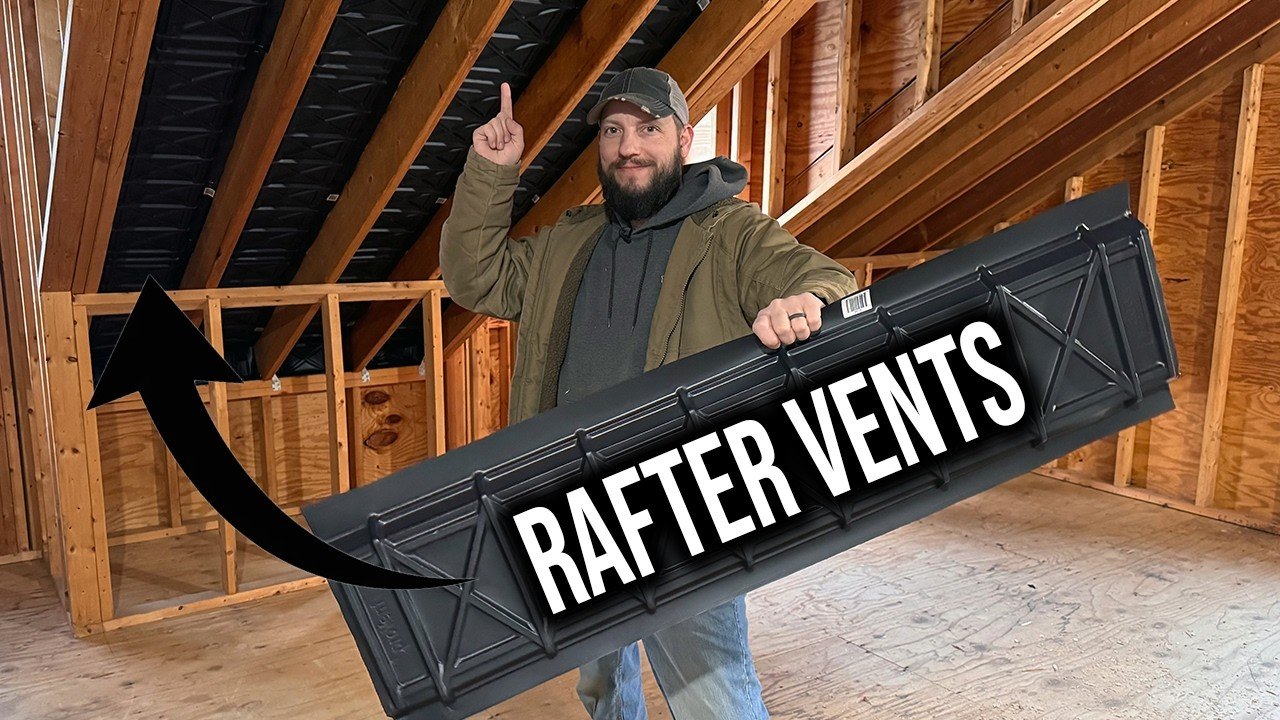
Rafter vents go in at the soffits, slid into place and attached with a staple gun. They let air flow from the soffit to the ridge vent, preventing moisture buildup. Before laying insulation, map out lights and other utilities for future reference, and place wood pieces or rulers around the attic to gauge depth. A barrier of rigid foam attached with cap nails keeps insulation out of the walk area and away from the hatch.
Blowing it in
Running the machine is a two-person job. Hook up the hose, feed half a bag of fill into the machine, then turn on the hose, starting farthest from the hatch and filling to the desired depth, taking care not to spray the rafter beds. Next to barriers, a hand held over the hose directs the insulation down.
To keep the attic usable for storage, a framework of 2x6s is laid perpendicular over the existing joists and screwed to them. The middle is filled with insulation and a sheet of plywood goes on top. If the attic stair door isn't insulated, add weatherstripping to the frame and attach rigid foam to the door with adhesive and cap nails.
Questions this video answers
When does loose fill work better than batt insulation?
The video says loose fill works well in tight spaces or for topping off an existing layer of insulation, while batt and roll suits wide open spaces between joists and studs.
What should you check before insulating around recessed lights?
Check whether they are rated type IC. If not, keep insulation away by building a box with drywall and screws that leaves a three inch space around the fixture, and spray foam the seams.
How many people does it take to run the machine?
Running a loose fill machine is a two-person job.
Why install rafter vents?
They let air flow from the soffit to the ridge vent, preventing moisture buildup in the attic.
How do you figure out how much insulation to buy?
Multiply the attic's length by its width to get square footage, then use the back of the package to find the height needed for the right R-value.
Explore related projects
Connected by the topic: Insulation