Insulating an Old Basement: Slab, Walls and Rim Joist Moisture Control
The short version
Explains how to insulate and air seal an old basement while controlling condensation: slab treatment with epoxy or a dimple mat, taped rigid foam or closed cell spray foam on walls, floating or sleeper subfloors, and rim joist air sealing. It also covers mudsill inspection, borate rods, a dedicated dehumidifier and finishes to avoid. It stresses that moisture management must come before insulating.
Full written account
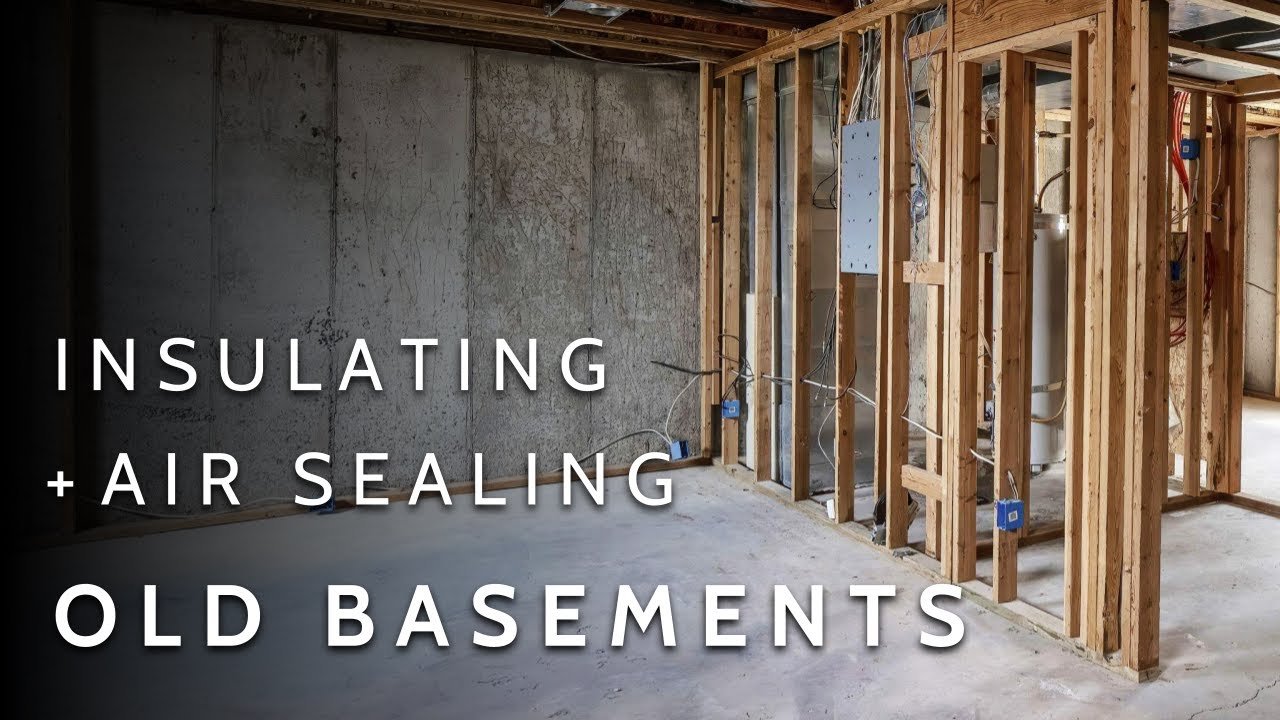
Can an old basement be insulated without causing the structure to rot? The answer given by ASIRI Designs is that moisture management details come first, because otherwise the structure can degrade rapidly. With drainage and waterproofing already addressed in an earlier video, the focus here is condensation control across the slab, walls, floor and rim joist.
The slab
The strategy depends on the condition of the slab, whether there are damp spots and whether a vapor barrier was installed beneath it. If bulk water intrusion at the walls has been handled, a drainage strategy is in place and moisture is mild or absent, the slab can be coated in a fluid-applied epoxy compatible with the concrete. The alkalinity of the concrete must not compromise the epoxy. The cured epoxy acts as a monolithic vapor barrier, air control layer and capillary brake.
For more severe moisture or an uneven floor, a secondary dimple mat designed for floors uncouples the assembly from the damp slab. It gives a capillary break, and the gap formed by the dimples lets vapor pressure equalize. If relative humidity in that gap is 100%, nothing drives more moisture into the space. This only works if the dimple mat is taped and sealed airtight.
Walls
The key is a means of condensation control: an insulation with a high R-value per inch that is air impermeable and works as a vapor retarder. That means taped rigid foam or closed cell spray foam. The channel typically recommends taped rigid foam, because spray foam tends to off gas long after installation and some of those chemicals can be harmful irritants.
Rigid foam goes tight against the dimple mat with adhesives when an internal drainage system is used, or directly against the foundation wall with an external drainage strategy. Joints and seams are taped to form one continuous layer. EPS, XPS, GPS or polyiso all work; products with cellulose fiber facers should be avoided because they can degrade and support mold growth.
Stud cavities can then be filled with any unfaced batt or blown-in insulation. No impermeable material such as a polyethylene vapor barrier should go over the studs, since it traps moisture in the wall. It is better to have no vapor retarder than one in the wrong place. To use only fibrous insulation such as mineral wool, wood fiber or cellulose, a smart vapor retarder membrane is needed to control condensation from air leakage and diffusion while still allowing inward drying.
Floors
Rigid insulation is used in nearly every case. Over a fluid-applied epoxy slab it can sit directly on the slab with staggered, offset joints, giving a thermal break and a secondary capillary break. Above it, either sleepers with a single layer of subflooring, or two layers of subflooring with staggered, offset joints, glued and fastened together and floating. The floating floor gives a more compact buildup and avoids fastening sleepers to the slab. Over a dimple mat the floating floor is pretty much required, as fasteners through sleepers would puncture the mat. Non-load bearing partitions can sit directly on the floating subfloor; load bearing walls need planning, with a transition to an air-sealed expansion gap.
Rim joist and mudsill
The rim joist is where the foundation wall, mudsill, floor joist, exterior sheathing and subfloor meet, and air leakage there can lead to moisture accumulation, mold and rot. Options are rigid foam between each floor joist sealed with expanding foam sealant or elastomeric joint and seam filler; closed cell spray foam, with the off gassing concern; exterior rigid insulation at the right ratio for the climate zone with good air sealing; or a smart vapor retarder membrane taken to each floor joist.
If the mudsill sits directly on the foundation wall without a capillary break, more moisture transfers into it and other wood in contact, and the video suggests considering exterior insulation to keep those components warmer. Borate rods placed at regular intervals can preserve the wood, deter rot fungi and bugs, and help drive moisture out. The mudsill and embedded components should be inspected, and any that are deteriorated must be replaced so rot fungi does not spread.
Finishing details
A dedicated dehumidifier is recommended in case moisture dries to the interior or hot humid air leaks in. Impermeable wall finishes such as vinyl wallpaper, PVC shiplap or plastic panels that are not back vented should be avoided, so moisture-sensitive components can dry out.
Questions this video answers
Why not use a polyethylene vapor barrier over the studs?
The video says it traps moisture within the wall assembly and can make it deteriorate quickly; the rigid foam or spray foam already acts as the vapor retarder and air barrier.
Which rigid insulation types work?
EPS, XPS, GPS or polyiso all work; avoid products with cellulose fiber facers, which can degrade and support mold growth.
Why does the channel prefer taped rigid foam to spray foam?
It says spray foam can off gas long after installation and some of the chemicals can be harmful irritants.
What finishes should be avoided on basement walls?
Vinyl wallpaper, PVC shiplap and plastic panels that are not back vented, because they limit inward drying.
What do borate rods do?
They are made of borate salts that help preserve wood and deter rot fungi and bugs, and are placed at regular intervals in the mudsill or embedded components.
Explore related projects
Connected by the topic: Insulation