Toilet Water Stays in the Bowl: Clogs, Siphon Jet and Tank Parts
The short version
A plumber explains why water can stay in the bowl when a toilet won't flush: a clog, hard-water buildup in the siphon jet, or worn tank parts like the flapper and fill valve. He shows how to clean the siphon jet with vinegar or muriatic acid and discusses when replacing an old toilet makes more sense than rebuilding it.
Full written account
A toilet whose water stays in the bowl instead of flushing can have several causes, and a plumber walks through them in order, starting with the most common: a clog. Normally that is the problem, and a plunger or closet auger takes care of it.
Bowl problems and hard water
If the water just swirls and never goes down, there may be more to it. The problem could be in the bowl or in the tank, where the fill valve or flush valve may not be letting enough water down to flush. Calcium and magnesium from hard water build up as scale; a white powdery substance on shower heads or aerators is a sign. Chlorine in the water can also damage tank parts.
If the tank is fine and the toilet isn't clogged, the usual culprit is the siphon jet. It is the hole toward you in the bowl that pushes water back toward the P-trap to push the solids down the drain. If it isn't pushing hard, water fills the bowl but nothing starts the flush.
Cleaning the siphon jet
One method is to put on rubber gloves, reach into the jet hole and break up the calcium and magnesium so it pulls out through the hole.
The other is chemical. Pull the hose off the overflow tube, set a funnel in it and pour in a half gallon of vinegar, which fills the rim and breaks up the buildup. He prefers vinegar for homeowners because it is not nearly as dangerous, and compares the method to breaking up hardness in tankless water heaters. Muriatic acid is applied the same way, but he normally doesn't recommend it to homeowners. It needs good gloves, eye protection and possibly coveralls, and should sit only about 30 minutes to an hour.
The procedure:
- Turn the water off and flush to remove as much water as possible.
- Pour the cleaner down the overflow tube with the funnel.
- Cover the bowl and tank with cellophane, taped down if needed, to keep the smell in.
- Let it sit about 30 minutes.
- Turn the water back on and flush, watching the bottom of the bowl for buildup being pushed out.
Tank parts
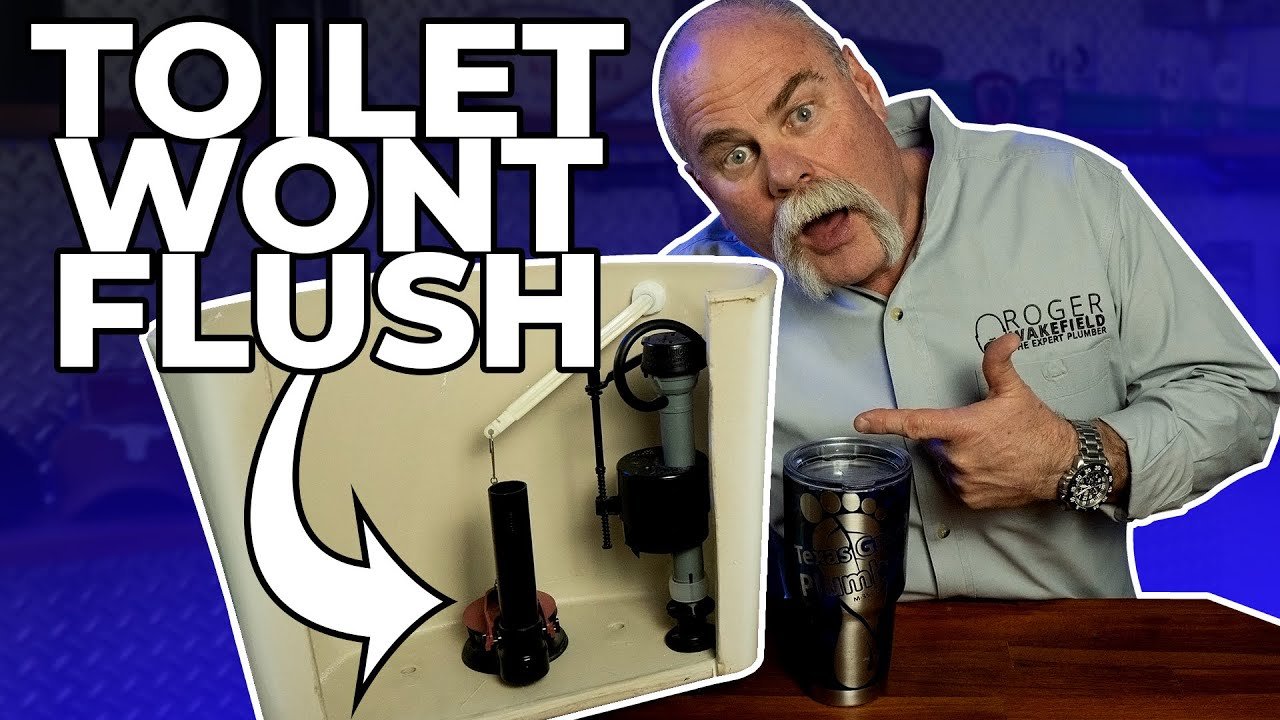
A flapper damaged by chlorine may hold water instead of air, so it drops right back down after the flush and doesn't release enough water to clear the bowl. A fill valve with a clog or corrosion may not fill the tank fully. He suggests checking whether the handle, flapper and fill valve all work and make the sounds they should. Parts problems are something a homeowner can fix.
Repair or replace
He asks whether the toilet is 10 to 20 years old. If so, he asks whether the owner would rather spend three or four hundred dollars replacing all the parts or put that money toward a new toilet. Older toilets may use three or four gallons per flush, while new ones use 0.8 gallons up to about 1.28 or 1.16.
Questions this video answers
Why won't my toilet flush and the water stays in the bowl?
A clogged toilet is normally the problem, and a plunger or closet auger takes care of it. If not, the cause may be the bowl's siphon jet, or the fill valve or flush valve in the tank.
What is the siphon jet?
The siphon jet is the hole toward you in the bowl that pushes water back toward the P-trap to push solids down the drain. Hard water buildup of calcium and magnesium can keep it from pushing hard.
How do I clean the siphon jet?
Put on rubber gloves and break up the buildup by hand, or pour about a half gallon of vinegar down the overflow tube with a funnel and let it sit. Muriatic acid can also be used, but he does not recommend it to homeowners.
How long should the cleaner sit?
About 30 minutes to an hour for muriatic acid, and about 30 minutes in the flush routine he describes. Flush first with the water off, then turn the water back on and flush afterward.
When should I replace the toilet instead?
If it is 10 to 20 years old, it may be time to replace it rather than spend three or four hundred dollars rebuilding it. Newer toilets use 0.8 to about 1.28 gallons per flush, while old ones may use three or four.
Explore related projects
Connected by the topic: Plumbing