Shower Goes Cold? Swapping a 1964 Single-Lever Valve Cartridge
The short version
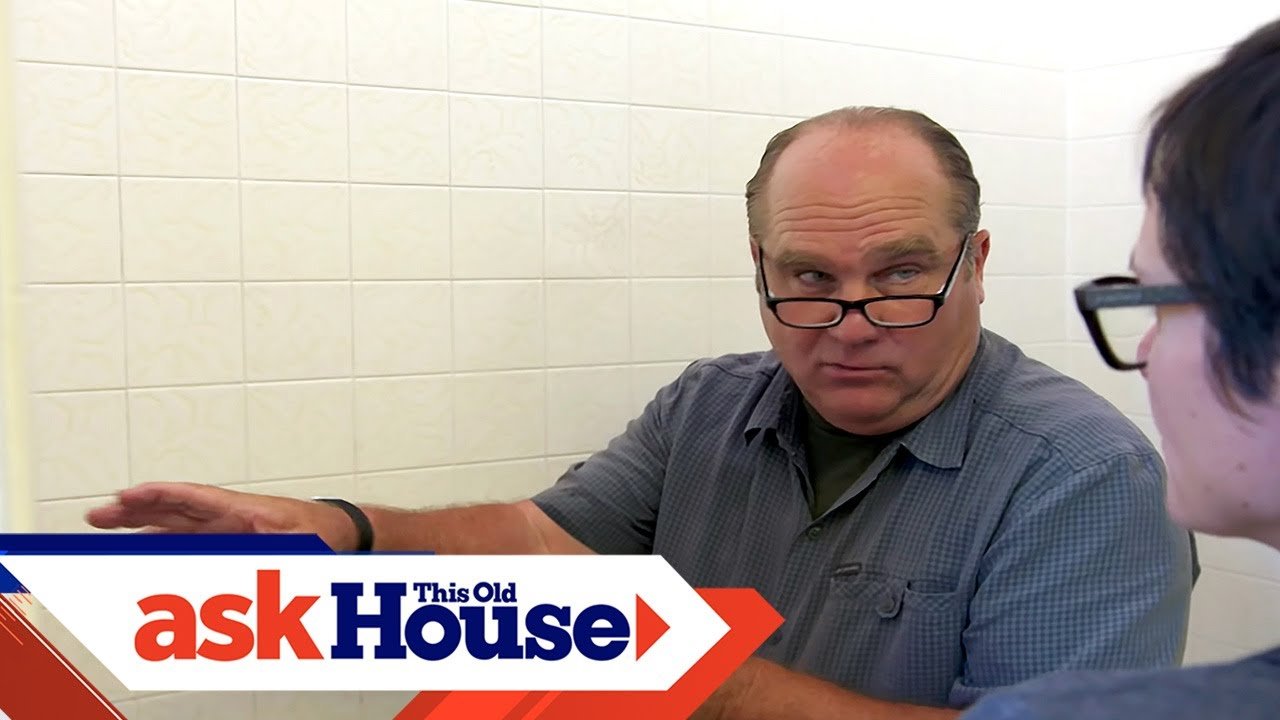
Richard Trethewey helps a Seattle homeowner whose shower loses hot water when the kitchen hot tap or dishwasher is used. He shuts off the water, removes the handle and trim, pulls the old cartridge with a special tool, and installs a redesigned cartridge. He then explains how a modern pressure balancing valve works.
Full written account
In a Seattle house the shower runs cold whenever someone opens the hot tap in the kitchen or turns on the dishwasher. The homeowner says she loses hot water completely for a little while, and it takes a while to come back. Ask This Old House plumbing and heating expert Richard Trethewey opens the kitchen hot faucet fully while someone showers, and the water gets colder.
Getting to the valve
The handle comes off by loosening a screw under a small cover plate, turning it counterclockwise. A cover plate with two more screws follows. Because of a fair amount of caulking, Trethewey scores it with a knife before prying. Behind it is a single-lever shower valve with hot and cold pipes coming in, one going down to the spout and one up to the shower head.
There are no service valves at the fixture, so he goes to the basement and turns off the hot and cold.
A cartridge about 50 years old
The valve has only one serviceable part, the cartridge. The house was built in 1964, and Trethewey says the cartridge has likely sat in the valve body for 50 or 60 years. He pries off a retaining clip. Pulling with pliers could break the cartridge and leave parts in the wall, which would mean replacing the whole valve. Instead he uses a special tool whose shoulders match those on the cartridge, twisting it to break the o-ring seal that had crusted up. Then pliers pull it straight out.
Why the old valve fails
The cartridge sits in constant hot and cold supply. Pulling the handle back lets hot into a chamber and out to the shower head, and turning it mixes the two. It does not account for changes in pressure. If cold pressure drops when a toilet flushes, hot can scald; here the hot pressure dropped and cold came in. Trethewey says this basic valve body is no longer legal by code, which requires a pressure balancing device.
The manufacturer redesigned the cartridge, changing the size and geometry of the hot and cold openings so the ports are more proportional. It will not fully fix the problem, he says, but can improve performance dramatically.
Installing and testing
He greases the o-rings lightly, sets the cartridge, adds the retainer clip, and seats a foam bead in wet caulk for a watertight seal. The trim and handle go back on. With the water on, the homeowner runs the shower while he opens the hot tap, and it stays hot.
A modern valve cut away
A cutaway of a modern valve shows shutoff valves for servicing and a check that stops hot or cold flowing the wrong way. It also has a balancing spool. When a toilet flush drops cold pressure, the stronger hot pressure pushes the spool to close off hot and increase cold. The spool controls pressure only, while the spindle controls temperature.
Questions this video answers
What problem did the homeowner have?
The homeowner loses hot water in the shower when someone opens the hot tap in the kitchen or the dishwasher runs, and it takes a while to come back.
Was the water shut off first?
Yes. He shuts off the hot and cold in the basement because there are no service valves at the fixture.
How was the old cartridge removed?
A special cartridge puller whose shoulders match the cartridge. It is twisted to break the o-ring seal, then pliers pull the cartridge straight out.
Does the new cartridge fully fix the pressure problem?
No. The redesigned cartridge changes the size and geometry of the hot and cold openings to reduce pressure balance issues. He says it will not fully fix it but can improve performance dramatically.
How does a modern pressure balancing valve work?
A balancing spool slides back and forth to close off the hot or cold side when pressure changes. It controls pressure, while the spindle controls temperature.
Explore related projects
Connected by the topic: Plumbing