How to Replace a Toilet: Flange Height, Wax Ring and Bolts
The short version
A renovator removes an old toilet from a 1984 house, shows how to drain the tank and bowl, deals with a spinning closet bolt and a flange left below the new floor height, then sets a new toilet. He states the flange must be at least flush with the floor or up to 1/4 inch higher.
Full written account
A toilet that weighs about 50 lb and still holds water is easy to spill, and the hole around the flange leads straight to the ceiling below. In a 1984 house, a renovator working alone shows how he removes an old toilet and installs a new one, claiming 90% of toilets in remodels are installed incorrectly.
Emptying the toilet first
Before the water is shut off, he pours in a pail of water quickly to shock the system, which creates a vacuum and pushes much of the water out of the bowl. A shop vac then removes the rest, including the tank, whose water he notes is clean city water. He wants the level near zero so nothing pours onto his leg or through the flange hole when he lifts the toilet.
The tank comes off by removing two bolts, using a large flathead screwdriver on top and holding the nut underneath. He explains the bolts sit under compression against a rubber gasket.
A stuck closet bolt
The closet bolts use a nut and brass washer. If the nut and washer spin, he suggests needle-nose pliers to hold the thread, or a grinder. Here the bolt itself turned with the nut. His fix was 3-in-1 oil with compression, pushing the nut up and the washer down. Lifting the toilet to create compression also works.
What was under the toilet
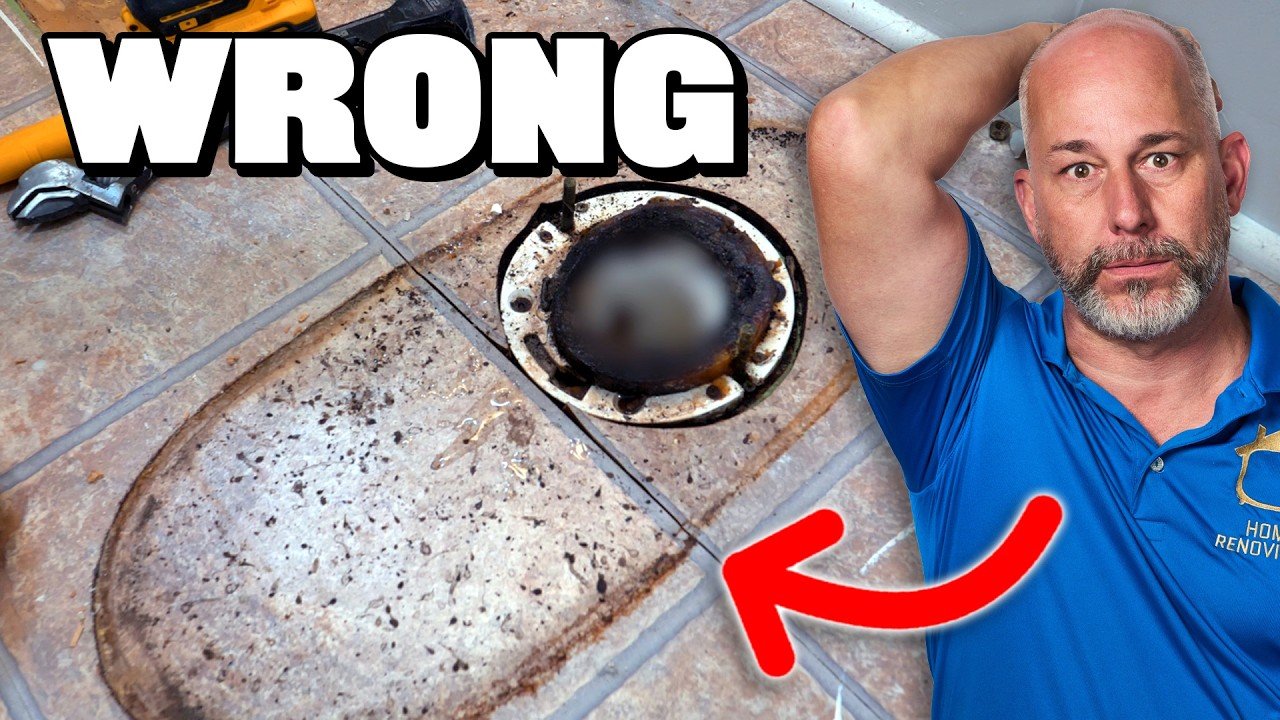
He states the flange needs to be as high as the floor. In this bathroom it was not. The wax was swollen and almost nonexistent, an economy ring rather than the $5 type with a plastic mold and diverter. Someone had added plywood and cheap laminate over old vinyl. He says there is no such thing as waterproof laminate, and that he can count on one hand the times he has lifted a toilet that was installed correctly.
New supply valve
He removes the old valve from 1984 by turning the bottom nut counterclockwise. The new valve has the same thread size and valve body, but sends the supply straight up. He tightens it by hand first, then holds the valve body while snugging the compression nut, which compresses a flared copper ring onto the pipe. He then turns the water back on to test it.
Raising the flange
The existing PVC ring had been flush with the old floor but is now lower because of floor leveler, Ditra and tile. He uses a 3 in. PVC twist and seal replacement flange, sold at Lowe's or Home Depot, with a flared rubber gasket. With minor downward pressure he twists it in until it is hard to turn, aligning the bolt slots at 9 and 3. The gasket keeps sewer backup from coming into the house. He pre-drills and screws the new flange to the old one so the toilet cannot rock, which protects the wax seal. The rule he gives is that it must be at least flush or up to 1/4 inch higher, which he says is met all the way around.
Setting the new toilet
A washer with a plastic holder keeps each bolt standing upright. Only an extra-size wax ring was available, which means more wax in the way. He attaches the tank to the bowl first, hovers the toilet over the bolts and sets it straight down. Leveling clips on the floor mean there should be no wobble. Seat bolts twist on, get cut off and are capped.
For an uneven floor, he suggests grouting the toilet area with leftover sanded grout as a stabilizer, finished with a clear silicone bead.
Questions this video answers
How does the video empty the toilet before lifting it?
A pail of water is poured in fast before the water is shut off, then a shop vac removes the rest, so the toilet is almost empty of water when lifted.
How high should the toilet flange be?
The flange needs to be at least flush with the floor, or up to 1/4 inch higher.
What if the closet bolt spins with the nut?
Apply 3-in-1 oil, put compression on it by pushing the nut up and the washer down, or lift the toilet to create compression.
What is used when the flange sits below the new floor height?
A twist-and-seal 3 in. PVC replacement flange with a flared rubber gasket, twisted in with downward pressure, positioned at 9 and 3, then screwed to the old flange.
How heavy is the toilet?
The toilet weighs about 50 lb.
What does the video suggest for an uneven floor?
It suggests grouting around the toilet base with leftover sanded grout as a stabilizer, with an optional clear silicone bead.
Explore related projects
Connected by the topic: Plumbing