Slow Bathroom Sink: Clear the P-Trap, Stopper Arm and Drain
The short version
Jeff of HomeRepairTutor shows how to fix a slow-draining bathroom sink by removing the P-trap, goose neck and pop-up stopper pivot arm and cleaning out the gunk. He uses a $3 Zip-it tool, a drain auger and paper towels, then reassembles and checks for leaks.
Full written account
A slow-draining bathroom sink can be cleared by taking apart the plumbing underneath it and removing the gunk by hand. Jeff of HomeRepairTutor walks through the job, starting with how the trap works.
Why the P-trap holds water
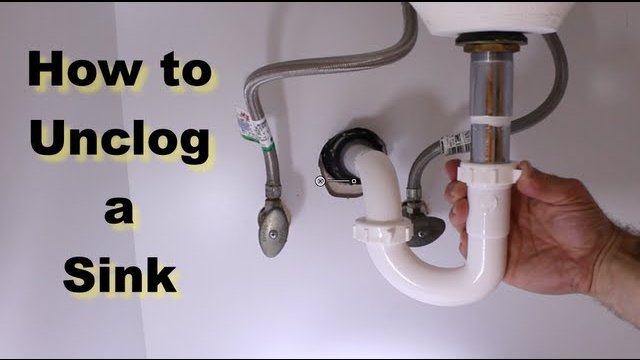
The drain comes down and then up into the wall in a P-trap shape. Water stands in the trap so sewer gas doesn't come back into the house through the plumbing line.
Taking the pipes apart
Put a Tupperware container or bucket directly under the P-trap, with a towel beneath the work area. Loosen the slip nuts by hand, or with channel locks, top one first and then the bottom. Water will come out. When it slows, the whole P-trap comes out. It is full of gunk, and it can be tapped against the container or fished out.
The goose neck pipe also comes out after a slip nut at the back is removed, and it can hold buildup too.
The stopper and pivot arm
A rod at the back of the drain controls the pop-up stopper and sticks into the pipe, where hair and gunk catch on it. Loosen the nut holding the pivot arm with channel locks or a crescent wrench, pull the arm out, then lift out the pop-up stopper. Both were coated in gunk.
Clearing the drain
A Zip-it tool, bought at a hardware store for about $3, goes down the drain to pull out the clog. A drain auger with a sharp spring on the end can be fed down the pipe too, and it can be spun by hand or with a drill attachment. A paper towel pushed through with the snake cleans the pipe sides, and a folded paper towel can be pulled through the goose neck. The Zip-it or auger can also be used in the wall pipe to look for an obstruction.
Putting it back together
Seat the goose neck in the wall with its washer flush, and tighten the nut a little so it can be adjusted. Position the P-trap with the goose neck arm sitting down in it, hand tighten the nut, and make sure the washer sits flush. Give each plastic nut a quarter turn with channel locks. Put the pivot arm through the hole in the stopper and tighten it a half to a quarter turn.
With the water on, check for leaks at the slip nuts and where the pivot arm enters the drain. Run the water a minute or two and look for drips. The sink then drained well.
Questions this video answers
Why does a sink have a P-trap?
The P-trap holds standing water so sewer gas can't come back into the house through the plumbing line.
What do you need to unclog a bathroom sink this way?
Tupperware container or bucket, a towel, channel locks or a crescent wrench, a Zip-it tool (about $3), and optionally a drain auger and paper towels.
Where does the clog collect?
Hair and gunk catch on the rod that sticks into the pipe at the back of the drain, and the pop-up stopper also collects debris.
How tight should the nuts be?
Hand tighten the slip nuts, make sure the washers sit flush, then give each plastic nut a quarter turn with channel locks. Run the water a minute or two and check for drips.
Explore related projects
Connected by the topic: Plumbing