Shop Vac and Cyclone Dust Collection on a DIY Roll-Around Cart
The short version
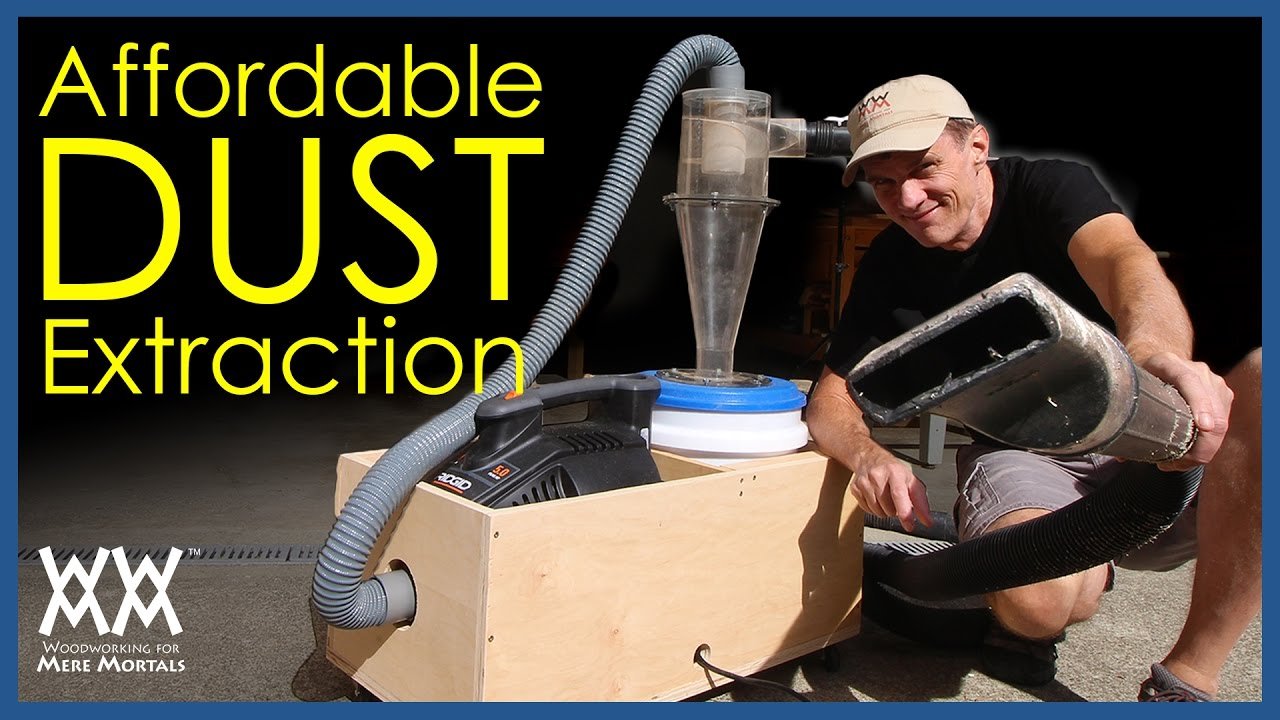
A woodworker with a small garage shop explains why a full dust extraction system can be expensive and impractical, and recommends a shop vac as an affordable option. He adds a mini cyclone ahead of the vac so the filter stays cleaner, then builds a basic roll-around cart from glue and screws to carry a 4 gallon, 5 horsepower vac and the cyclone together.
Full written account
A 16 gallon ShopVac that has sat out in the driveway for almost 15 years, rained on occasionally, still works. It is the heart of the dust collection setup that woodworker Steve Ramsey describes for a small garage shop, and he recommends buying a ShopVac even if you do nothing else about dust.
Why not a full system
Large workshops use stationary dust extractors with custom ductwork running to each power tool, which he calls probably the best way to keep shop and air clean. He gives two reasons it may not suit a hobbyist: it is expensive, with thousands of dollars to install and outfit, and it needs a dedicated shop space and stationary tools. In a small garage he moves his table saw and router table around all the time.
The shop vac approach
All power tools have a dust extraction port, so attaching a vacuum hose is simple. He says the ShopVac is also useful for cleaning the shop and a car interior, and that switching the hose makes it a blower. If tools are mobile and the weather is agreeable, he suggests rolling them outside.
Adding a cyclone
A few years ago he added a mini cyclone. The vac pulls air through the unit, and sawdust spins in the cyclone so that 99% drops into the bucket instead of the vac. The vac's filter clogs quickly under normal use and reduces suction; with the cyclone ahead of it, the filter stays cleaner. He can also see the bucket and empty it before it fills. His first cyclone's lid and seals deteriorated, so he replaced it.
The cart
The old cyclone bucket bolted to the side of the vac, which was awkward. The new one came with a roll-around base and a strap to lash the two together, which he found useless. He swapped the 16 gallon vac for a 4 gallon unit with the same 5 horsepower and built a no-frills box cart from plans he drew himself, assembled with glue and screws. The bottom was pieced together from three small pieces, and he used the casters that came with the cyclone. He added blocks to keep the vac from sliding and removed a handle. A cross brace has to come off whenever the vacuum filter is changed. Depending on hose diameter, an adapter may be needed; the hose from his own ShopVac fit fine.
Questions this video answers
Why add a cyclone to a shop vac?
About 99% of the sawdust drops into the cyclone bucket instead of the vac, so the filter stays cleaner and the vac keeps its suction. The bucket also shows how full it is.
What size vac does he use on the cart?
A 4 gallon vac with 5 horsepower, the same horsepower as his old 16 gallon ShopVac.
How is the cart assembled?
With glue and screws, using casters that came with the cyclone.
Where can I get the cart plans?
They are linked in the video description, and he says to modify them to fit your own components.
Explore related projects
Connected by the topic: Woodworking