Installing an Oneida Dust Gorilla Pro and Ducting in a Home Shop
The short version
A woodworker replaces her old dust collection with an Oneida 5 HP Dust Gorilla Pro in a new shop. She assembles the stand, cone, barrel, motor, HEPA filter and dust bin, then hangs Quick-Clamp ductwork from Gripple cables using an Oneida shop plan design. She then tests suction at the router table and table saw and demonstrates Smart Boost fan-speed adjustment.
Full written account
Tamar of 3x3Custom set up dust collection in her new shop around an Oneida 5 horsepower Dust Gorilla Pro with Smart Boost. She replaced an old system that had left fine dust on her walls. She calls the ductwork the part she was most nervous about, since piping a whole shop was not something she had done before.
Choosing the unit
She first considered Oneida's Supercell, which suits using one tool at a time. Some of her tools, including the table saw and router table, have two ports she wants to use at once. Oneida suggested the Dust Gorilla Pro, whose Smart Boost technology adjusts fan motor speed based on how many ports are open and how big they are.
Assembling the collector
She chose the freestanding leg kit over wall mounting in case she wants to move the unit. She used a 35 gallon drum on the optional drum dolly, which needed the leg extension kit. Gasket material goes on the parts for a complete seal. The cone and barrel lock to the stand with 12 bolts, with one left loose for the plenum support brace later. The fan housing can rotate in 45 degree increments to set where the filter hangs.
The motor assembly was the hardest part. She could not lift it herself, and a helper got it up and rotated it into place on a ladder.
The filter is a HEPA grade media filter, which she describes as 99.97 percent efficient at capturing particles as small as 0.3 microns. A drop-in silencer and a stacking sound filter go on top, held with clips and J bolts. The braided ground wire from the motor attaches to a J bolt, with an alligator clip on the filter cage. A Dust Sentry light flashes when the bin is full, and the instructions suggest setting it about four inches from the top of the bin. The unit comes with bare wires, so she says a plug has to be supplied and installed, and she does not show electrical work.
Planning and hanging the ductwork
Oneida offers a shop plan design service with a 30 minute design consultation. Its fee is fully refundable if the ductwork is bought from Oneida. She went over her shop with technical sales rep Dan Knapp and got a layout showing where each blast gate goes. She chose Quick-Clamp ducting, which needs no sealing and can be unclamped for changes.
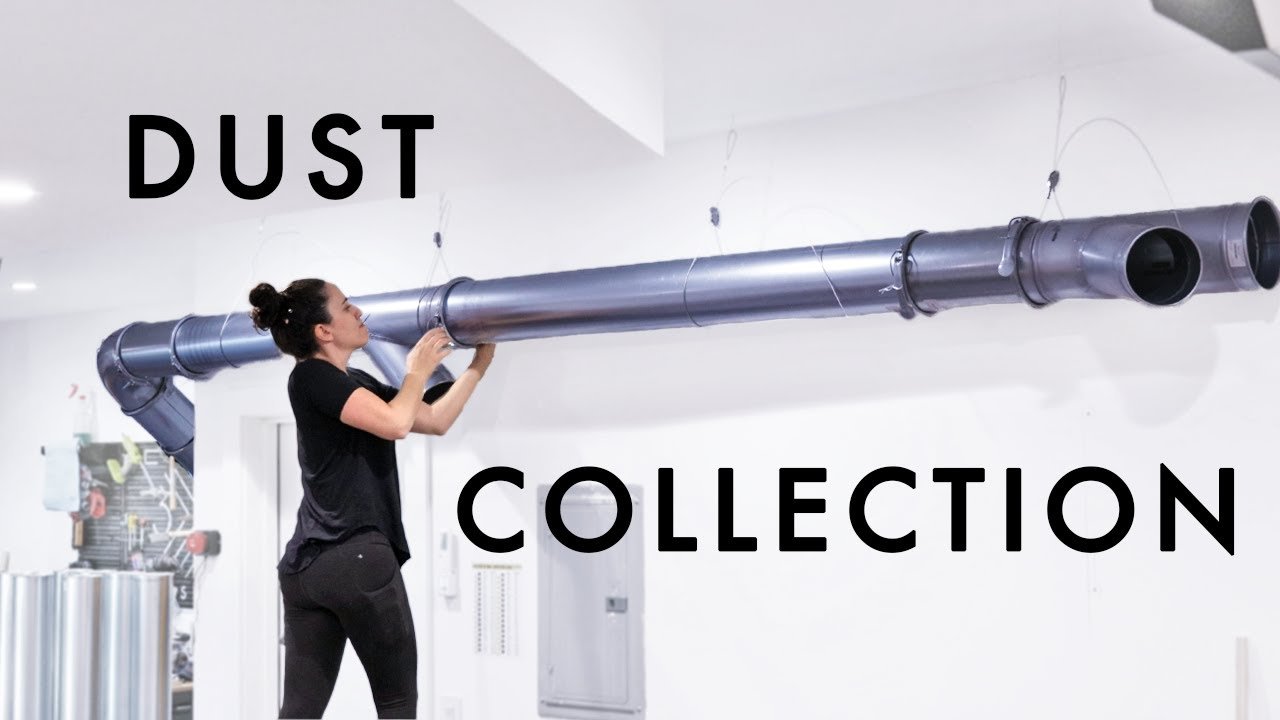
To make custom lengths she cut pipe about four inches shorter than the space, using a jigsaw with a metal cutting blade. She cleaned off burrs, then slipped the pipe into an adjustable sleeve with an O-ring and a clamp. The pipe hangs on the Gripple Hang Fast system, with hooks screwed into the joists. Where the joists changed angle, she screwed boards to them to hang hooks from. She also added a piece at the start of the run to gain headroom.
One drop needed a 45 degree elbow to clear a door. She later noticed the locking pin screws on the blast gates faced the wrong way. The gates seal in one direction only, so she planned to flip the pins.
Testing
The unit felt quieter than her old one, though still loud enough for hearing protection. She put it inside the shop because moving it outside would pull air into the space that would need replacing, and she says that is how radon and other gases get into houses. At the router table, the last tool on the line after many bends, it picked up dust her old unit never could. The table saw no longer sprayed dust back at her. For the Smart Boost demo she started with three blast gates open and closed two one at a time, and she says the motor speed change was audible.
Tool connections
She added a floor sweep near the routing and drilling area. The jointer, planer and drum sander will share a five inch hose with a five to four reducer. She chose not to connect the miter saw, which runs on a dust extractor. The table saw has two ports, one for the overarm and one for the main body. The router table fence and cabinet were split onto separate hoses, and a handheld floor sweep awaits a longer flex hose.
Questions this video answers
Which dust collector is installed?
The Oneida 5 horsepower Dust Gorilla Pro with Smart Boost, on a freestanding leg kit with a 35 gallon drum.
Why a 35 gallon drum instead of 55 gallon?
A 55 gallon drum would leave only two inches of ceiling clearance, and she did not want to call for help each time she dumps the bin.
What does Smart Boost do?
It changes the fan speed based on resistance on the motor, raising speed if low airflow is detected, so suction holds with different open ports and duct sizes.
How is the ductwork joined and hung?
Quick-Clamp pipe is joined with clamps and needs no sealing. Cut pipes get an adjustable sleeve and O-ring, and the pipe hangs on Gripple cables from hooks screwed into the joists.
Does the video show the electrical hookup?
No. The unit comes with bare wires and needs a plug, but she says she will not show electrical work.
How is the HEPA filter rated?
She states it is 99.97 percent efficient at capturing particles as small as 0.3 microns.
Explore related projects
Connected by the topic: Woodworking