Ceiling Light in a 1960 House: Why 60°C Wire Is a Fire Risk
The short version
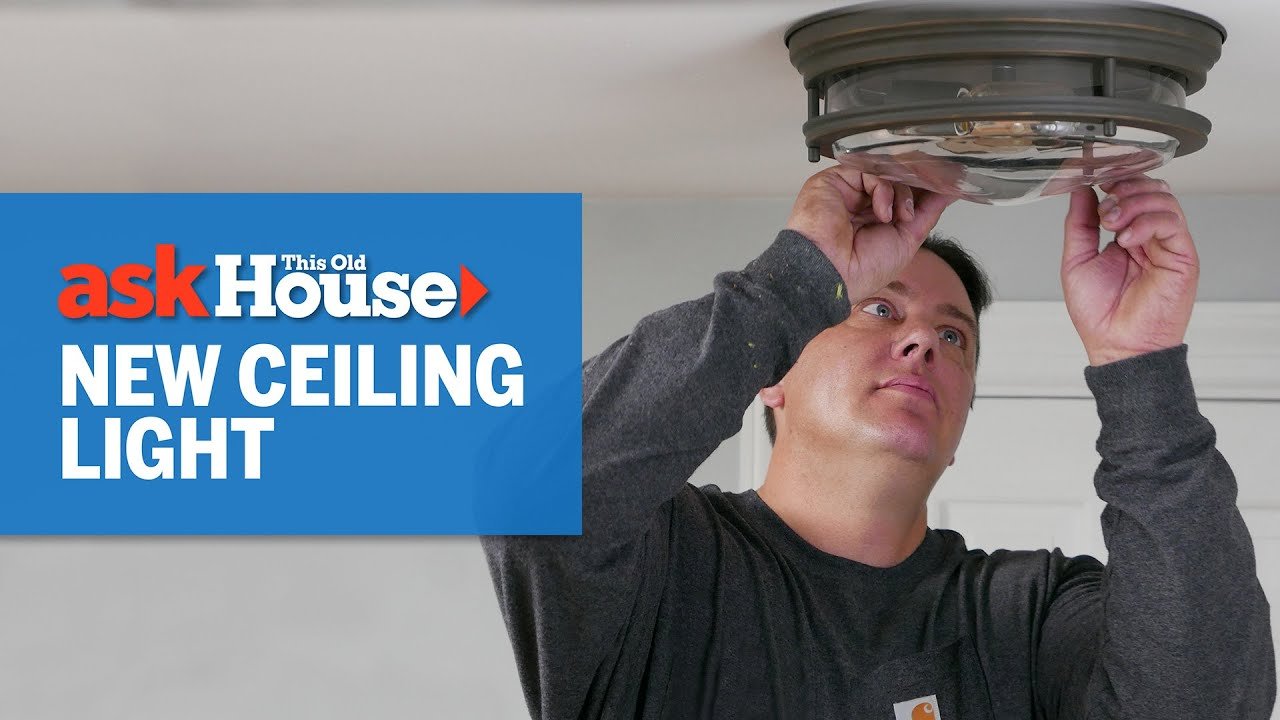
Master electrician Heath Eastman helps a homeowner whose new ceiling light carries a warning for houses built before 1985. The 1960 house has cloth-covered cable with 60 C conductors, so he adds about 18 to 24 inches of newer 90 C wire and installs the fixture. He then explains how to tell NM from NMB cable.
Full written account
A homeowner in a house built in 1960 bought an oil-rubbed bronze ceiling fixture with clear glass and Edison-style LED lamps. Its label warned of a fire risk in houses built before 1985. Master electrician Heath Eastman of Ask This Old House checked the wiring before the fixture went up.
What was in the box
After the power was switched off at the panel and the old fixture came down, the junction box held cloth-covered NM cable. Its conductors are rated 60 degrees Celsius, about 140 degrees Fahrenheit. With incandescent bulbs, people often fitted lamps the fixture wasn't rated for. Heath says the insulation could heat up over time, turn brittle, crack, separate and fall off, and in the worst case cause a fire.
The rating change
In the early 80s the code changed to require insulation rated 90 degrees C, almost 200 degrees F (194). LED bulbs won't generate much heat, but the socket still takes a standard bulb, so someone could put in one that is far too strong and overheats.
The fix
The solution was to pull the existing wiring back and add a new piece of newer wire about 18 to 24 inches long in the junction box. The old wires were pushed up into the crawl space above, but they ran in different directions and did not reach a single box. Heath put one wire in the first box, brought the other two into a second box, added a jumper between them and ran the new wire down to the fixture location.
He then installed the new box, stripped the jacket, slid the wire through the cable connector and added a ground screw. He also put a ground screw on the fixture bar. The metal box was already bonded, which is usually sufficient, but a plastic box would need it, and it is a habit. The bulbs and glass went in, the power came back on and the light worked.
Why the heat matters
Asked about amperage, Heath says it isn't the concern here. The issue is heat from the lamps sitting directly against the junction box, which can heat the box and make the conductor insulation brittle. A chandelier, with its bulbs lower and farther from the canopy, is not as much of an issue and may carry no label.
Telling the cable apart
- Cloth-covered cable is old and never suitable for this application.
- In the 70s it changed to non-metallic sheathed type NM, still rated 60 degrees C.
- In 1984 came NMB, rated 90 degrees C; the B is a kind of second generation.
If the cable doesn't say NMB, it has 60 degrees C conductors and isn't good for this application. Wire bought today carries the newer rating.
Questions this video answers
Why did the homeowner's new ceiling light need a wiring change?
Because the house was built in 1960 and the fixture label warned of a fire risk in houses built before 1985. The old wiring conductors are rated 60 degrees Celsius (about 140 F).
What temperature rating does newer wire have?
Newer wire is rated 90 degrees Celsius (194 F). The code changed in the early 80s to require higher-rated insulation; the video says NMB cable arrived in 1984.
How can you tell whether the wire is the right type?
Look at the jacket. Type NM is rated 60 degrees C, while NMB is rated 90 degrees C. If you don't see NMB, it isn't suitable for this application.
How was the problem solved?
Heath added about 18 to 24 inches of new wire in the junction box, spliced to the existing wiring, and ran it to the new fixture.
Does it matter that the bulbs are LED?
Even LEDs don't generate much heat, but the socket still takes a standard bulb, so someone could install a bulb that is too strong and overheats.
Explore related projects
Connected by the topic: Electrical