Garage Floor Coating: Epoxy Primer, Chips and Polyaspartic Top Coat
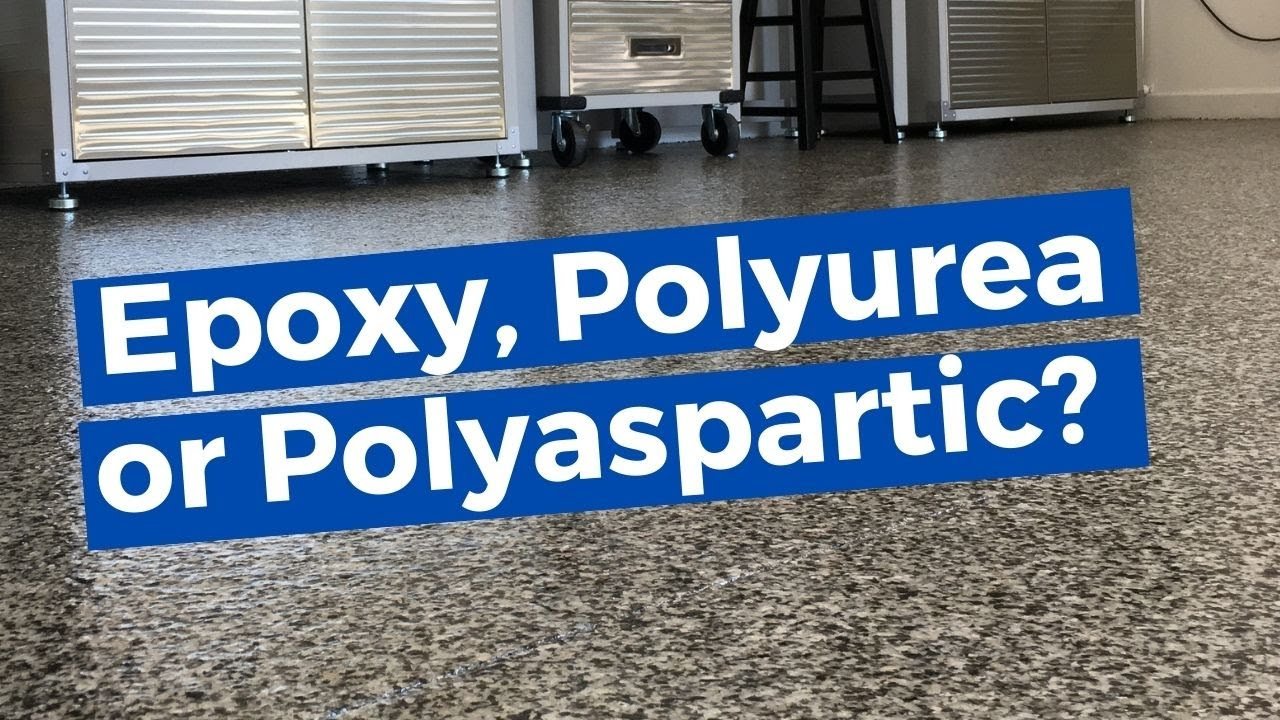
The short version
A professional concrete coatings contractor shows how two garage floors were done in two days: grind the concrete, patch cracks, roll a high solids epoxy primer, broadcast vinyl chips, then clean up excess chips and roll a clear polyaspartic urethane top coat on day two. He explains why he prefers a slower-setting polyaspartic over a fast polyurea and avoids one-day systems.
Full written account
Two garage floors were coated in two days using a high solids epoxy primer, vinyl chips and a clear polyaspartic urethane top coat. The contractor behind the work explains each choice, including why a fast-setting polyurea is avoided as a primer and why a one-day system isn't preferred.
Day one: prep, primer and chips
The first step is grinding the concrete. Because many garage floors have hairline cracks, all cracks are patched before any coating goes down. For the primer, the crew uses a high solids epoxy, meaning there is little solvent and over 90 percent of what goes on the floor stays there. Most DIY kits, by contrast, are low solids and water based, so about half of the material evaporates into the air, which is why they are described as not nearly as durable.
Some companies use a polyaspartic or polyurea primer. The contractor doesn't, because it sets up too fast. Epoxy sets more slowly, which gives it more time to penetrate the concrete for a stronger bond and gives the crew more time to do a good job.
Vinyl chips are then broadcast into the wet epoxy. The floor is completely covered, commonly called broadcasting to rejection, meaning a lot of chips are used. A common objection is that epoxy is not UV stable, but with the epoxy fully covered by chips it never has UV exposure.
Day two: cleanup and top coat
The next day begins with removing excess chips: blow them to one side, scrape the floor a few times, then vacuum a few times. The floor must be completely clean before any top coat.
The clear coat is a polyaspartic urethane. Polyaspartics are a type of polyurea but generally set more slowly, which lets them penetrate deeper and self-level a little after rolling. They also don't turn yellow like some clear epoxies.
Changing the system
The crew used to run a three-coat system: epoxy primer with chips, a clear epoxy top coat, then urethane over it to keep the clear epoxy from yellowing. Eliminating the clear epoxy means going straight to a UV stable polyaspartic urethane as the final coat.
Why not a one-day system
A polyurea that sets up in 20 minutes can really only be rolled once. A slower polyaspartic leaves time to roll the floor many times, and the more it is rolled, the more evenly it spreads. The industry has pushed polyurea for every garage floor, with the pitch that contractors can finish in one day. Doing two garages in two days is basically one garage per day, but the contractor prefers this method because there is no rush to lay down a coating that sets in 20 minutes.
Questions this video answers
What is a high solids epoxy primer?
One with little solvent, so over 90 percent of what is put down stays on the floor. Most DIY kits are low solids and water based, and about half of that material evaporates.
Why not use polyurea as a primer?
It sets up too fast. Epoxy sets slower, giving it more time to penetrate the concrete for a stronger bond and giving the crew more time to work.
Won't epoxy on a garage floor suffer UV damage?
The floor is completely covered with vinyl chips, so the epoxy never has UV exposure.
Why a polyaspartic urethane top coat?
It doesn't turn yellow like some clear epoxies, is UV stable, and its slower set time lets it penetrate deeper and self-level a little after rolling.
How is excess chip cleanup done?
Blow the chips to one side, scrape the floor a few times, then vacuum a few times until the floor is completely clean.
Explore related projects
Connected by the topic: Flooring