Furnace Filter Direction: Why the Arrow and Grid Matter
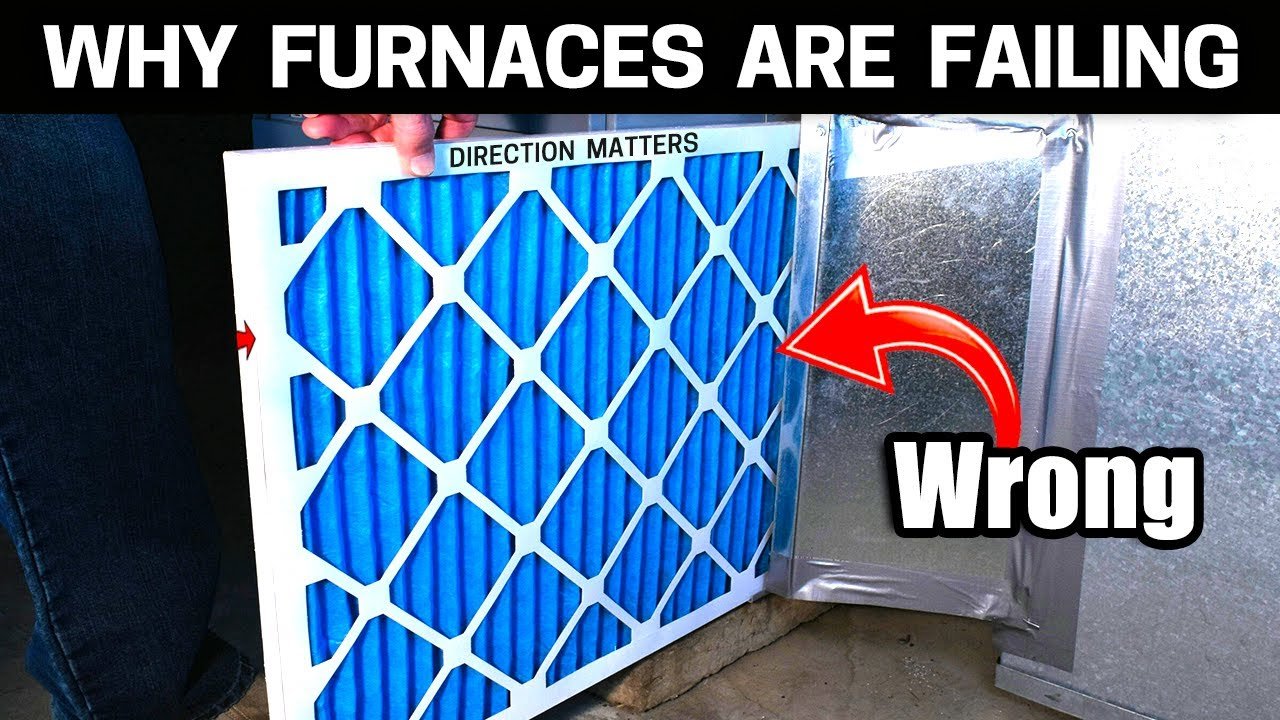
The short version
Explains how to install a furnace or HVAC air filter in the correct direction, with the arrow pointing from the return side toward the heating or cooling system. The grid on the filter keeps torn fabric out of the blower motor, and one homeowner's repair came to almost $2,000. It also shows how to identify the return and supply sides and notes that a 3M filter has its mesh in an unexpected place.
Full written account
A furnace filter that looks identical on both sides is not. In one homeowner's case, a filter installed the wrong way ended with an ECM motor repair of almost $2,000, because filter fabric went straight into the blower motor.
Return side and supply side
Air in an HVAC system is always moving. The side where air is sucked into the main system to be heated or cooled is the return side. Once conditioned, the air moves back to the rooms on the supply side. The filter always sits on the return side, the suction side into the system, and the arrow on it always points toward the heating or cooling system.
Why direction matters
Some filters have different components, such as filter fabric first and then carbon to remove odors. There, direction matters because the air should be pre-filtered by the fabric before reaching the carbon section, which can remove things like smoke or fumes. Most people do not buy multi-part filters like this.
The bigger reason is the grid on one side of a standard filter. It is a safety feature. If the fabric is damaged or breaks apart, the grid keeps it from being sucked into the system and into the motor, which could cause the motor to burn out or overheat. The homeowner with an ECM motor, a motor that can adjust its speed, needed a repair of almost $2,000. With the filter out, the blower motor is visible as a silver wheel above the filter slot, and the grid is there to catch torn fabric before it reaches it.
Finding the return
In the attic or basement it is not always easy to tell which side is the return. Start inside the house. Vents in bedrooms and individual rooms are supply vents, where air blows out. The larger vents on a floor or ceiling, probably in a central location, are the return.
Then go to the main system and track the duct from the return vent to where it enters the unit. The system in the video is mounted vertically, though many lie down, and the method is the same. Its ductwork runs up the ceiling to a return grill in the living room. The motor sits in the center, so the filter goes in with the arrow pointing from the return side toward the motor, which also puts the grid in the correct position.
Once this is worked out, the video suggests taking a few seconds to draw an arrow with a Sharpie on the part of the system where the filter goes, marking the airflow.
A 3M exception
Not every filter is built the same. A 3M filter has a heavy-duty mesh permanently attached, but not on the side you would expect, and it appears to be attached to every part of the filter. The presenter's guess is that it is stronger than cardboard on the opposite side. Because looking only at the grid could lead to inserting it wrong, always go by the arrow on the filter.
Questions this video answers
Which way should the arrow on a furnace filter point?
The arrow points toward the heating or cooling system, with the filter on the return (suction) side.
Why does filter direction matter if it looks the same on both sides?
The grid is a safety feature. If the filter fabric tears or breaks off, the grid catches it so it does not get sucked into the blower motor.
How do I tell the return side from the supply side?
Vents in bedrooms and individual rooms are supply vents. The larger vents on a floor or ceiling in a central location are the return. Track the duct from the return vent to the main system.
What can happen if the filter goes in wrong?
One homeowner's system had an ECM motor, and the filter went into it, causing a repair of almost $2,000.
How can I remember the correct direction?
Use a Sharpie to draw an arrow on the part of the system where the filter goes, showing the airflow direction.