Furnace Filter Changes: Arrow Direction, MERV Ratings and Timing
The short version
An HVAC tradesperson with 30 years of furnace experience lists five furnace filter mistakes: hard-to-grab old filters, not turning off power, installing the filter backward, not changing it often enough, and overspending on high-MERV filters. He recommends cheap fiberglass or MERV 8 filters for most 1-inch setups and says a whole-house air cleaner is a job for an HVAC professional.
Full written account
A tradesperson who says he has worked on furnaces for 30 years lists five filter mistakes that can cost homeowners money, and the questions he sets out to answer are whether cheap or expensive filters are better for air quality, and whether expensive ones raise electricity use.
Removing the old filter and cutting power
A filter that is hard to grip can be pulled with pliers. Without pliers, a wood screw or drywall screw turned into the filter gives a handle to pull it out.
Running the furnace during a change is a mistake: the pressure against the dirty filter makes it hard to pull out, and it can tear into pieces. A piece of plastic or paper left in the return air since new construction could be sucked into the blower once the filter is out, which can be costly.
Power should be off at the switch near the furnace or at the breaker. The furnace needs time to cool first: turn the thermostat down, wait 60 seconds, then cut power. Switching off immediately can overheat the furnace and lead to a service call. He says nine times out of 10 it is fine, but once in a while it costs money.
Direction of the filter
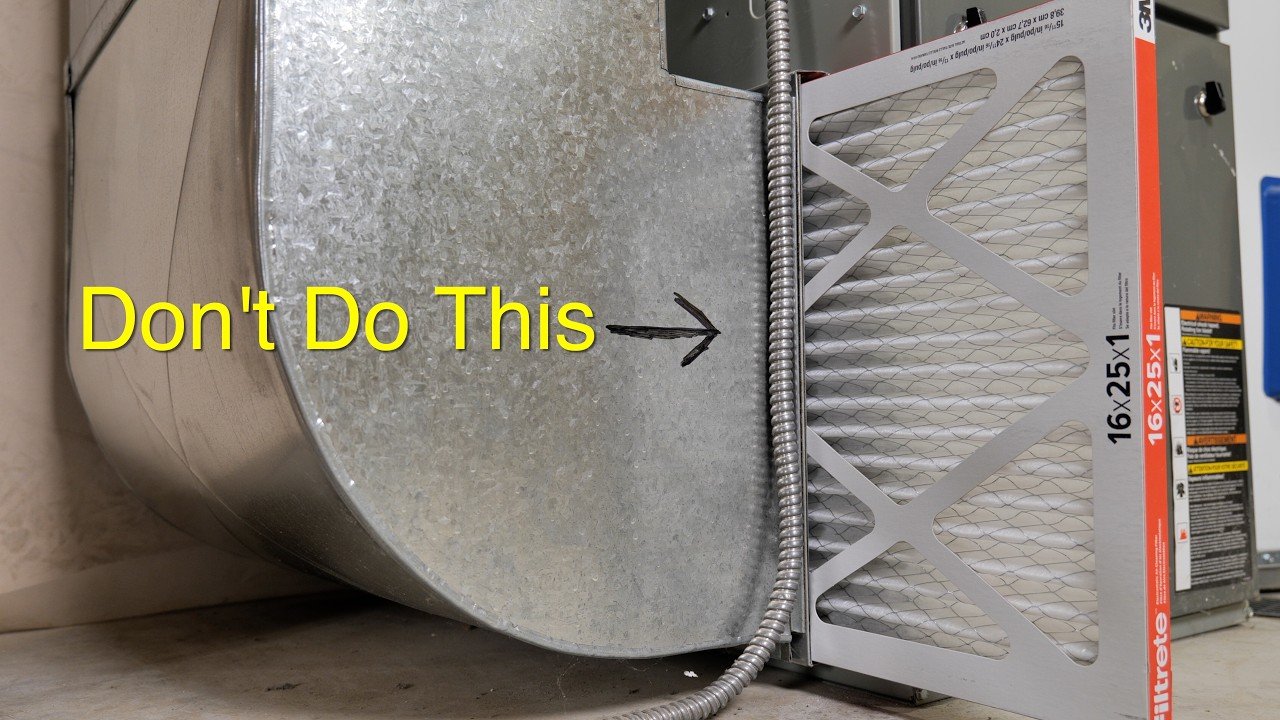
A backward filter is more restrictive, and filter material can be pulled into the furnace and cause damage. The arrows on the filter should point toward the furnace. With the furnace in the basement, they point toward the equipment. With the furnace on the main floor and ducting in the crawl space, the furnace sits on top and the arrows point down. A Sharpie arrow drawn on the ducting toward the furnace works as a reminder.
How often to change it
The industry standard is 3 months. If the filter looks like the dirty one shown at 3 months, change it every month or two; if it looks cleaner, it can stay another month or two. A filter that dirty makes the furnace run hot and costs more in gas and about 25 to 30% more in electricity. A phone reminder every 3 months helps, and at the very least the filter should be changed twice a year.
Not overspending
For most people with a 1-inch filter, a cheap fiberglass filter is recommended. With restrictions such as an air conditioning coil or poor ducting, a MERV 13 or MERV 14 filter is restrictive, almost like a dirty one, and costs more in electricity. A MERV 8 is called a great option.
For those concerned about dust and air quality, MERV 11, 12 or 13 filters are options, but they are more restrictive, need replacing more often, cost more in electricity and gas, and call for the fan running 24/7. For allergies or asthma, a whole house air cleaner is something different, and a local HVAC professional should be contacted. Filter sizes differ between furnaces, so the size should be checked before ordering.
Questions this video answers
How often should a furnace filter be changed?
The video gives 3 months as the industry standard. If the filter looks like the dirty one shown after 3 months, change it every month or two. At the very least, change it twice a year.
Which way does a furnace filter go in?
The arrows on the filter should always point toward the furnace. With the furnace in the basement they point toward the equipment; with the furnace on top of crawl space ducting they point down toward it.
Is a cheap or expensive filter better?
For most people with a 1-inch filter, a cheap fiberglass filter or a MERV 8 is recommended. A MERV 13 or 14 can be restrictive and cost more in electricity.
How do you turn off the furnace before changing the filter?
Turn the thermostat down, wait 60 seconds, then turn off the power at the nearby switch or the breaker. Switching off right away can overheat the furnace and cause a service call.
What can help remove a stuck filter?
Use pliers, or turn a wood screw or drywall screw into the filter and pull it out.