Epoxy a Garage Floor: Acid Etch, Two Coats and Pot Life Limits
The short version
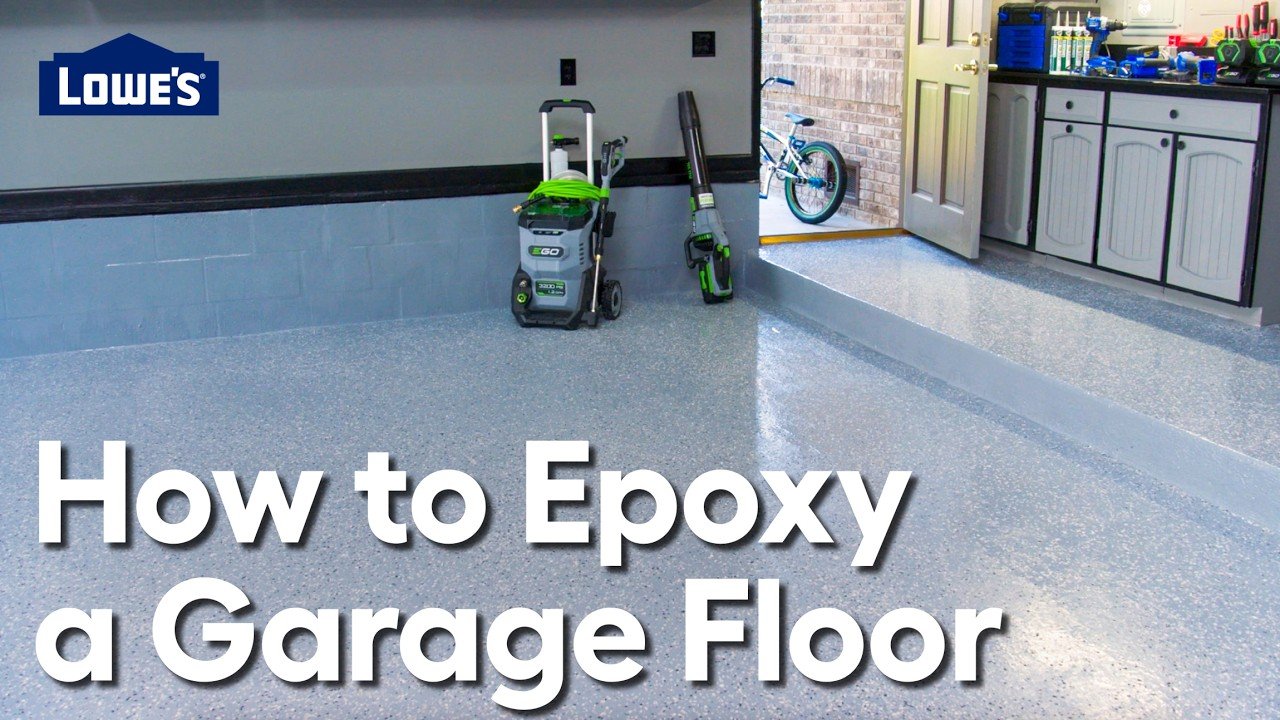
A step-by-step guide to epoxying a garage floor: measure the area, fill cracks, remove items, degrease, acid-etch, let the floor dry 24 to 48 hours, then mix and roll two coats of epoxy with flakes on the second. The example garage has about 650 sq ft and a high water table, so the first coat serves as a vapor barrier. The floor is dry enough for foot traffic in 10 hours and vehicles in 36 hours.
Full written account
Mixed garage floor epoxy gives only 45 minutes of working time, a limit called pot life, before it starts to harden. That clock shapes how Lowe's Home Improvement lays out a garage floor job: the kit in the demonstration has two bottles of Part A (the resin) and two bottles of Part B (the hardener and pigment), so half can be mixed at a time rather than rushing to finish before everything hardens.
Planning for moisture and coverage
The demonstration garage sits in an area with a very high water table. The concrete has no surface moisture, but moisture likely lies just below it. For that reason the floor gets two coats, with the first acting as a vapor barrier. The kit's manufacturer recommends an additional coat of the same epoxy for the base, because it creates the most durable bond. The video advises checking the manufacturer's recommendations for whatever product is used.
Sizing starts with length times width, plus any nooks, insets or taller knee walls. This garage has about 650 ft to cover. Normally two kits would be needed, but because of the extra coat, three are used.
Preparing the concrete
Cracks, oil stains and other imperfections are inspected first; cracks and patches get concrete crack filler, following the manufacturer's application and cure times. Everything that touches the floor comes out, and stays out for a few days. Air and concrete temperatures should be between 50 and 90°F, so the project is not suited to winter cold or summer heat.
The floor is blown and swept, then scrubbed with diluted degreaser and a stiff brush, rinsed and squeegeed out. Epoxy will not adhere to dust, grease, oil or other residue.
Acid etching
The concrete must be porous for the epoxy to bond, which can be done by grinding or by an acid etch. The video uses the etch because it is more DIY friendly and the kit includes acid powder. It is dissolved in water in a 5-gallon bucket and stirred with a paint stir stick that is never reused for the epoxy. Rubber gloves and protective eyewear are a must. The floor is pre-wet, the solution poured and scrubbed in, and the concrete stays damp throughout. The etch sits at least 15 minutes before a thorough rinse, then the floor is squeegeed and dries for 24 to 48 hours.
Mixing and rolling
After dusting again, painters tape protects edges. Tape also goes where the garage door comes down, since most garage floor epoxy is for indoor use and fades in direct sunlight. Part B is shaken for 3 minutes, poured into Part A and mixed for at least 5 minutes, scraping the sides and bottom. A 3-inch brush cuts in the edges, then a roller applies the epoxy in small sections in an M or W pattern.
Flakes go on only with the second coat, tossed in small handfuls upward over each section as it is finished. The first coat dries 10 to 36 hours before the second. The finished floor is dry enough for foot traffic in 10 hours and vehicles in 36 hours.
Questions this video answers
How long do you have to use mixed epoxy?
The pot life is 45 minutes once Part A and Part B are mixed.
What temperature is needed?
Air and concrete temperatures should be between 50 and 90°F.
How long should the etched floor dry?
24 to 48 hours.
When can you walk or drive on it?
Foot traffic after about 10 hours and vehicles after 36 hours.
Why two coats?
The garage has a high water table, so the first coat acts as a vapor barrier.
Why tape off past the garage door?
Most garage floor epoxy is for indoor use and fades in direct sunlight.
Explore related projects
Connected by the topic: Flooring